


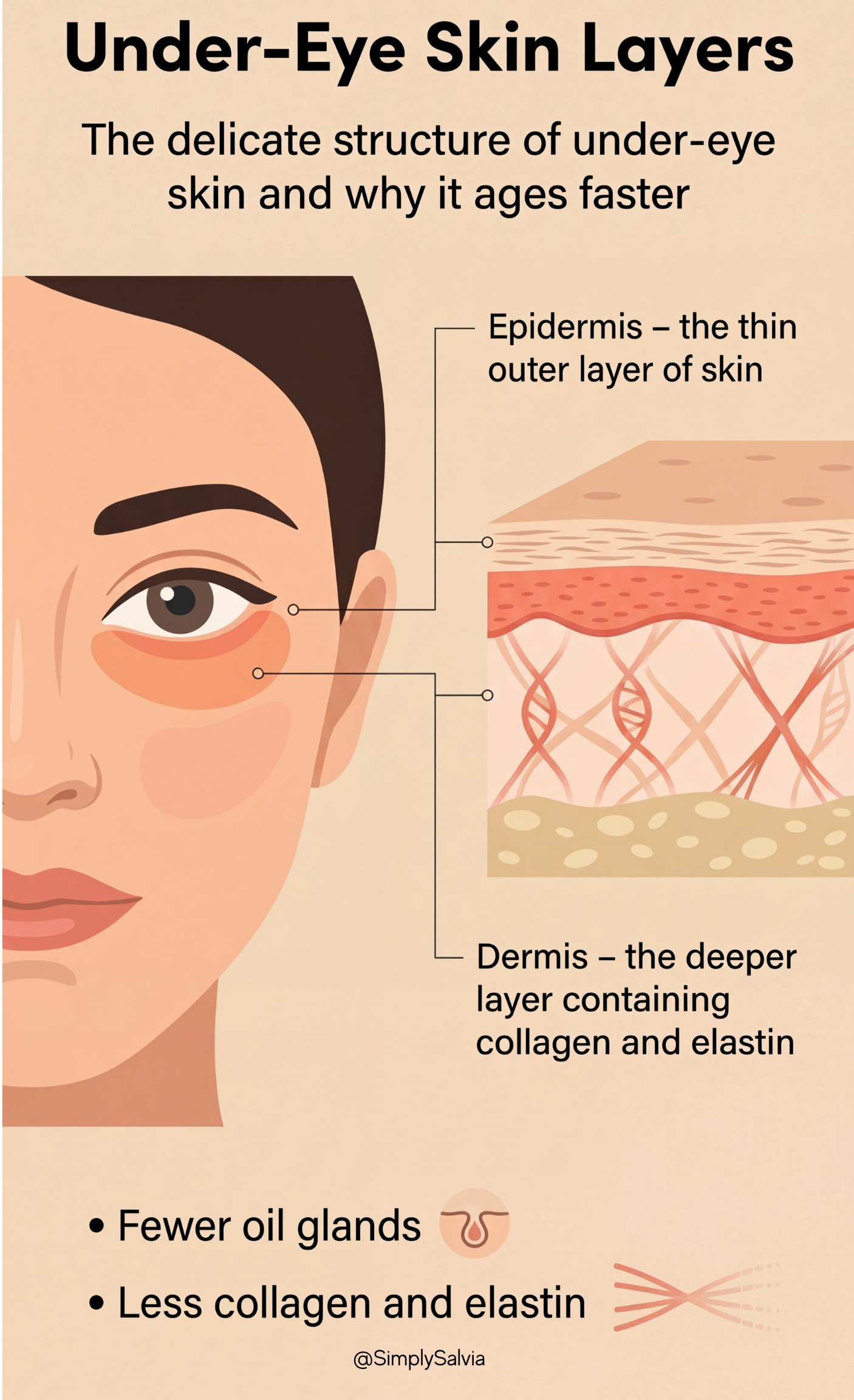
The skin under your eyes is the thinnest on your entire face.
We’re talking 0.5mm thick — less than half the thickness of skin anywhere else. It has almost no fat beneath it, minimal collagen support, and a dense network of tiny blood vessels running directly underneath the surface. That’s not a flaw in your biology. That’s just what that area is. But it means everything shows up there first — tiredness, stress, dehydration, allergies, inflammation, before it registers anywhere else on your face.
And yet somehow, when dark circles appear, the first instinct isn’t to ask why. It’s to reach for a product.
I was exactly that person.
Expensive eye creams. Viral serums. The ones with caffeine, the ones with peptides, the ones that promised results in fourteen days. Cucumber slices on a Sunday night. Cold spoons from the freezer. Tea bags. Everything went under my eyes and nothing really changed. Dark circles became the kind you can’t sleep off. Concealer stopped being enough, sometimes it made it worse, turning the area ashy and grey.
The routine became: colour corrector first, then concealer, every single morning. Skipping it meant instant panda eyes. And honestly, doing it every day gets old.
So I started asking the question I should have asked first.
Why do I have dark circles? Not in the vague, general sense. But specifically — what type are they, what’s driving them, and why has nothing I’ve tried actually worked?
Big surprise: dark circles aren’t one thing.
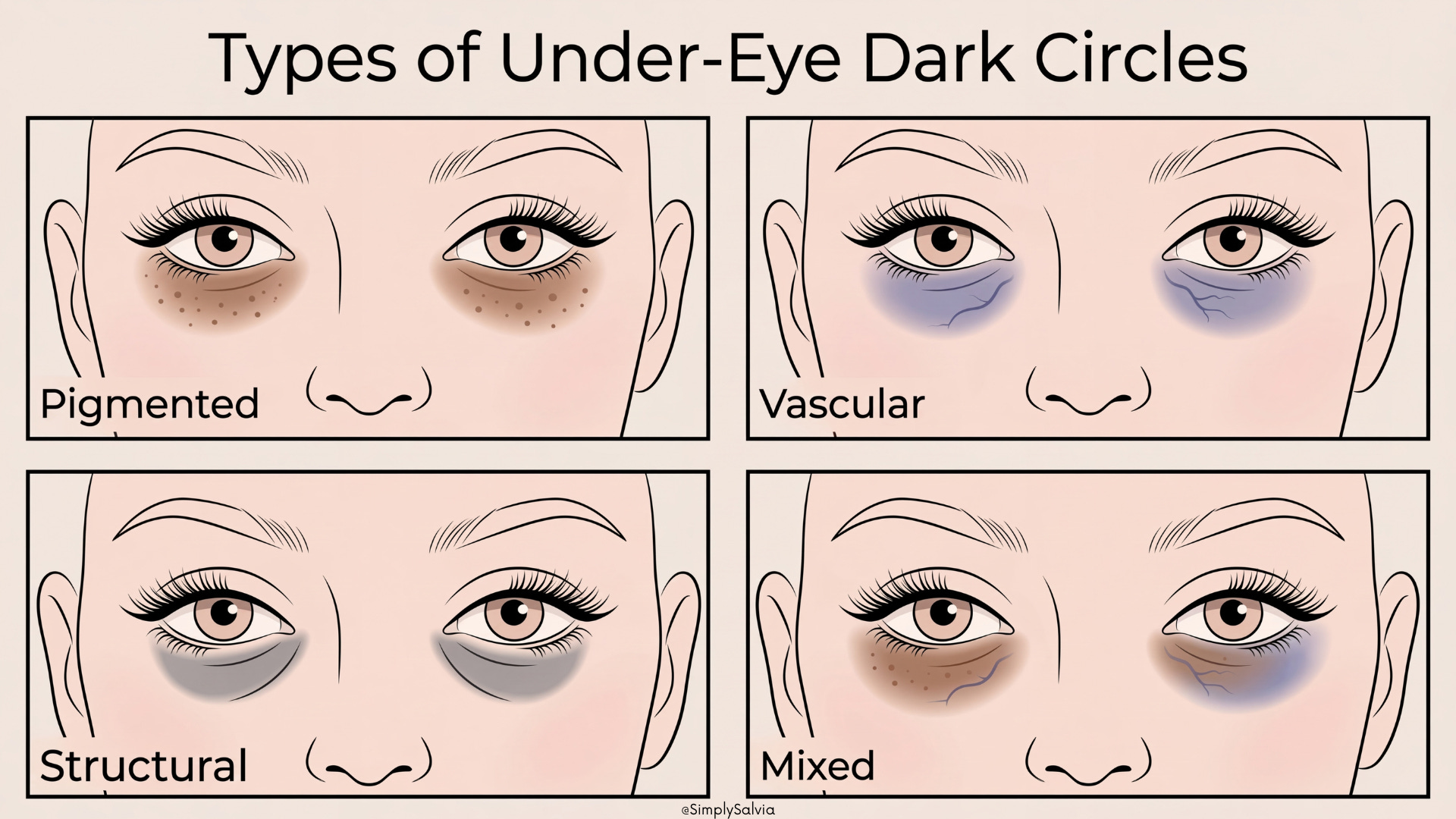
The term is used to describe at least four completely different problems that happen to look similar on the surface. Some are vascular; thin skin over blood vessels creates a bluish or purple tint that no amount of sleep fully fixes. Some are pigmentation-related; excess melanin deposits from inflammation, sun exposure, or genetics create a brownish shadow that lives in the skin itself. Some are structural; hollowing and volume loss create shadows that aren’t discolouration at all, they’re light and shadow from facial architecture. And some are puffiness-driven; fluid retention and morning swelling that cast a shadow downwards.
Each type has a completely different cause. And a different solution.
Which means that every eye cream, cold spoon, and concealer trick that wasn’t built for your specific type was always going to miss. Not because the products were bad but because they were aimed at a problem you might not even have had.
I went looking for the research. What I found is that the under-eye area responds to everything — not just what you put on it, but what you eat, how you sleep, whether your nasal passages are congested, how much cortisol is running through your system, and the specific anatomy you were born with.
Studies on periorbital hyperpigmentation, the clinical term for pigmented dark circles find it’s more common in darker skin tones and has a strong genetic component, but is also worsened by UV exposure and chronic rubbing. Caffeine has clinical backing for vascular dark circles and puffiness, it works by temporarily constricting blood vessels and reducing fluid accumulation but it does almost nothing for pigment-type darkness or structural hollowing. The viral cold spoon and ice roller content on TikTok? It works, briefly, for the same reason — vasoconstriction and lymphatic drainage but for a small subset of people with a specific type.
Knowing your type is the difference between a fix and a temporary mask.
This Short Dive is what I wish I’d had before I spent two years and significant money on products that were solving the wrong problem. It covers:
Why the under-eye area behaves differently from the rest of your skin — the anatomy that makes it so reactive
The four main types of dark circles and puffy eye bags, and how to identify which one you’re actually dealing with
The triggers that make each type worse — genetics, allergies, congestion, sleep quality, hydration, diet, inflammation, and facial structure
Practical strategies that match the actual cause, from targeted ingredients to lifestyle and nutrition approaches that show up in the research
Dark circles aren’t always cosmetic. Sometimes they’re reflecting something, about sleep, stress, allergies, or circulation. Sometimes they’re just your anatomy doing exactly what it’s designed to do. Either way, understanding the why changes what you do about it.
The one thing that was missing the whole time wasn’t a better eye cream.
It was knowing what I was actually trying to fix.
Table of Contents
The Different Types of Dark Circles and Puffy Eyes (And Which One You Have)
What Makes It Worse Day to Day: Daily Triggers You Can Control
What Actually Helps: Lifestyle & Nutrition Strategies That Work
When to See a Doctor: Signs You Should Get Professional Help
Hope you enjoy reading and learning with me, Simply Salvia
PS: We also have a subscriber-only group chat where members discuss the deep dives, share their sleep journeys, and ask me questions directly. See you there.
Disclaimer: The information and opinions expressed above are current as of the date of this post and are subject to change without notice. Materials referenced above are provided for educational and informational purposes only. None of the above constitutes medical advice, a diagnosis, a treatment recommendation, or a substitute for consultation with a qualified healthcare professional. Always seek the guidance of your doctor or another qualified health provider with any questions you may have regarding a medical condition or sleep disorder.
Short Dive below ↓
Chapter 1: Why Your Eyes Look Tired (Even When You're Not)
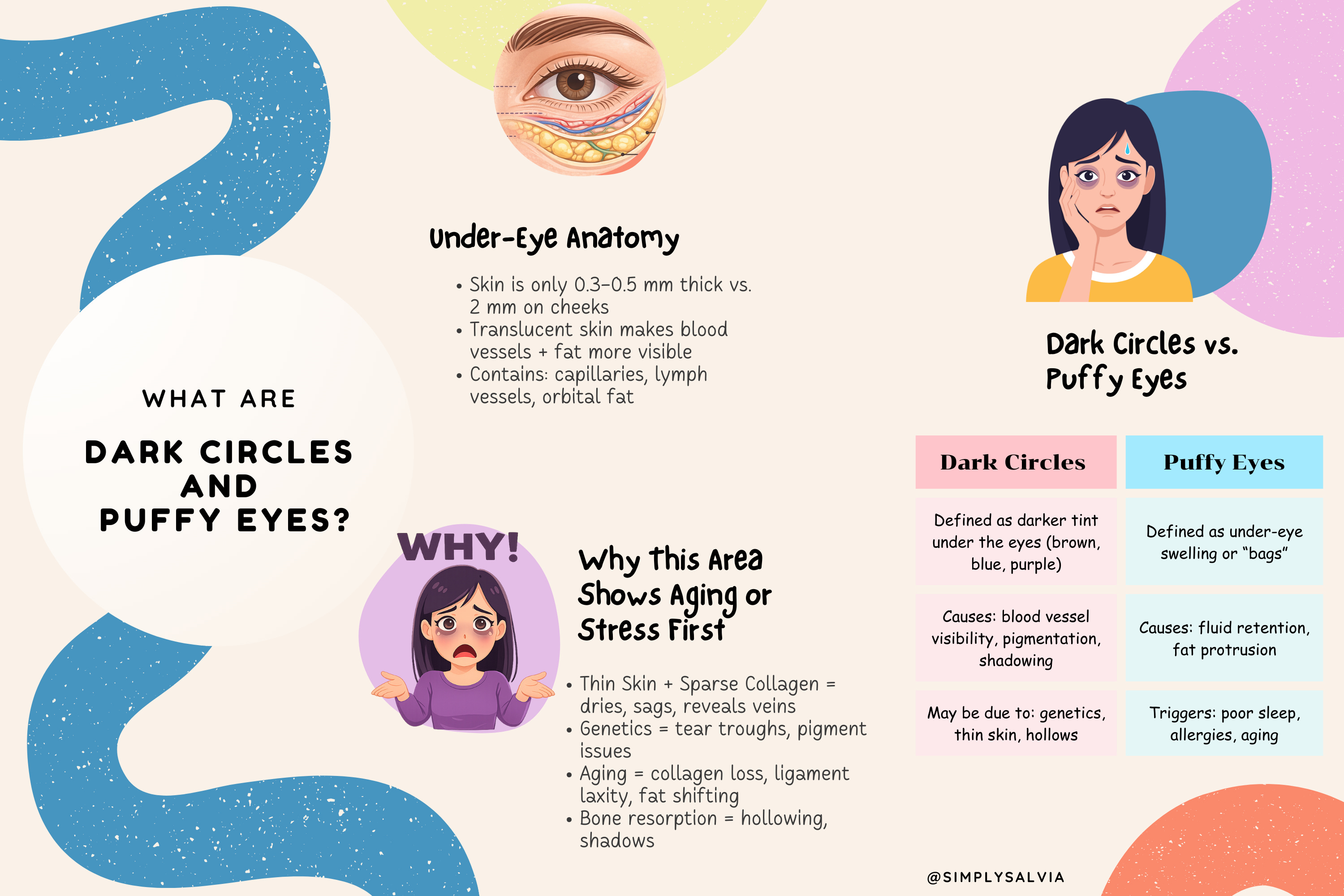
The skin under your eyes is the thinnest on your entire body — about 0.3–0.5 mm thick compared to 2mm on the rest of your face. That means blood vessels, pigment changes, fluid buildup, and even bone structure show through more easily here than anywhere else.
Add to that: this area has fewer oil glands, loses collagen faster, and is in constant motion (you blink 15,000–20,000 times a day). It’s basically set up to reveal stress, dehydration, allergies, and fatigue before anywhere else does.
Dark Circles
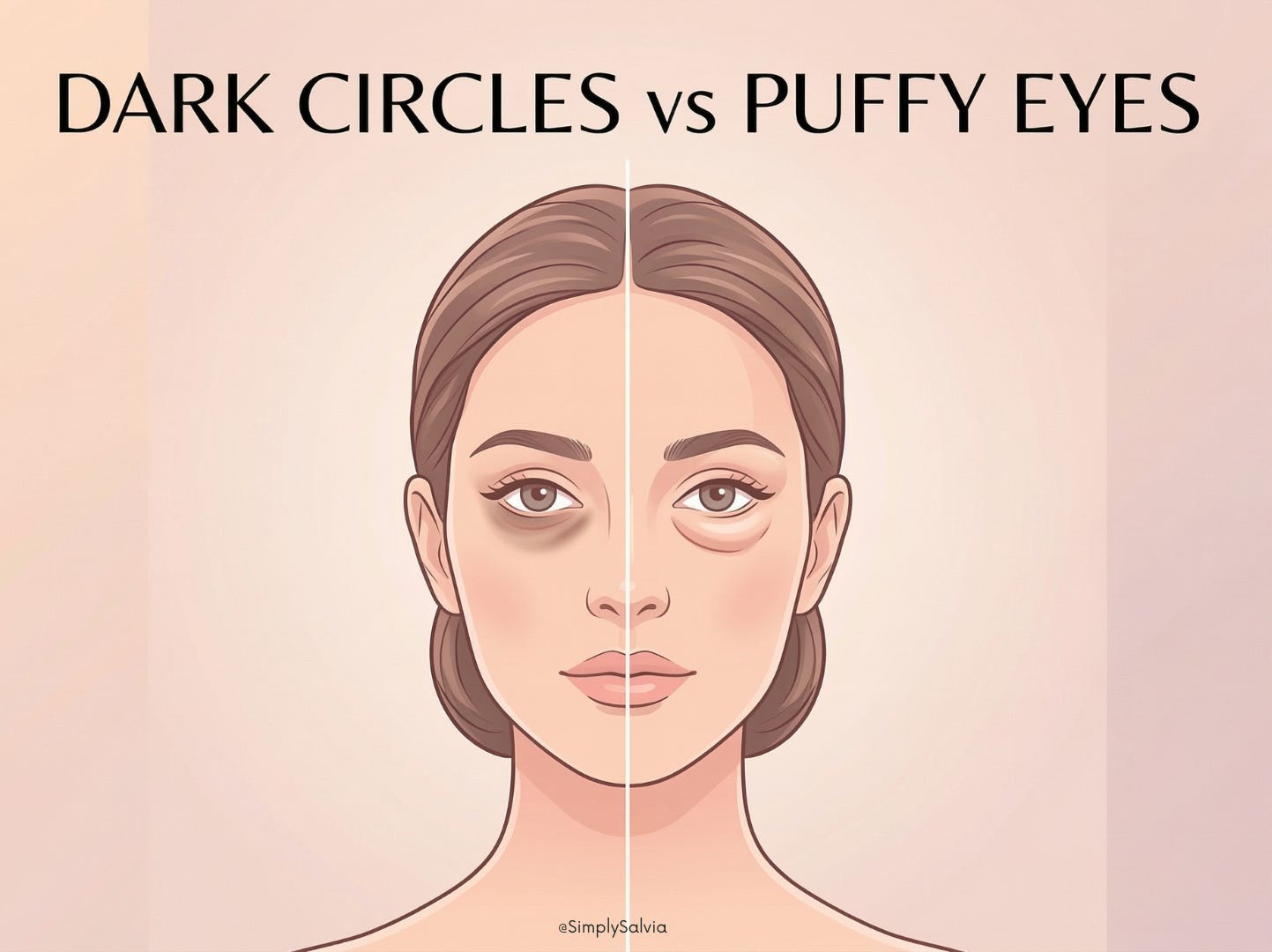
Dark circles are simply areas under the eyes that appear darker than the surrounding skin. They can look brown, bluish, or purplish, depending on what’s causing them (more on types later).
Importantly, the skin isn’t actually bruised. The under-eye area is extremely thin, so what you’re often seeing is light reflecting off blood vessels underneath the skin or extra pigment (melanin) in that area. Because the skin here is so delicate, even small changes beneath the surface can become very visible.
Puffy Eyes
Puffy eyes are a bit different. Instead of a color change, they involve swelling under the lower eyelid, which can create the appearance of bags.
This swelling usually happens because of fluid buildup in the area or because the natural fat pads under the eyes become more noticeable. Things like poor sleep, allergies, salt intake, or genetics can all contribute.
It’s also very common to experience both dark circles and puffiness at the same time. For example, after a short night of sleep, you might wake up with slightly swollen under-eyes and a darker tint underneath. The two issues often overlap, which is why they’re frequently talked about together.
Why is the Eye Area so Prone to these Issues?
The skin around your eyes is very different from the rest of your face, and unfortunately, that makes it much more prone to problems like dark circles and puffiness.
First, the skin here is extremely thin. In fact, it’s one of the thinnest areas of skin on the entire body. It also contains less collagen and elastin, the proteins that normally keep skin firm and resilient. On top of that, the under-eye area has fewer oil glands, which means it dries out more easily and doesn’t have the same natural protection as other parts of your face.
Because this skin is so delicate, the structures underneath it become much easier to see. Right below the surface sits the orbicularis oculi muscle, the circular muscle that helps you blink and squint, along with small blood vessels and supportive ligaments. Over time, the fat and bone that normally support this area gradually decrease, which can make the under-eye region look more hollow, shadowed, or tired. That’s why the eye area often shows signs of stress or aging earlier than the rest of the face.
Genetics also play a surprisingly big role. Some people naturally have deep-set eyes or a more pronounced tear trough — the groove that runs from the inner corner of the eye down toward the cheek. When light hits this groove, it can create a shadow that looks like a dark circle, even if the skin itself is perfectly healthy. Others may inherit thinner skin, stronger pigmentation under the eyes, or a tendency to develop under-eye bags. So if dark circles run in your family, you might be more likely to experience them too.
Aging adds another layer to the picture. As the years pass, the skin slowly loses collagen and becomes even thinner and more translucent. This makes the tiny blood vessels underneath more visible, which can give the under-eye area a bluish or purplish tint. At the same time, fat in the cheeks and around the eyes gradually shifts or shrinks, creating hollows that cast shadows. In some cases, the fat under the eyes can also push forward, forming the familiar under-eye “bags.”
All of these changes; thinner skin, shifting fat, and subtle changes in bone structure, combine to make the under-eye area one of the first places where fatigue, stress, and aging tend to show up.
In summary, dark circles are usually a pigmentation or visibility issue (seeing what’s beneath the skin), and puffy eyes are a swelling or structural issue. But they often overlap. A night of poor sleep might give you both: dilated blood vessels (dark bluish circles) and fluid retention (morning puffiness). Conversely, someone could have chronic bags from fat pads but no discoloration, or brown pigmentation but no swelling. Understanding exactly what you’re seeing under your eyes, whether it’s true pigmentation, a shadow from a hollow, or pooled fluid is the first step in addressing it. In the next chapter, I’ll delve into the many causes behind these pesky under-eye changes.
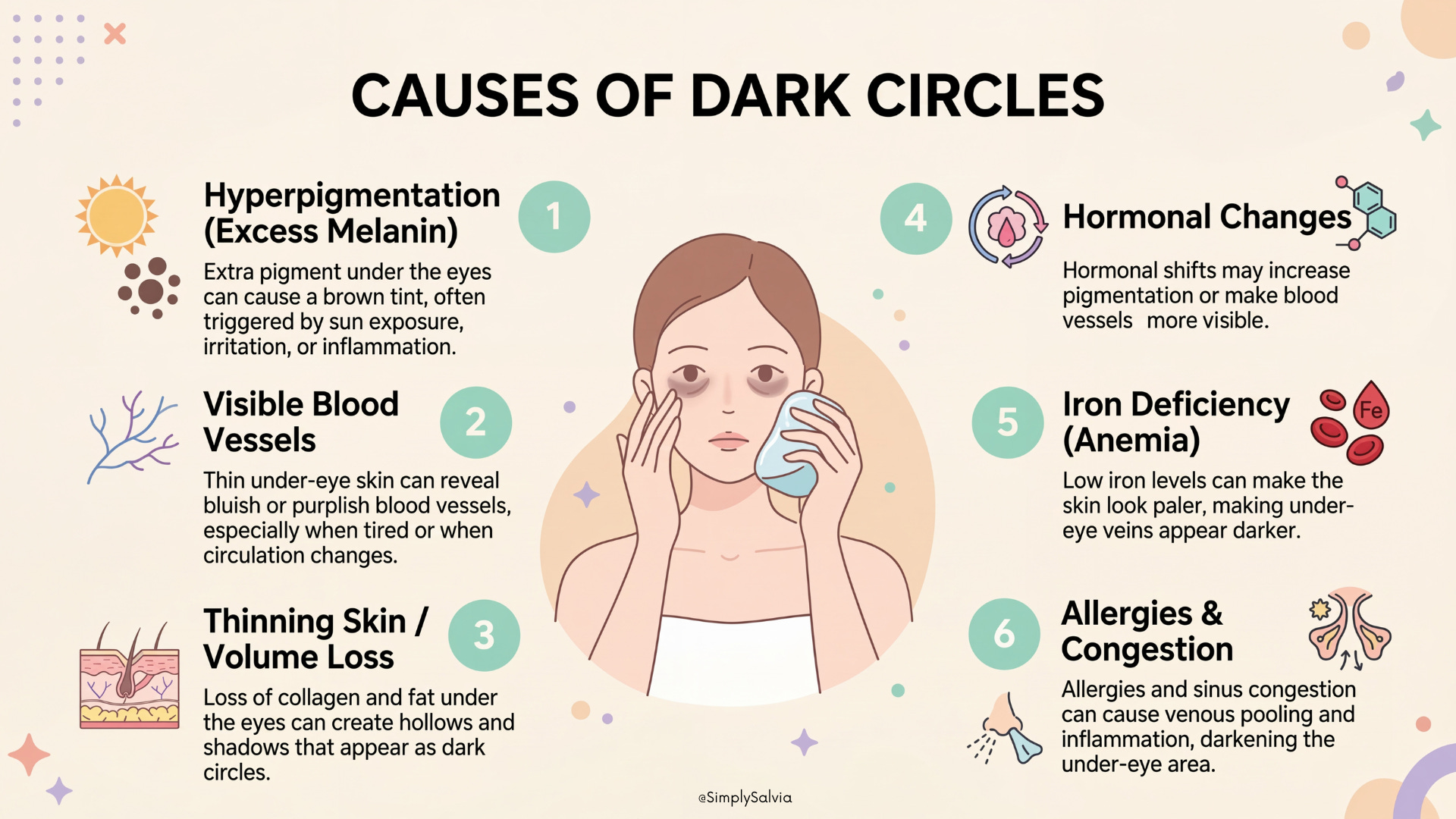
Chapter 2: The 6 Real Reasons Dark Circles Happen
Both dark circles and puffy eyes have a variety of causes, often overlapping. Let’s break them down into two categories (dark circle causes vs. puffiness causes), and then note the common triggers they share.
Causes of Dark Circles:
Hyperpigmentation (Excess Melanin)
Sometimes the skin under the eyes actually has more pigment. This can happen from chronic sun exposure (UV rays trigger melanin production), hormonal changes, or even inflammation. For example, years of unprotected sun can lead to a persistent brown tint around the eyes. People with medium to darker skin tones might be more prone to this type of brown hyperpigmentation. Rubbing or irritation (such as from eczema or allergies) can also deposit extra pigment as the skin heals, a form of post-inflammatory hyperpigmentation.
Visible Blood Vessels / Vascular Pooling
In many cases, dark circles are “blue” or “purple” because of blood under the skin. Remember that under-eye skin is thin and translucent so the blood in capillaries can show through with a bluish hue. When you’re tired or haven’t slept, your skin can look paler and blood vessels dilate, making the under-eye area look darker. Nasal congestion from allergies can also back up the veins around the eyes, causing that purplish tone often called “allergic shiners.” In women, hormonal shifts during the menstrual cycle can make vessels more pronounced (some notice their circles look worse during their period). Any condition that leads to blood pooling or poor circulation under the eyes can contribute to darker circles.
Thinning Skin or Volume Loss
Sometimes what we perceive as a “dark circle” is actually a hollow or indentation casting a shadow. As we age, we lose fat and collagen under the eyes, and the tear trough (the groove below lower eyelid) becomes more sunken. This depression creates a shadow that can look like a dark semicircle under the eye. Additionally, as skin gets thinner, the underlying muscle (which is a dark reddish color) and blood vessels show through more easily, making the area look darker. So, thinning skin + hollow = a structural dark circle.
Hormonal Changes
Beyond monthly cycle effects, other hormonal shifts might influence the under-eye area. For instance, pregnancy can cause skin changes and sometimes a condition called melasma (though melasma typically appears on the cheeks/forehead, some women notice darkening around eyes too). Thyroid issues, which I’ll discuss in Chapter 3, can also indirectly affect skin pigmentation and fluid balance. High levels of stress hormones (like cortisol) over time may break down collagen, thin the skin, and worsen dark circles. While hormones are rarely the sole cause, they can exacerbate underlying tendencies (like making vessels more visible or triggering pigment production).
Iron Deficiency (Anemia)
Iron-deficiency anemia is a common nutritional issue that can show through your face. When you’re anemic, you have fewer red blood cells or hemoglobin, so your blood carries less oxygen. This often makes one’s complexion more pale. Paler skin contrasts more starkly with the bluish veins under the eyes, making dark circles more apparent. Additionally, anemia can leave you feeling tired and under-oxygenated, which might indirectly worsen the appearance of under-eye circles. In one study of people with chronic dark circles, about half had iron deficiency anemia, suggesting a significant link. Treating the anemia (with diet or supplements) often improves the darkness if iron was a factor.
Allergies & Congestion
Allergic rhinitis, sinus issues, or chronic rubbing from irritation cause venous congestion and inflammation. Histamine dilates blood vessels, which darkens the under-eye area. If you also rub your eyes a lot, that mechanical friction worsens pigmentation over time.
Causes of Puffy Eyes:
Fluid Retention
Ever wake up with a puffy face after a salty meal or a good cry? The thin tissue around the eyes easily accumulates fluid. Eating a high-sodium diet causes the body to retain water, which can pool under the eyes overnight, leading to that “morning puffiness.” Dehydration can paradoxically cause puffiness too – when you don’t drink enough water, your body holds on to fluids, and eyes can look swollen. Poor sleep is another factor: lack of sleep can disrupt the balance of hormones that regulate water in the body, and you might see puffier eyes (and often darker circles) after insomnia. Sleeping position matters as well: if you sleep flat on your back or stomach, fluid can collect under the eyes due to gravity. That’s why elevating your head can help (I’ll discuss in remedies).
Allergies & Inflammation
Allergies (like hay fever, dust allergies, pet dander allergy) often cause inflammation in the delicate tissues around the eyes. The term “allergic shiners” refers to the dark, puffy under-eyes of someone with chronic nasal allergies – blood pools and fluid leaks due to constant inflammation and rubbing. Histamine release can make blood vessels leaky, so fluid seeps into the soft tissue, causing swelling. Likewise, any irritation of the eyes (smoke, strong fragrances, crying emotional tears) can lead to inflammation and puffiness. People with sinus infections or sinus congestion often notice puffy lids and under-eyes because of fluid backup.
Poor Lymphatic Drainage
The lymphatic system is like the body’s drainage network for fluids. The under-eye area has lymphatic vessels that usually carry away excess interstitial fluid. If you’re sedentary or if the lymph circulation is sluggish (could be due to genetics or aging), fluid might not drain efficiently, accumulating as under-eye puffiness. Sometimes gently massaging the area can stimulate lymph flow and reduce the swelling (I’ll cover techniques in Chapter 7). In the morning, lymph drainage is naturally slower (since you’ve been lying down not moving all night), which is why puffiness is worst when you wake up.
Eye Rubbing, Alcohol, and Other Lifestyle Factors
Rubbing your eyes frequently (due to tiredness or itchiness) can both deposit pigment (causing darkness) and cause irritation and fluid buildup (causing puffiness). It’s a double whammy – the mechanical stress can inflame the area and minor capillaries can break. Alcohol consumption often leads to puffy eyes because alcohol causes blood vessels to expand and also dehydrates you, prompting the body to hold onto water. Ever notice how your face can look bloated after a night of heavy drinking? The eye area is no exception. Additionally, alcohol and lack of sleep often go hand-in-hand, compounding the effect. Certain medications (like high blood pressure meds or corticosteroids) can cause water retention as well, which might show up around the eyes.
Structural or Fat-Related Puffiness
Not all “bags” are fluid though some are due to fat. We all have a little fat pad under each eye (which helps cushion the eyeball). With age, the membrane that holds that fat in place can weaken, and the fat prolapses or pushes forward, creating a persistent bulge under the eye. This is often genetic, some people in their 20s start to get noticeable fat bulges, while others have flat under-eyes into old age. This kind of puffiness doesn’t fluctuate much day to day (because it’s actual tissue, not fluid). It’s often more pronounced after sleeping or when you’re swollen, but even on good days you might see a slight bag. Unfortunately, lifestyle changes alone may not remove fat-based eye bags (those sometimes require medical treatments like fillers or surgery), but you can definitely minimize any additional swelling on top of them. Another structural cause is lax skin – as skin and muscle lose tone, they sag, creating a pouch that can look puffy. In summary, if your under-eye “bags” are constant and don’t go away with lifestyle changes, protruding fat pads could be to blame.
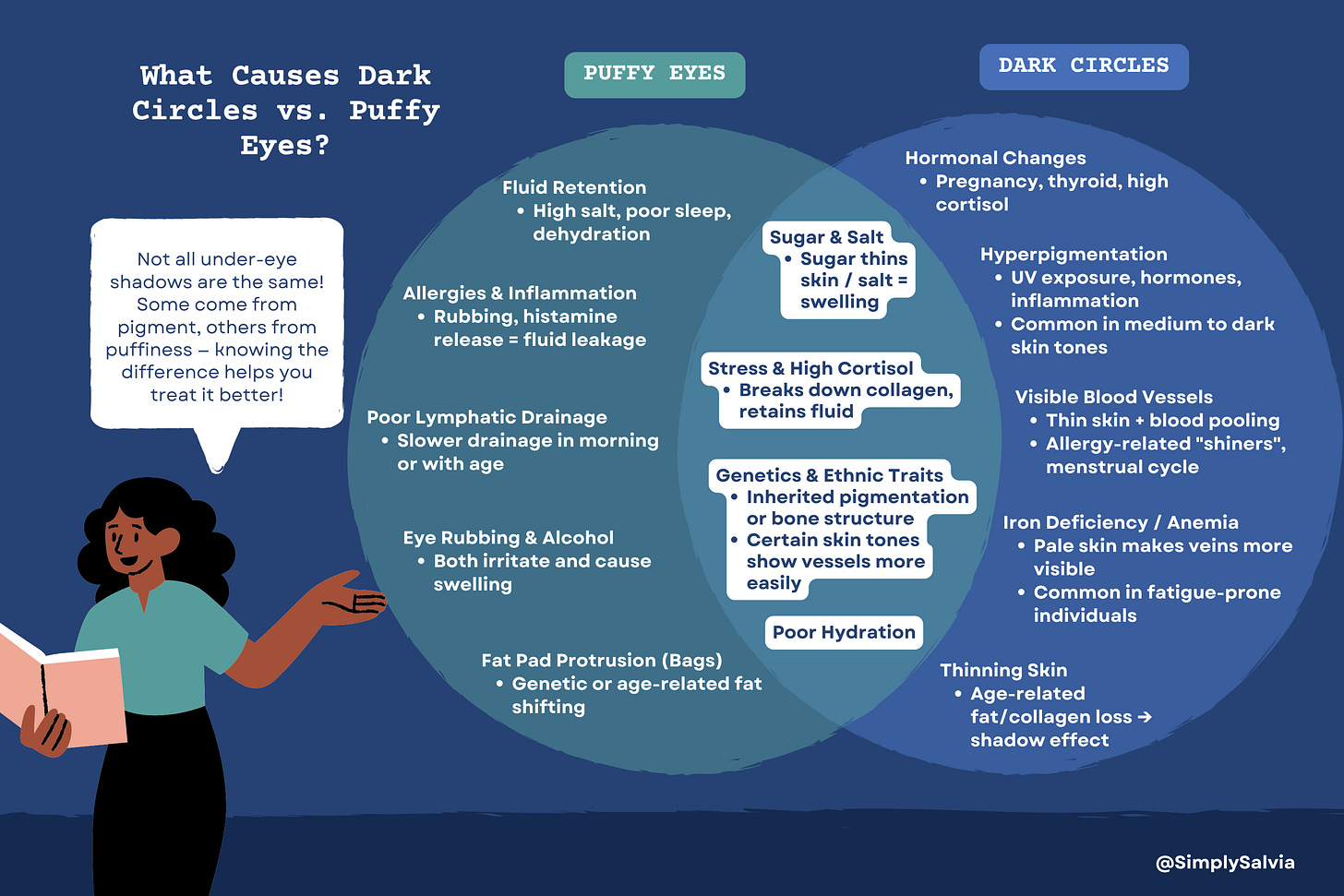
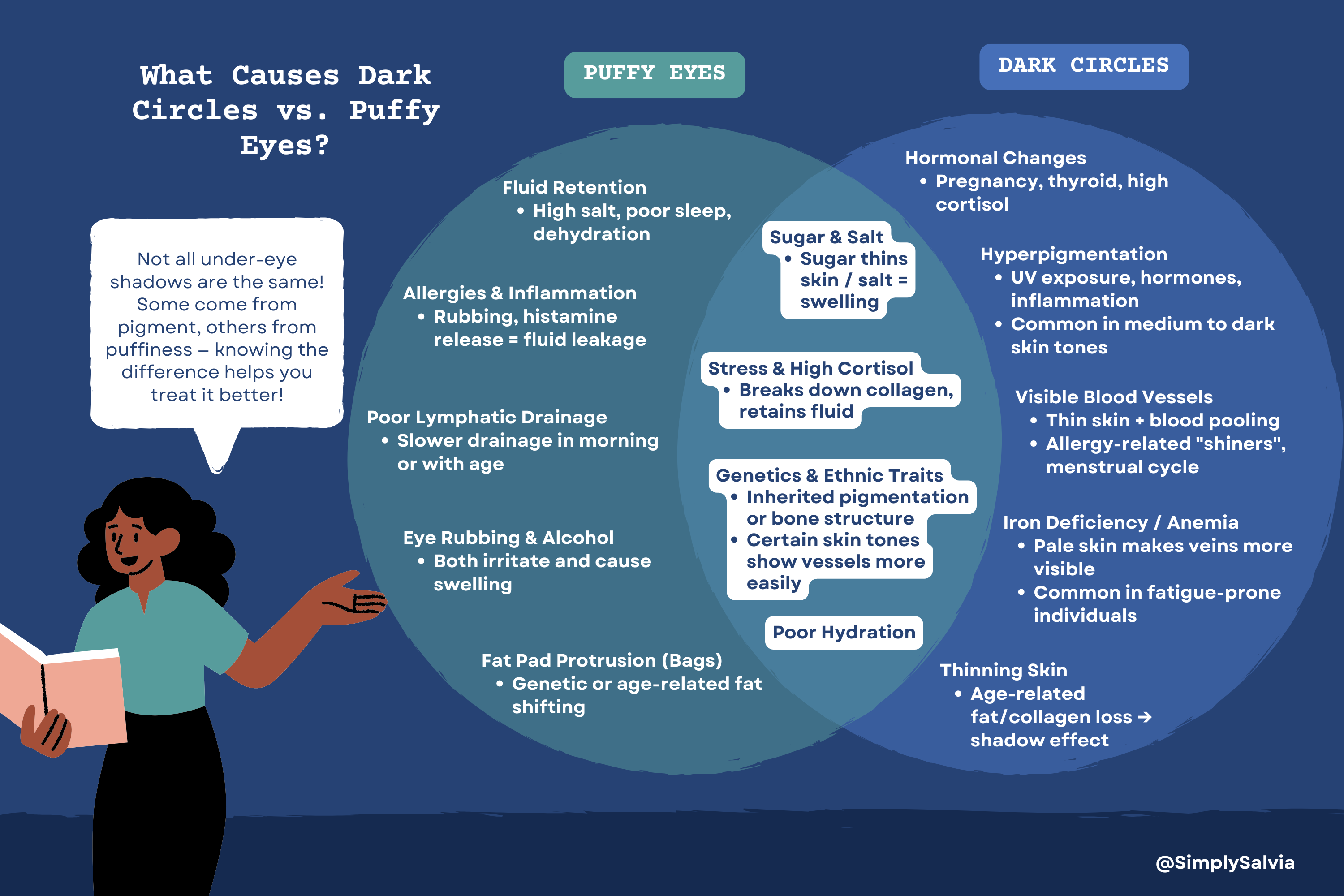
Shared Triggers
Stress and High Cortisol
Chronic stress doesn’t just wear you out; it visibly affects your face. High cortisol (the stress hormone) over time can break down collagen, thinning the under-eye skin (making dark circles worse) and can also promote fluid retention in weird places. Stress often disturbs sleep quality as well, which leads to both darkness and swelling. Dermatologists note that people under high stress often experience more under-eye bags. Managing stress can thus indirectly improve your eye appearance by normalizing cortisol levels and improving sleep (and even reducing habits like eye rubbing).
Poor Hydration
Not drinking enough water during the day can lead to dull, sunken eyes (your body pulls water from the skin and it can make eyes look more hollow with more prominent dark vessels). Then, as mentioned, dehydration prompts your body to retain whatever fluid it can, which may collect under eyes leading to puffiness. It’s a bit of a paradox: both dehydration and over-hydration can cause puffiness but in most cases, staying adequately hydrated helps the body maintain proper fluid balance so you don’t have extremes. Proper hydration also plumps up skin a bit, which can make the area look less shadowed.
Excess Sugar and Salt in Diet
A diet high in refined sugar can increase systemic inflammation and contribute to skin glycation (damage to collagen fibers), potentially accelerating thinning of the skin and wrinkles. This could make dark circles more pronounced over time (since the support structure of the skin is weaker). Salt, as discussed, causes water retention, a single salty meal can give you noticeable under-eye edema the next morning. Also, heavy alcohol (which often comes with sugary mixers or salty snacks) is a common culprit for next-day puffiness. Keeping a balanced diet with plenty of whole foods helps; I’ll talk about specific nutrients for eye health in the nutrition chapter.
Genetics and Ethnic Predisposition
Sometimes, it really is in your genes. If your family tends to have under-eye circles or bags, you may notice them early in life. People of certain ethnic backgrounds can have more pigment around the eyes (for example, individuals of South Asian or Middle Eastern descent often report periorbital hyperpigmentation as a common concern). This doesn’t mean everyone in those groups will have it, but the predisposition is higher. Conversely, very fair-skinned people might not have brown pigment but may show blue circles easily because their skin is so light and translucent (the blood vessels show through). The shape of your face and bone structure (often determined by ethnicity) also affects shadowing. For instance, deep-set eyes (common in some Caucasian skull structures) can cast shadows, whereas some Asian ethnicities have more shallow orbits but may have a fold of skin (epicanthal fold) that creates a different under-eye appearance. Genetics also influence things like allergies, anemia, and thyroid function – conditions that can underlie circles or puffiness. So, some of it you can thank your parents for, but even genetic tendencies can be mitigated with the right care.
As you can tell, there’s a laundry list of potential causes. Often, a person’s dark circles or puffy eyes aren’t due to just one thing but a mix – say, a genetic propensity plus poor sleep and allergies. The good news is that many of these factors are within your control (sleep, diet, allergies can be treated, etc.). In the next chapter, I’ll discuss when under-eye issues might indicate a bigger health problem that needs medical attention. Otherwise, if you identify with some of the causes above, keep them in mind and I will address natural solutions for many of them in later chapters.
Chapter 3: The Different Types of Dark Circles and Puffy Eyes (And Which One You Have)
Not all dark circles are created equal. They come in different “shades” and causes. Similarly, there are various types of puffiness. Classifying your specific type can help you target the right solution. Here I break down the common types:
Types of Dark Circles:
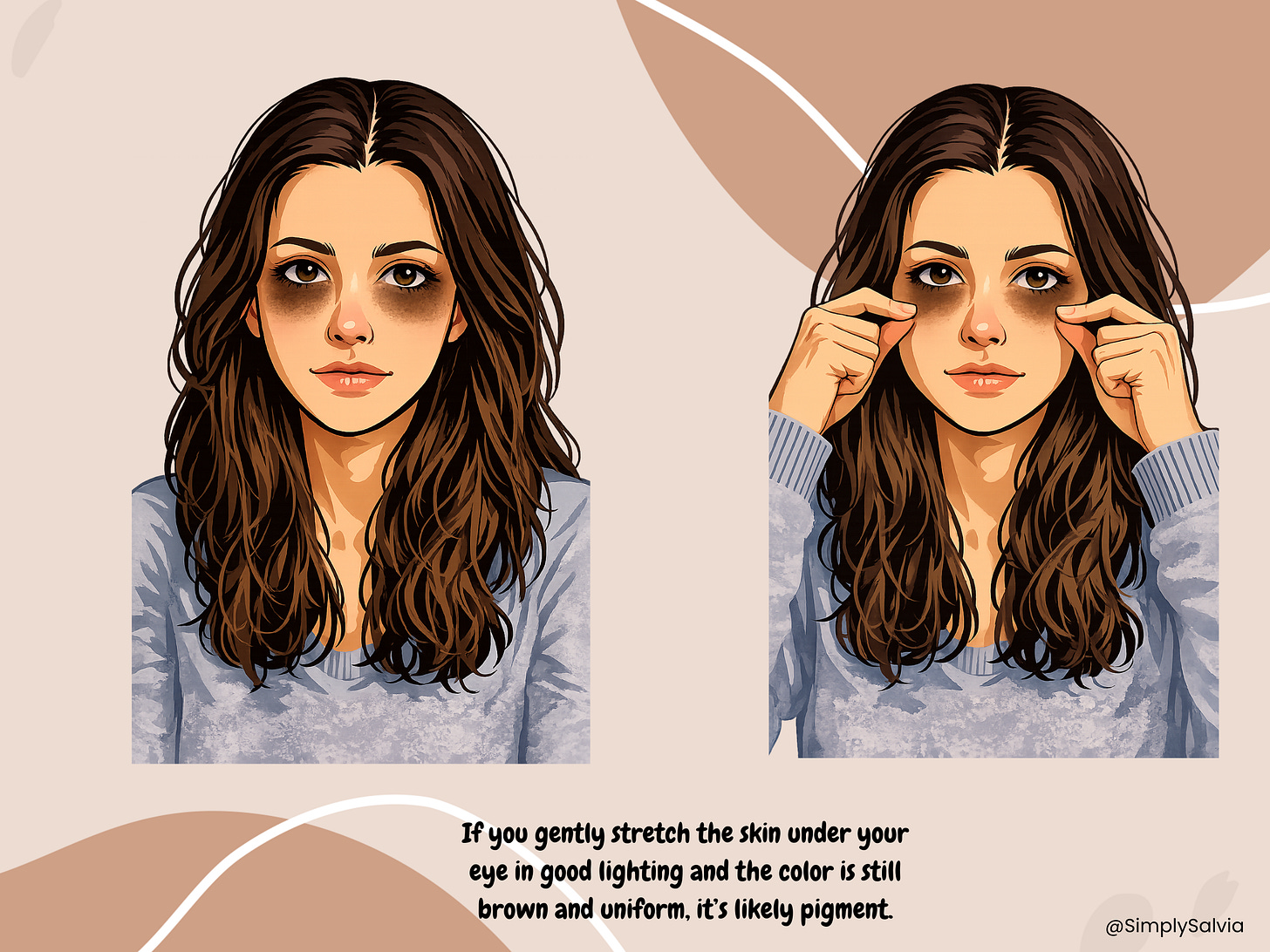
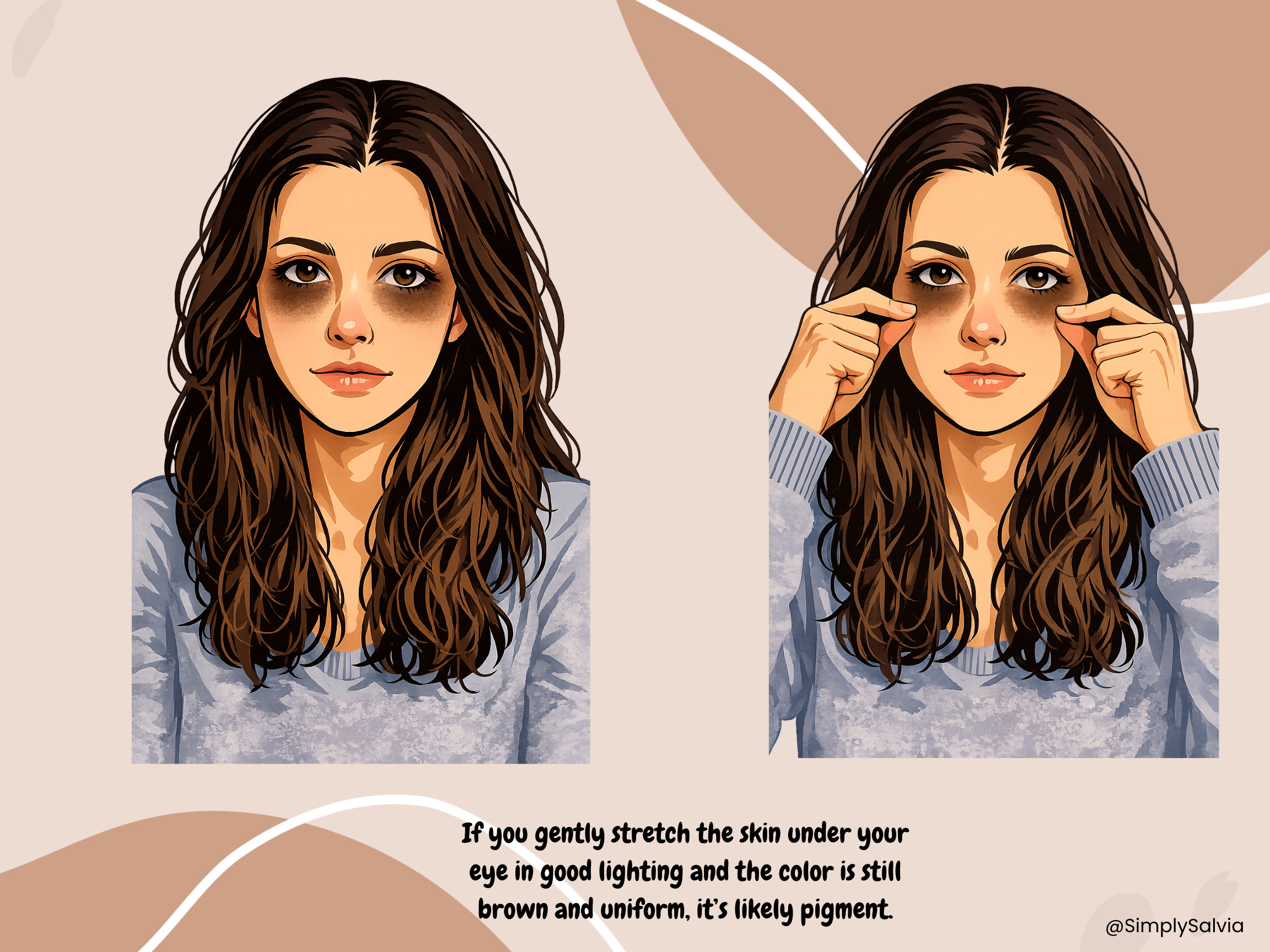
Pigmented Dark Circles (Brownish). These are caused by actual pigment in the skin. They appear as a brown or even gray-brown color under the eyes. You’ll notice the area itself has darker skin tone than the rest of your face. Common in people with darker skin tones, pigmented circles result from excess melanin. Causes include genetics, chronic sun exposure, hormonal changes (e.g. pregnancy or birth control melasma), and post-inflammatory hyperpigmentation (from eczema, allergic irritation, or even years of rubbing). If you gently stretch the skin under your eye in good lighting and the color is still brown and uniform, it’s likely pigment. Under a Wood’s lamp (UV light used by dermatologists), pigmented circles often become more apparent if the pigment is in the epidermis. Natural remedies aimed at lightening (like vitamin C, licorice, turmeric, etc.) can help these, as can sun protection to prevent them from deepening.
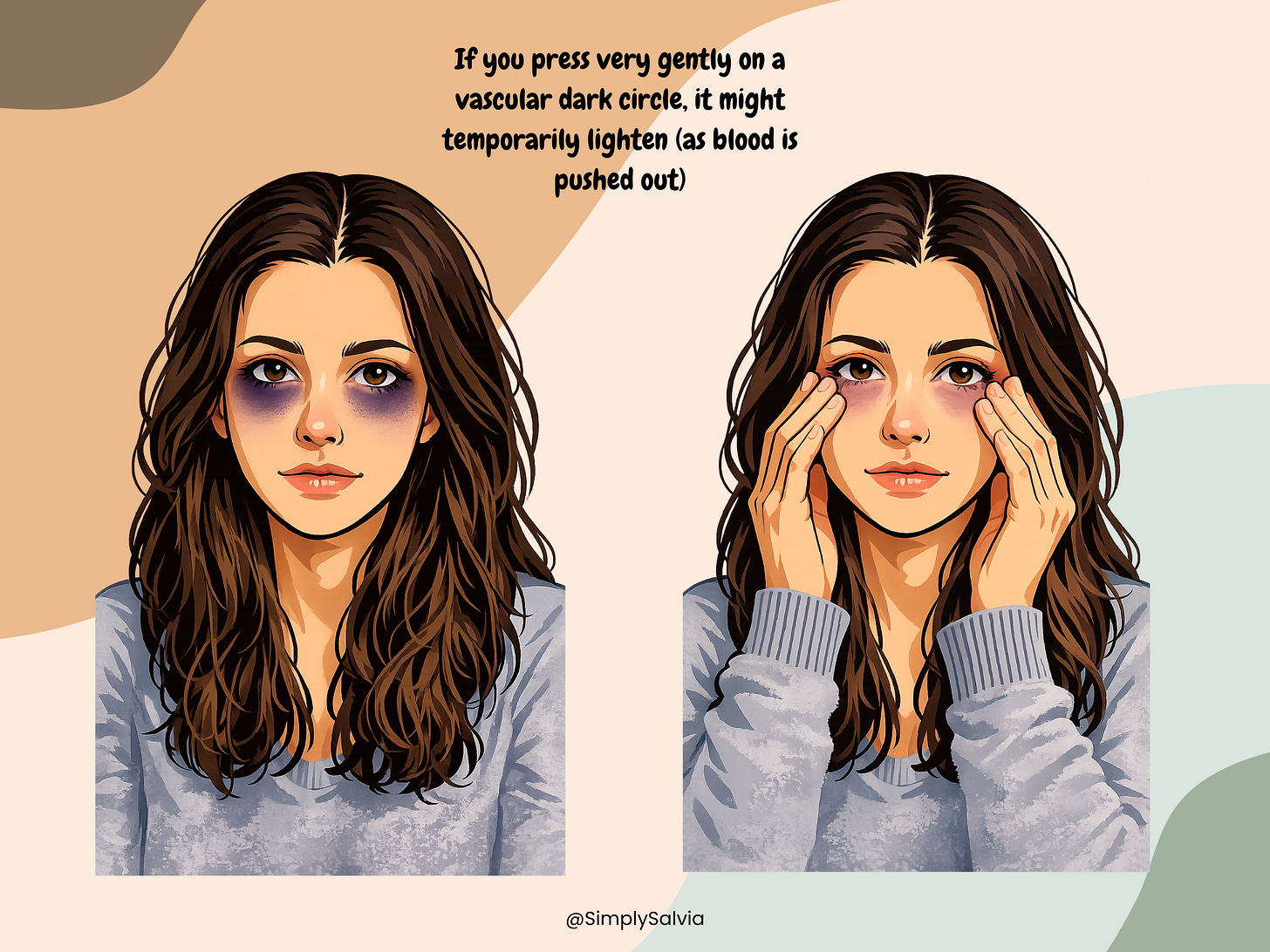
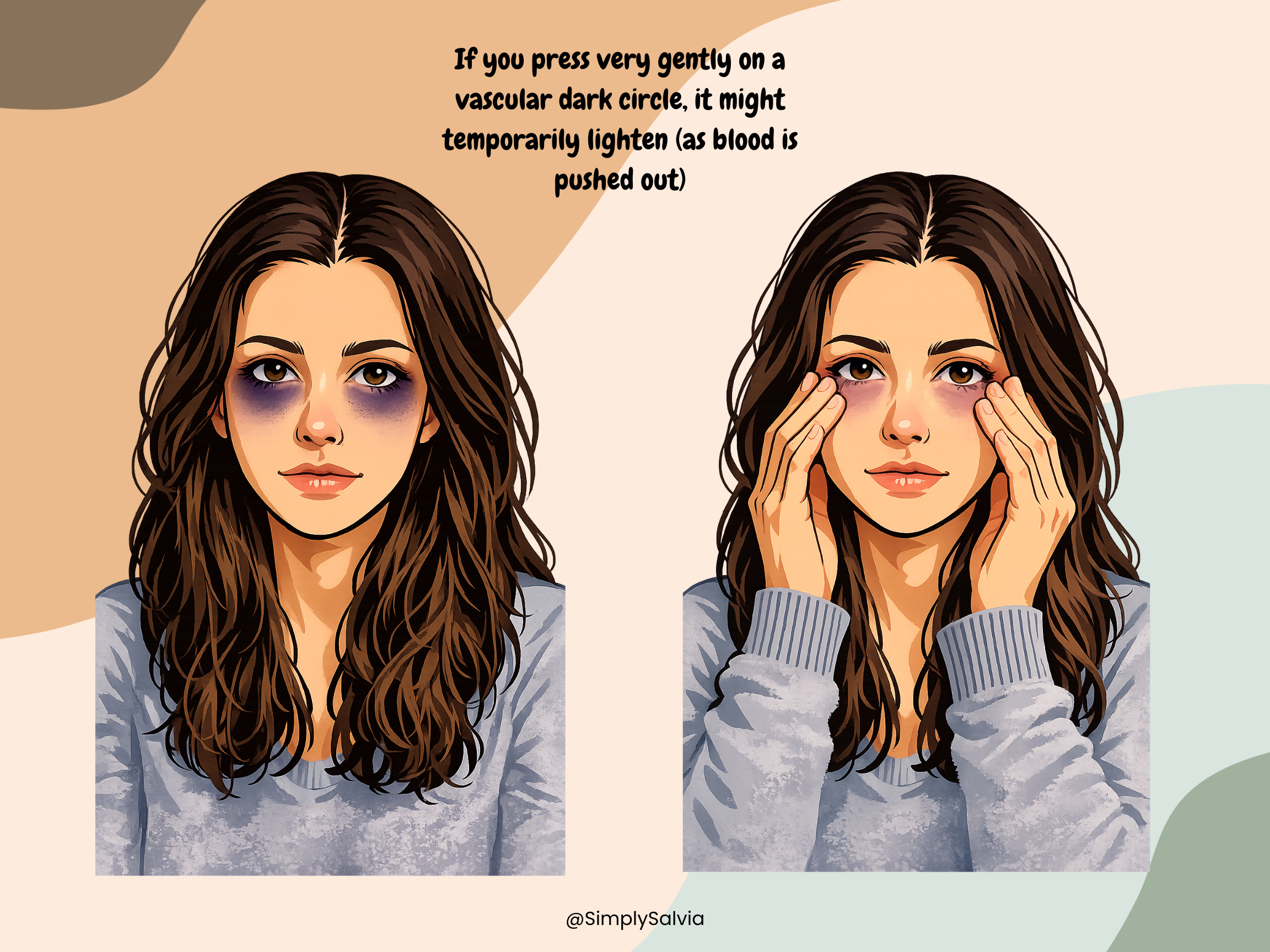
Vascular Dark Circles (Blue/Purple). These circles have a blue, purple, or even pink hue, and often the color may look worse in certain lighting or after certain activities (like after crying or upon waking). They are due to blood vessels and blood under the skin. Because under-eye skin is so thin, the deoxygenated blood (which is bluish) in the veins can show through. If you press very gently on a vascular dark circle, it might temporarily lighten (as blood is pushed out) don’t do this too hard though! Vascular circles can also become more noticeable during menstruation or if you’re lying down (more blood pooling). People with allergies often have vascular circles. If your circles improve significantly with cold compresses or worsen after a salty meal (both affecting blood vessels), the vascular component is likely. These are the ones that respond well to things like cold tea bags or caffeine eye creams (which constrict blood vessels). When the lower eyelid skin is stretched, a purely vascular circle might spread out and look lighter (whereas a pigmented one remains the same color).
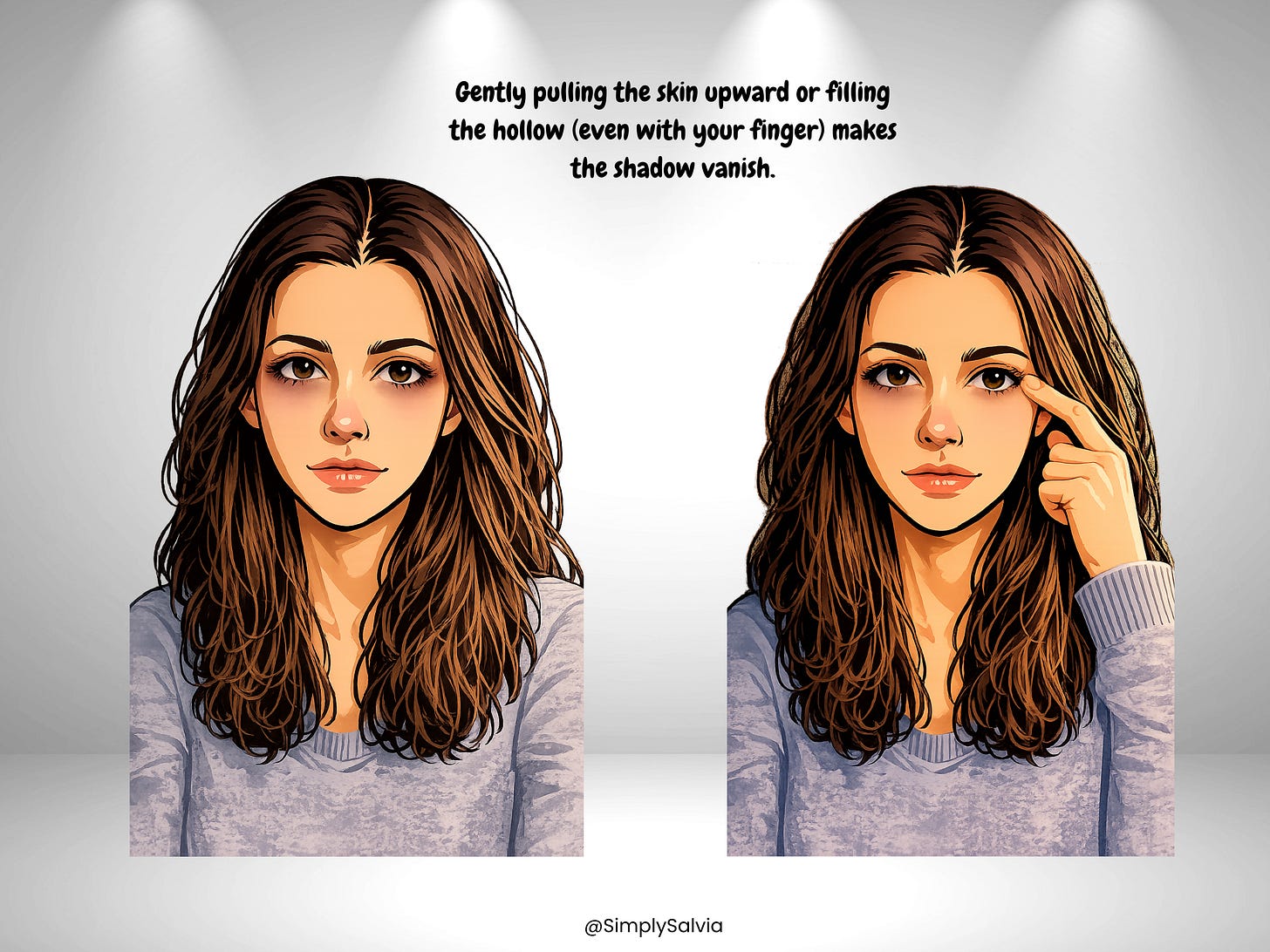
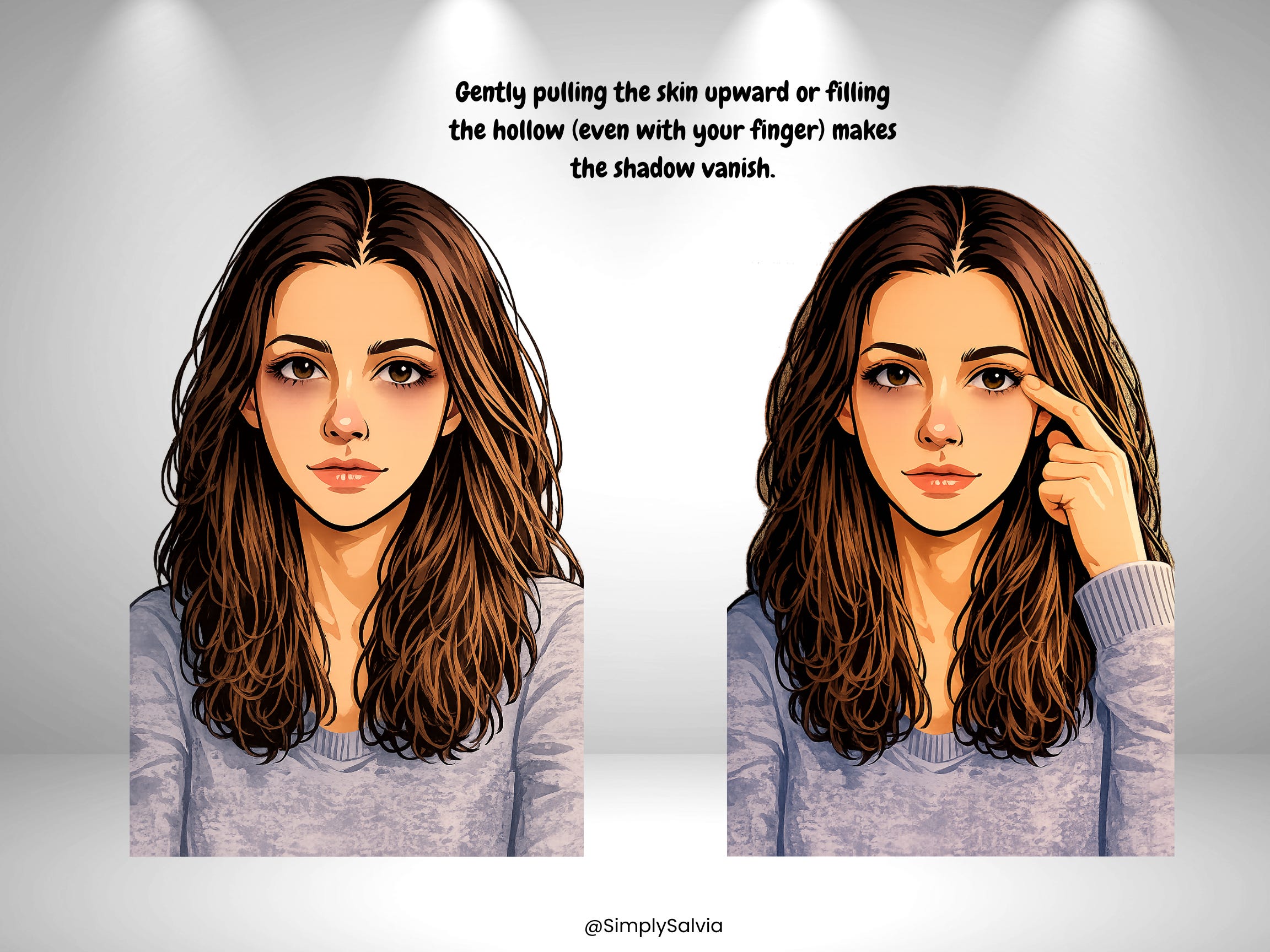
Structural Dark Circles (Shadow-based). Here, the dark “circle” is not from color in the skin at all, but from a shadow. This happens due to the contour of your face. The classic example is a deep tear trough or hollowness under the eye – the inward depression causes a shadow under the lower eyelid, giving the illusion of a dark half-circle. Another example is eye bags that create a shadow beneath them (the bulge of a bag can cast darkness below it). Structural circles are usually worse on one side or at certain angles of lighting. If you tilt your head or change the light and the darkness disappears or moves, that’s a clue it’s a shadow. Another test: gently pulling the skin upward or filling the hollow (even with your finger) makes the shadow vanish. In young people, structural circles can be due to genetics (deep-set eyes). In older people, it’s often due to volume loss, atrophy of fat and thinning skin with age leads to that sunken look. Treatments here aim to change the contour e.g., filler injections to plump the hollow, or simply using creams that plump/hydrate can give a temporary improvement. In makeup terms, this is where a concealer (which literally “conceals” the shadow by reflecting light) helps a lot.
Mixed Dark Circles. Many people have more than one factor at play and that’s termed “mixed type.” In fact, a clinical analysis by dermatologists classified dark circles into pigmented, vascular, structural, and mixed; the mixed was further sub-typed because you can have combinations (like pigment + vascular, or pigment + structural, etc.). For example, you might have a bit of brown pigment and also some hollowing, causing a brownish shadow. Or allergies could give you both bluish veins and some rubbing-induced brown pigmentation – a common scenario. If that’s the case, you’ll want a multi-pronged approach (lightening agents for the pigment, and cold compress or decongesting massage for the vascular part, etc.). The key takeaway is to examine your under-eyes in different conditions to understand what mix you have. Mixed circles are very common, so don’t worry if you can’t pigeonhole yours into just one category just note the components (color vs. shadow) present.
Types of Puffy Eyes:
Transient Morning Puffiness: Many of us have woken up with pillow crease lines and puffy eyes that improve within an hour or two. Morning puffiness is due to fluid pooling overnight when we’re lying flat. It tends to affect the upper and lower lids. If your eyes are only puffy in the morning and flatten out by mid-day, this is likely your issue. Eating a salty dinner or not sleeping well can intensify it. This type of puffiness is usually bilateral (both eyes) and symmetrical. It’s often accompanied by general facial puffiness. Simple measures like a cold washcloth on the eyes, a cup of coffee (as caffeine is a diuretic), or just staying upright for a while will help gravity drain the fluid. Morning puffiness is considered normal unless it’s very severe. However, persistent extreme morning swelling could hint at kidney problems as noted in Chapter 3 but if you’re healthy and it resolves quickly, it’s typically just post-sleep fluid retention. Keeping your head slightly elevated at night (extra pillow) can reduce this.
Allergy-Related Swelling: For some, puffy eyes come and go with allergy flares. If you notice your eyelids and under-eyes get puffier during allergy season, after exposure to cats/dogs, or when you have a sinus infection, it’s likely histamine-driven swelling. Allergic puffy eyes might also be red or itchy, and you might have tearing. Rubbing them (common with itchy allergy eyes) then makes it worse by adding mechanical swelling and even a bit of trauma. People with chronic eczema around the eyes (atopic dermatitis) can have almost constant mild puffiness and a crepey look to the skin there, due to ongoing low-level inflammation. Treating the allergy – antihistamine meds, nasal sprays, or allergy eye drops often helps a lot. There are also natural antihistamines like quercetin and stinging nettle that some use (more on that later). A cool saline eyewash or cold chamomile tea bag compress can soothe allergic swelling naturally.
Fat Pad “Bags” (Chronic Under-Eye Bags): This type of puffiness is more or less permanent. If you have bulging under-eye bags even after a great night’s sleep and clean diet, you might have a prominence of the orbital fat pads. These pads normally sit behind the eye, but can protrude forward. Unlike fluid, fat doesn’t just drain away during the day. Bag-type puffiness can actually look worse when you’re not swollen elsewhere (because when the face is a bit puffy, the bags blend in more, but when your face is tight, the bags stick out). You can distinguish fat pads from fluid: fat pad bags are usually firm to the touch and have a defined shape; fluid edema is softer and more diffuse. Also, fat pads won’t fluctuate as much day to day, whereas fluid will. People with fat pad bags often also have a dark shadow under the bag (a double whammy of structural circle + bag). No topical cream can remove a fat pad, often, these are addressed by cosmetic procedures (like lower blepharoplasty surgery or laser treatments). However, you can reduce any additional swelling on top of them with lifestyle changes. And some eye creams with caffeine or tightening effects can temporarily make the bulge look a bit flatter by tightening skin. It’s just good to know if most of your issue is a true fat bag, so you set realistic expectations.
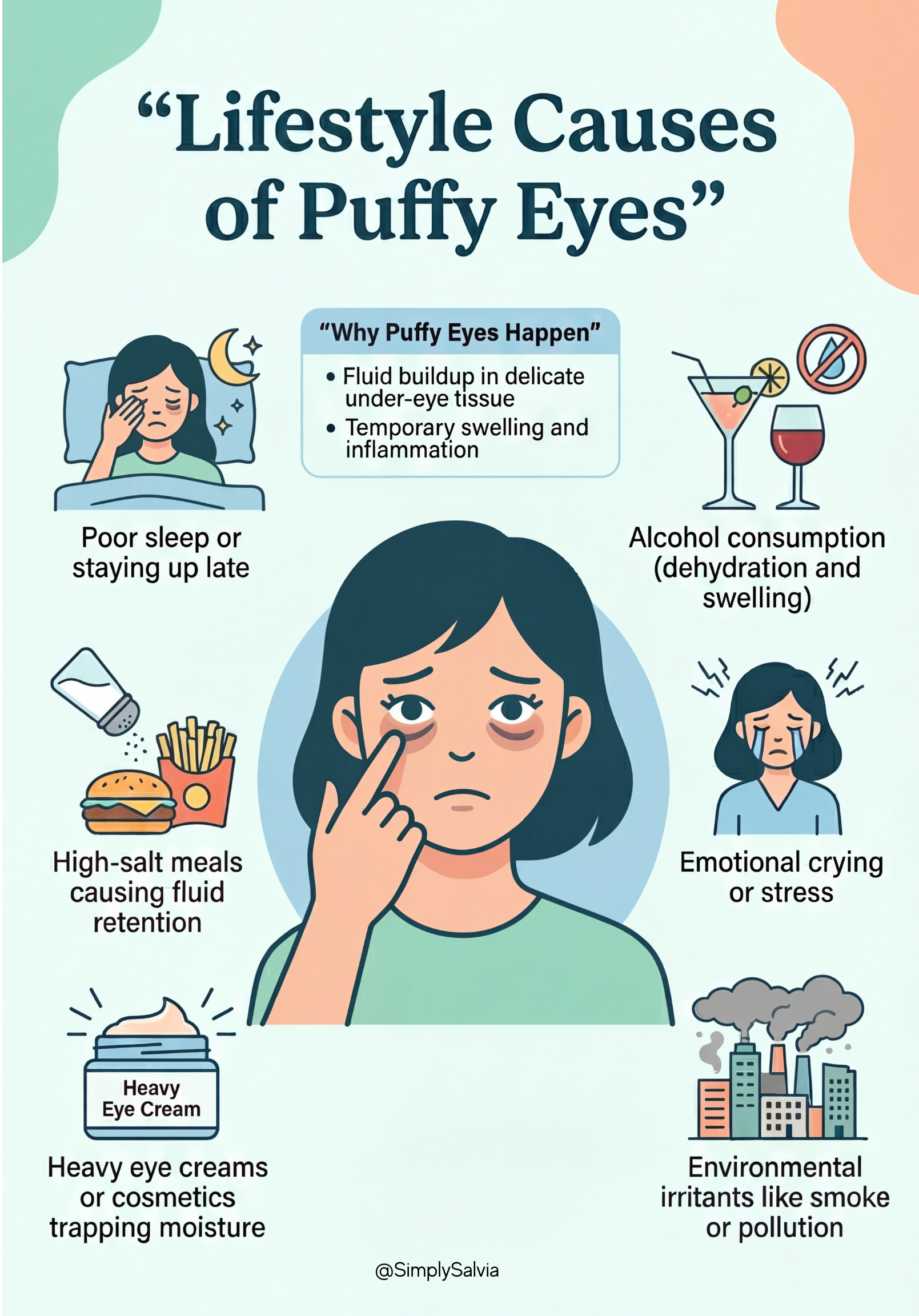
Lifestyle/Inflammatory Swelling: This is a catch-all for puffiness caused by things like lack of sleep, excessive alcohol, high-salt meals, crying, or general inflammation in the body. It’s not exactly “morning puffiness” because it can happen any time (for instance, your eyes might puff up in the evening after a stressful, salty day). I separate it because it’s not due to allergies per se, and it’s not permanent fat, it’s lifestyle-driven fluid retention or inflammation. For example, after a night of cocktails and poor sleep, you might see red, puffy eyes as the blood vessels are dilated from alcohol and you’re retaining water, plus you didn’t get the restorative sleep that would normally clear out fluids. Another example: if you’ve been crying or under emotional stress, the increased blood flow and tear production can inflame the eye area, leading to swelling that might last hours. Even overuse of certain eye creams or cosmetic products can cause puffiness, as discussed, heavy creams can trap moisture in the skin or cause mild irritation resulting in swelling. Environmental irritants like smoke or high pollution can also irritate eyes and cause minor swelling. This category of puffiness is generally temporary and correlates with the trigger (you’ll notice the pattern: “Every time I eat ramen at midnight, I’m puffy” or “whenever I binge-watch Netflix till 3am, hello eye bags”). The remedy is removing or reducing the triggers (better sleep, moderate salt, etc.) and using soothing measures (cool compresses, hydration) to bring the swelling down.
By identifying what type of dark circle or puffiness you have, you can tailor the remedies. Often, people have a combination e.g. a bit of pigment and a bit of hollow for circles (mixed type), or some mild fat bags that get worse with fluid retention (so both chronic and lifestyle). Don’t worry if it’s not clear-cut; you can try a variety of approaches. In the next chapters, I’ll focus on things you can do in daily life to prevent making these under-eye issues worse (Chapter 5) and then how to actively improve them through lifestyle (Chapter 6) and natural remedies (Chapter 7).
You now know three things most people never figure out.
What’s actually happening anatomically under that thin, overexposed skin. The real reasons dark circles form and not just “you’re tired” but the six distinct causes, from iron deficiency to venous pooling to genetics playing a hand you didn’t ask for. And which type you’re actually dealing with, because a brownish pigmented circle and a blue vascular one and a structural shadow are three completely different problems, and treating one with the other’s solution gets you nowhere.
Part 1 was the diagnosis.
Part 2 is what you do about it.
In Part 2:
Chapter 4 covers the different health conditions that dark circles can show up as.
Chapter 5 covers the daily habits that are quietly making yours worse — some of which are in your skincare routine right now, without you knowing.
Chapter 6 is the lifestyle and nutrition research: what sleep position actually does to under-eye fluid, the specific nutrients linked to both pigmentation and vascular visibility, and what dietary shifts show up in the dermatology literature as genuinely useful.
Chapter 7 covers the natural remedies worth trying — ranked by what actually has evidence behind it and the ones that are mostly aesthetic rather than functional.
Chapter 8 is the one most guides skip: when the circles aren’t a skincare issue at all, and what symptoms mean it’s time to stop Googling and see a doctor.
Two years of eye creams that solved the wrong problem. Part 2 is the chapter I wish I’d started with.
Subscribe to read Part 2 →
The information in this post is for educational and informational purposes only and does not constitute medical advice or a substitute for consultation with a qualified healthcare professional.
References:
Cleveland Clinic – Dark Circles Under The Eyes: Causes & Treatment (2022)my.clevelandclinic.orgmy.clevelandclinic.orgmy.clevelandclinic.org.
Sarkar et al. – Periorbital Hyperpigmentation: A Comprehensive Review, J. Clin. Aesthetic Dermatology (2016)pmc.ncbi.nlm.nih.govpmc.ncbi.nlm.nih.gov.
Beautology Lab – How to Take Care of Delicate Thin Skin Under Eyes (2020)beautologylab.combeautologylab.com.
Wikipedia – Periorbital Dark Circles (2023)en.wikipedia.orgen.wikipedia.org.
Wikipedia – Periorbital Puffiness (2023)en.wikipedia.orgen.wikipedia.org.
National Kidney Foundation – 5 Signs Your Kidneys or Heart Could Be in Trouble (2017)kidney.org.
Healthline – 7 Ways Dandelion Tea Could Be Good for You (2024)healthline.com.
Nature Effiscience – The Soothing Benefits of Chamomile for the Eyes (2024)nature-effiscience.com.
Vogue – How to Get Rid of Bags Under Eyes, According to Doctors (2021)vogue.comvogue.com.
Zanducare – How Ashwagandha Lowers Cortisol Levels (2025)zanducare.com.
News-Medical – Rhodiola Rosea: Health Benefits and Insights (2023)news-medical.net.
Colorescience – Vitamin E Skin Benefits (n.d.)colorescience.com.
Northwest Derm Group – Skincare Benefits of Turmeric (2021)nw-derm.com.
Skintour (Dr. B. Irwin) – Can Eye Creams Cause Puffy Eyes? (2018)skintour.com.
Healthline – Natural Antihistamines (Stinging Nettle) (2021)healthline.com.