


This is Part 2 of Beyond the Shadows — Reclaiming Bright, Rested Eyes. If you're new here, start with Part 1 — it covers the anatomy, the causes, and the types. This part is all about what you do next.
Part 1 left you with a question.
Specifically: okay, I know my type — now what?
Because knowing you have vascular dark circles, or pigmented ones, or a structural shadow that’s more about your tear trough than anything you ate this week, is only useful if you know what that means for how you treat it. Part 1 was the identification. This is the action plan.
And this is where it gets specific in a way that most eye cream marketing never does. Not “use caffeine,” but why caffeine works for one type and does almost nothing for another. Not “eat better and sleep more,” but which nutrients actually show up in the dermatology research for under-eye circles, and what sleep position does to overnight fluid drainage in a way that most people have never been told.
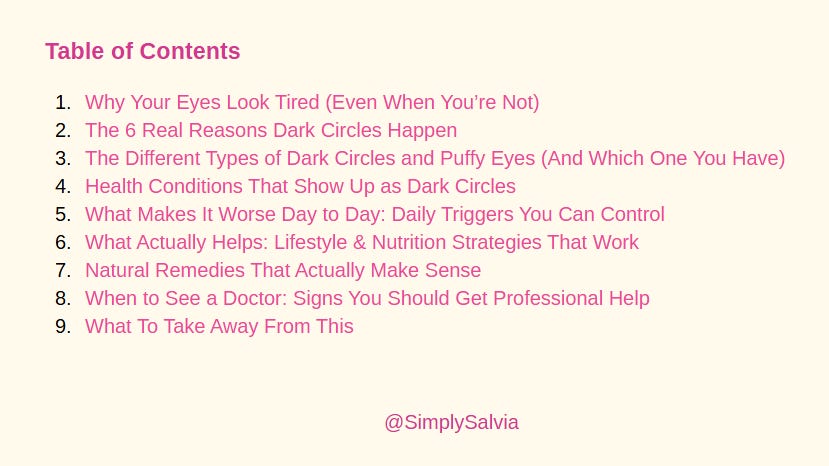
Chapters 4 through 9 cover the daily triggers you can actually control, the lifestyle and nutrition changes with real research behind them, the natural remedies worth your time versus the ones that are mostly vibes, and — the chapter nobody includes; when to stop treating this as a skincare problem and get proper eyes on it.
The cold spoon in the freezer was never going to fix it. But for a lot of people, the right combination of the right things, matched to the right type makes a visible difference within weeks.
Let’s finish what Part 1 started.
PS: We also have a subscriber-only group chat where members discuss the deep dives, share their sleep journeys, and ask me questions directly. See you there.
Disclaimer: The information and opinions expressed above are current as of the date of this post and are subject to change without notice. Materials referenced above are provided for educational and informational purposes only. None of the above constitutes medical advice, a diagnosis, a treatment recommendation, or a substitute for consultation with a qualified healthcare professional. Always seek the guidance of your doctor or another qualified health provider with any questions you may have regarding a medical condition or sleep disorder.
Short Dive below ↓
