


Convenience has become a food group of its own.
The faster we eat, the slower our systems adapt. Each shortcut; instant noodles, drive-through fries, flavored oat milks, and packaged sweets saves minutes but costs equilibrium. This week’s four studies examine how these quiet, cumulative choices bend the body’s metabolic, hormonal, and structural balance over time.
Caught My Eye…
Instant Noodles and Metabolic Syndrome
A 2024 review of Korean national survey data (KNHANES) summarized over a decade of research on instant ramen consumption and metabolic health. The findings were striking: women who ate instant noodles two or more times per week had about 68% higher odds of metabolic syndrome compared with those who rarely ate them.
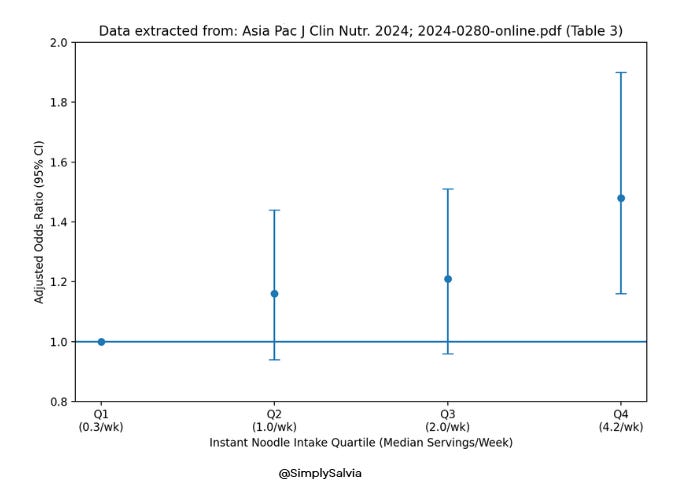
Metabolic syndrome—abdominal obesity, high triglycerides, low HDL, high blood pressure, and elevated glucose is a cluster that multiplies cardiovascular and diabetes risk. Researchers noted that frequent noodle eaters had poorer overall diet quality, lower intake of fresh produce, and higher sodium and trans-fat intake.
The takeaway isn’t just about noodles; it’s about the frequency and replacement.
Fried Potatoes and Type 2 Diabetes
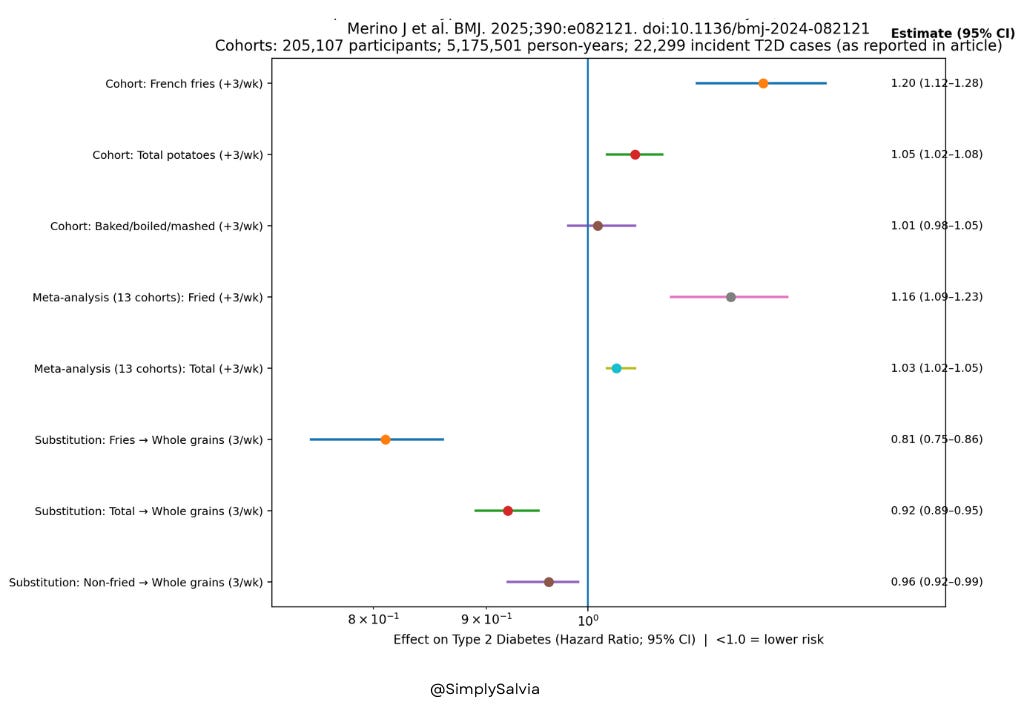
A BMJ cohort analysis (2025) following 205,000 U.S. adults found that those eating fried potatoes three or more times a week had a 20% higher risk of developing type 2 diabetes, climbing to 27% at five or more servings per week.
Interestingly, baked, boiled, or mashed potatoes showed no elevated risk, and replacing fried potatoes with whole grains significantly lowered diabetes incidence.
The study reinforces a simple but powerful metabolic truth: cooking method matters as much as ingredient. When starch meets oil at high heat, it forms advanced glycation end-products (AGEs) that stress insulin signaling. The same potato prepared differently can either nourish or nudge toward disease.
Plant Milks and Iodine Deficiency
An analysis from the British Journal of Nutrition (2020) using UK National Diet and Nutrition Survey data found that consumers of unfortified milk alternative drinks had median urinary iodine levels below 100 µg/L, indicating deficiency. By contrast, cow’s milk consumers had iodine levels in the optimal range.
Iodine is crucial for thyroid hormone synthesis, and even mild deficiency can affect metabolism and energy regulation. During pregnancy, deficiency can impair fetal neurodevelopment.
As plant-based diets grow, this study highlights a blind spot: unfortified plant milks are not nutritional equivalents of dairy unless iodine is specifically added. For those avoiding cow’s milk, choosing fortified products or including seaweed, iodized salt, or supplements remains essential.
Ultra-Processed Snacks and Tooth Decay
A 2022 BJN meta-analysis pooled data from children and adolescents across multiple countries and found a consistent pattern: higher ultra-processed food intake especially sweet snacks and confectionery was linked to greater odds of dental caries.
The association was strongest in settings where baseline caries rates were already high, showing how added sugars, refined starches, and acidity in UPFs feed not just appetite but oral bacteria.
Modern snacking culture exposes children’s teeth to a near-constant sugar stream, eroding enamel and altering the oral microbiome long before adult habits form. Prevention, the authors suggest, requires dietary not just dental intervention.
Detailed Readings
The association between noodle consumption and metabolic syndrome in Korean adults
Total and specific potato intake and risk of type 2 diabetes
Iodine status of consumers of milk-alternative drinks v. cows’ milk
Ultra-processed food consumption and dental caries in children and adolescents