
Not all carbohydrates behave the same once they reach the body. Some digest slowly, feeding cells steadily. Others break down almost instantly, flooding the bloodstream with glucose. Over time, that difference in pace appears to shape metabolic health in powerful ways. This week’s studies explore how dietary glycemic index (GI) and glycemic load (GL), measures of how fast and how much carbohydrates raise blood sugar influence long-term disease risk across populations.
Caught My Eye…
High-Glycemic Diets and Type 2 Diabetes Risk (PURE Study)
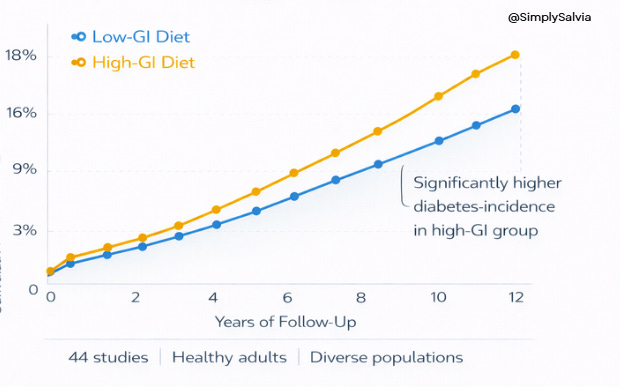
A large international cohort study followed over 127,000 adults from 20 countries for nearly 12 years to examine how dietary glycemic index and load relate to diabetes risk. Researchers found that people whose diets were higher in GI or GL had a significantly greater likelihood of developing type 2 diabetes compared with those eating lower-GI diets. The association held across regions, income levels, and dietary patterns. The findings support a simple physiological explanation: frequent rapid spikes in blood glucose demand repeated insulin surges, gradually straining the body’s ability to regulate sugar efficiently.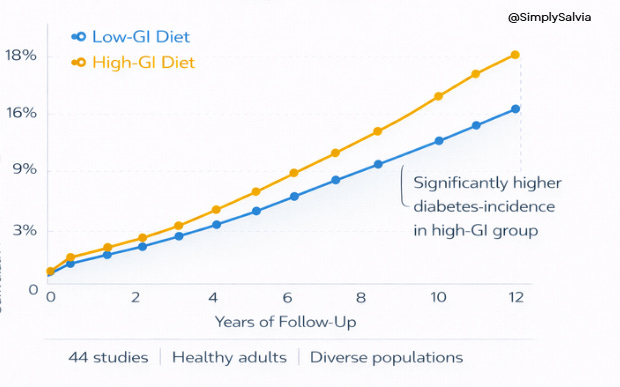
High GI and GL Diets Linked to Multiple Chronic Diseases
In a complementary meta-analysis pooling data from several large prospective cohorts, the same research group examined how glycemic quality relates to broader health outcomes. Diets high in GI or GL were associated not only with type 2 diabetes, but also with higher risk of cardiovascular disease, diabetes-related cancers, and all-cause mortality. The pattern suggests that repeated glucose and insulin fluctuations may contribute to metabolic stress, vascular dysfunction, and inflammation, pathways shared across chronic diseases.Glycemic Quality, Fiber, and Long-Term Health Outcomes
Earlier meta-analyses comparing high-GI diets with diets rich in fiber and whole grains reached similar conclusions. Diets characterized by slower-digesting carbohydrates were consistently linked to lower rates of diabetes, cardiovascular disease, cancer, and premature death. The magnitude of risk associated with high-GI diets was comparable to other established lifestyle risk factors, reinforcing the idea that carbohydrate quality not just quantity plays a central role in metabolic health.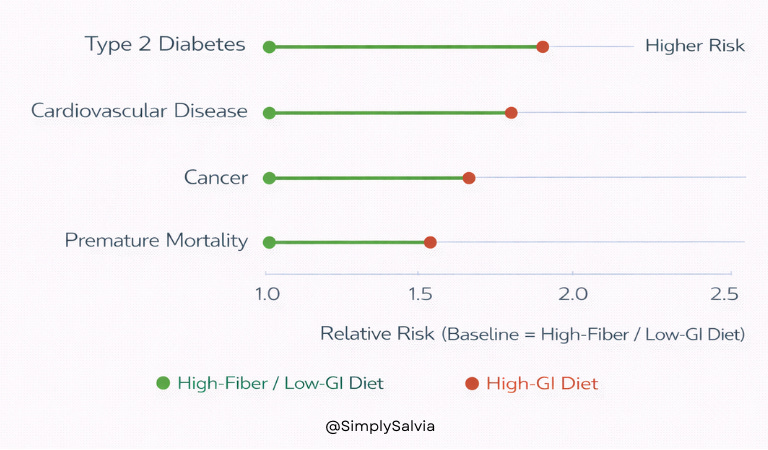
Dose–Response Evidence for GI, GL, and Diabetes Risk
A systematic review and dose–response meta-analysis of prospective cohort studies found a clear gradient: as dietary GI and GL increased, so did the risk of developing type 2 diabetes. Each incremental rise in glycemic exposure corresponded to higher disease risk, suggesting cumulative harm rather than a threshold effect. Mechanistically, diets dominated by rapidly absorbed carbohydrates create repeated glucose and insulin excursions that, over time, promote insulin resistance and beta-cell stress.
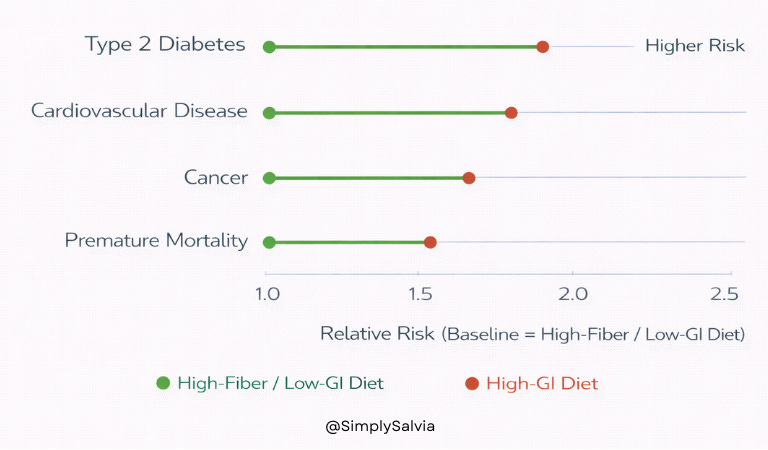
These studies converge on a shared insight: how quickly carbohydrates enter the bloodstream may matter as much as how many calories they provide. Diets built around refined grains, sugary snacks, and ultra-processed foods push the body into constant metabolic catch-up. Over years, that strain appears to reshape risk for diabetes, heart disease, and early mortality.
Lower-glycemic eating doesn’t require perfection or elimination. It often looks like slowing the meal down, pairing carbohydrates with fiber, fat, and protein, choosing intact grains over refined ones, and favoring foods that ask the body to digest rather than react. The science suggests those small shifts compound quietly, just as high-glycemic habits do.
Next week, I’ll turn attention to how food processing itself alters metabolic signals, and what happens when convenience consistently outpaces physiology.
Detailed Readings
Glycemic Index, Glycemic Load, Carbohydrates, and Type 2 Diabetes