


There’s a version of the anxiety conversation that goes like this: anxiety is common, it’s manageable, have you tried breathing exercises, maybe reduce your caffeine, have you considered therapy.
None of that is wrong. But it skips the part that would actually help most women understand what’s going on, which is why anxiety is happening in the first place, why it spikes at predictable points in the month, why it’s worse in certain years than others, and why the standard advice sometimes feels like it’s addressing a surface problem without touching what’s underneath it.
Women experience anxiety disorders at almost twice the rate of men. That gap appears in teenagers, in working women, in every age group and every country where researchers have looked. It is one of the most consistent findings in all of mental health research. And for most of the history of that research, the explanation was essentially “women are more anxious.” Not why. Just that they are.
The research has been getting considerably more specific since then. This short dive is the explanation.
Why Women Experience Anxiety at Almost Twice the Rate of Men
The Menstrual Cycle and Anxiety. The Most Specific Connection
The Evidence Hierarchy: What the Research Actually Ranks for Anxiety
Chapter 1: Why Women Experience Anxiety at Almost Twice the Rate of Men
The Headline Finding
Women are about twice as likely as men to experience major depression and significantly more likely to develop an anxiety disorder. The disparity holds steady whether you look at teenagers, working mothers, or women in midlife. This isn’t a cultural artefact or a matter of women being more willing to report symptoms, the gap persists across cultures, across healthcare systems, and in studies that control for reporting bias.
So what actually explains it?
The Hormonal Architecture
The clearest biological reason is one that’s been understood for years but rarely communicated clearly to the women it affects: estrogen and progesterone influence serotonin, dopamine, and GABA - the brain chemicals that regulate mood, fear, and emotional stability. When these hormones shift, so does a woman’s vulnerability to anxiety and low mood.
Let’s break that down into plain language, because those three brain chemicals matter in very specific ways:
Serotonin is the brain’s mood-stabilising system. It regulates fear responses, reduces the amygdala’s reactivity to threat, and is the primary target of SSRIs (the most commonly prescribed medications for anxiety and depression.) Falling estrogen pulls serotonin down with it, which is the direct biological mechanism behind the mood drop in the late luteal phase, after childbirth, and during perimenopause — all windows where estrogen declines sharply.
GABA is the brain’s main inhibitory neurotransmitter. It quiets neural activity and produces calm. It’s the system that benzodiazepines and alcohol work on, and it’s the system that progesterone’s metabolite (allopregnanolone) naturally activates throughout the luteal phase. More on this shortly, because this is where the anxiety-cycle connection gets very specific.
Dopamine regulates motivation, reward, and executive function, including the ability to redirect attention away from anxious thoughts. Estrogen supports dopamine signalling in the prefrontal cortex. As estrogen falls, dopamine’s regulatory effect on attention weakens, making it harder to break out of anxious thought loops.
These shifts are not constant; they spike during specific life stages. Puberty, the menstrual cycle, pregnancy, the postpartum period, and perimenopause each bring sharp hormonal change. This is why anxiety in women so often has a pattern, particular times of month, particular life chapters, that doesn’t fit neatly into the framing of anxiety as a fixed trait.
The Stress Response Is Wired Differently
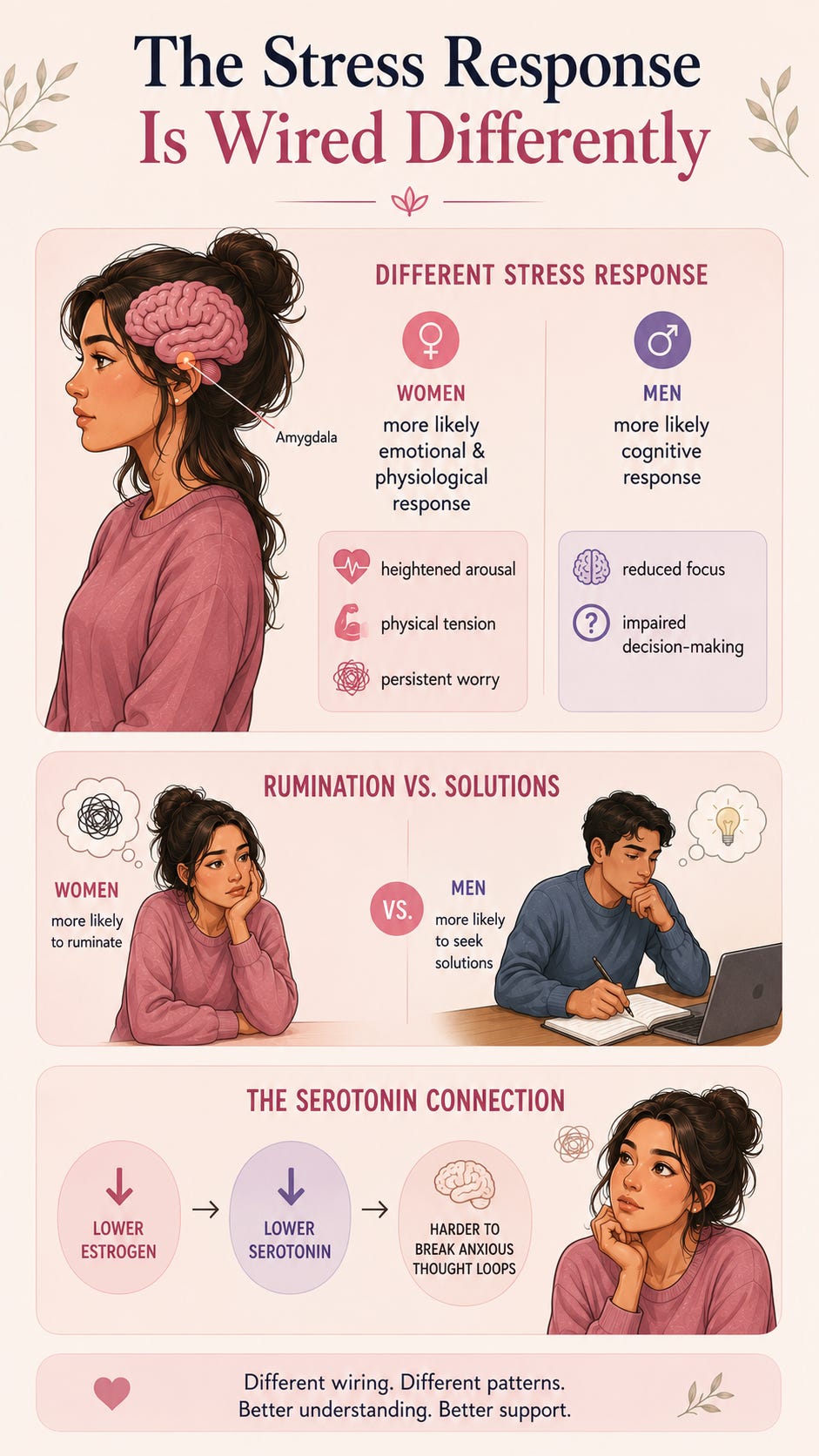
Beyond hormones, there are structural differences in how women’s nervous systems process threat. The amygdala (the brain’s threat detection centre) responds to stress differently in women than in men. Research has found that under chronic stress, women are more likely to experience anxiety at an emotional and physiological level (heightened arousal, increased physical tension, persistent worry), while men tend to experience stress effects more cognitively (reduced focus, impaired decision-making). This isn’t a vulnerability in any moral sense, it’s a different threat-processing architecture, and it has consequences for which interventions actually work.
Women tend to be more prone to rumination when faced with stress, women are more likely to ruminate while men are more likely to actively seek solutions. Rumination isn’t a character trait. It’s partly a reflection of the serotonin-estrogen connection: higher serotonin supports the ability to interrupt anxious thought loops. When serotonin is lower (as it is at lower-estrogen points of the cycle), the brain’s capacity to disengage from threat-focused thinking is genuinely reduced.
The Inflammation Link
Women are more vulnerable to the effects of immune-inflammatory pathways, which increase the production of anxiety-inducing compounds. Chronic low-grade inflammation; the kind produced by ultra-processed diets, poor sleep, chronic stress, and gut dysbiosis activates these pathways more readily in women than in men, producing a neurological environment that’s more prone to anxiety and low mood.
This is part of why the gut-brain axis is so relevant to women’s anxiety specifically, and why the dietary and gut health interventions covered in Part 2 have a more direct mechanistic connection to anxiety in women than they do in men.
Chapter 2: The Menstrual Cycle and Anxiety. The Most Specific Connection
This is the chapter that will probably explain something you’ve lived for years without having a name for.
The GABA Story: Why the Week Before Your Period Is the Worst
Every month, in the second half of your cycle, progesterone rises after ovulation and its metabolite (a compound called allopregnanolone, I’ll just call it ALLO) binds to GABA-A receptors in the brain. This produces a mild sedative, calming effect that’s sometimes described as the brain’s built-in progesterone calmer. During the mid-luteal phase, when progesterone is high and ALLO levels are stable, many women notice they feel more settled, more tired (this is real — it’s ALLO), and generally more emotionally even.
Then comes the late luteal phase. Progesterone drops sharply in the days before menstruation begins. ALLO drops with it. And for many women, the brain’s response to losing that GABA support is what researchers now call a neurosteroid withdrawal, a rebound state characterised by heightened nervous system arousal, increased anxiety, difficulty sleeping, emotional reactivity, and the “wired but exhausted” feeling that most people know as PMS or PMDD.
Allopregnanolone, a positive allosteric modulator on the GABA-A receptor, is believed to be involved in the symptomatology of premenstrual dysphoric disorder, which is characterised by depression, irritability, mood swings and anxiety in the luteal phase of the menstrual cycle.
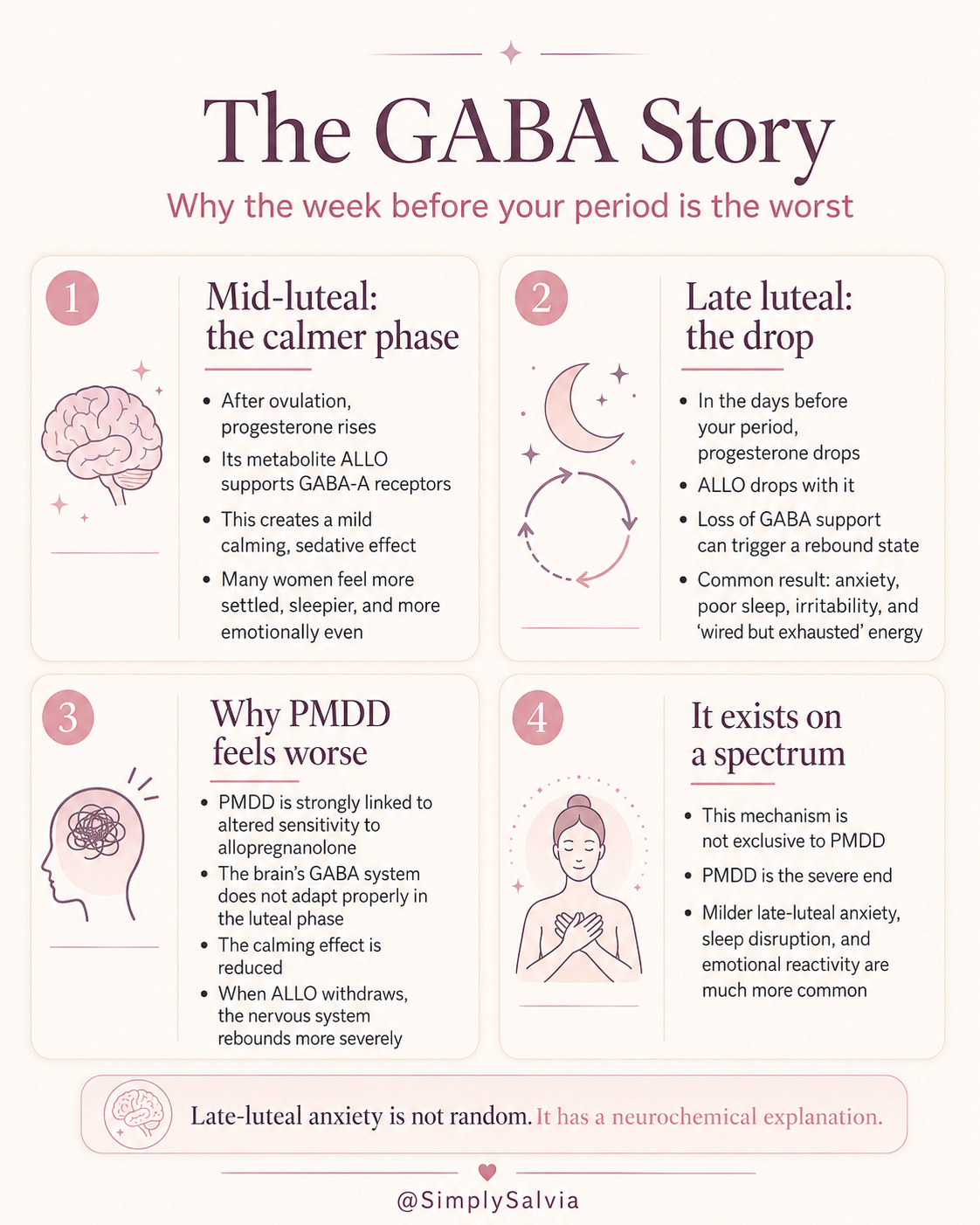
The research on PMDD specifically has become very clear on the mechanism: PMDD symptoms are linked to an altered sensitivity to normal luteal phase levels of allopregnanolone. Women with PMDD had lower expression of the delta subunit of the GABA-A receptor during the luteal phase, the exact point in the cycle when it should be going up. In plain language: their brain’s GABA system doesn’t adapt properly to the hormonal environment, so when ALLO is present, the calming effect isn’t registered and when ALLO withdraws, the nervous system rebounds more severely.
This mechanism isn’t exclusive to PMDD. It exists on a spectrum, PMDD is the severe end, but the milder version of the same pattern (more anxiety, worse sleep, more emotional reactivity in the late luteal phase) is experienced by a much larger proportion of women than the PMDD diagnosis captures.
Why This Means the Anxiety Isn’t the Same Every Week
The practical implication is one that most anxiety advice completely ignores: anxiety that’s driven by neurosteroid withdrawal in the late luteal phase is a different phenomenon from anxiety that’s driven by a chronic stressor, a diagnosed disorder, or a generalised pattern. It arrives at predictable points, it has a hormonal mechanism, and it responds to different interventions.
This is why two weeks of consistent meditation, magnesium supplementation, and good sleep can genuinely reduce anxiety and then the week before a period arrives and it feels like starting from scratch. The previous weeks’ interventions haven’t failed. A new, acute neurochemical event is happening on top of whatever baseline was being managed.
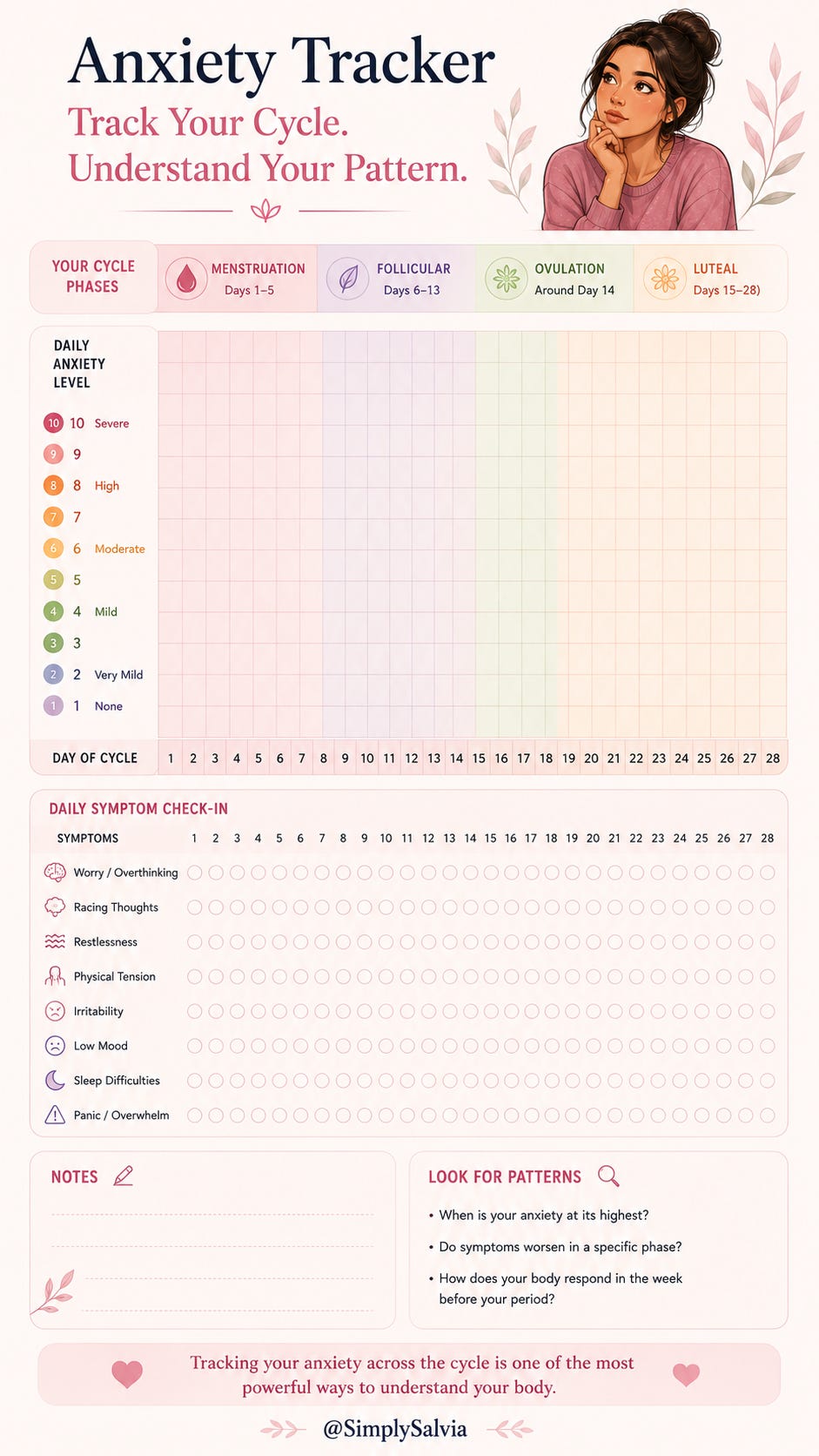
Tracking your anxiety levels across the cycle is one of the most useful diagnostic tools available, and it’s free. If anxiety reliably spikes in days 22–28 and improves within a day or two of your period starting, you have direct evidence of a luteal-phase anxiety pattern. That pattern responds to specific interventions (covered in Chapter 7 of Part 2) that aren’t the same as general anxiety management.
The Other Hormonal Windows
The luteal phase is the monthly version of this. But the same mechanism plays out at other hormonal transition points:
Postpartum: After birth, both estrogen and progesterone drop sharply. ALLO disappears with progesterone. The postpartum period is, neurochemically, the most dramatic GABA withdrawal a woman’s nervous system experiences in a lifetime, which is part of why postpartum anxiety and depression are so common and so severe. Brexanolone (a synthetic ALLO) has now been FDA-approved specifically for postpartum depression because of this mechanism.
Perimenopause: As estrogen declines erratically in the years before menopause, serotonin fluctuates with it. Many women describe a sudden-onset anxiety they’ve never experienced before, in their 40s, that doesn’t respond to the things that helped anxiety earlier in life. This is often the estrogen-serotonin connection manifesting at a new hormonal baseline — the brain chemistry has shifted, and the strategies built on an earlier hormonal environment are no longer as effective.
The Pill: Synthetic progestins in hormonal contraception affect the progesterone-ALLO pathway differently from natural progesterone and for some women, particularly those on formulations with higher androgenic progestins, this produces measurable effects on anxiety, mood, and emotional flatness. This is a documented side effect that’s been underreported and underdiscussed in the prescribing conversation.
Chapter 3: The Evidence Hierarchy: What the Research Actually Ranks for Anxiety
The Strongest Evidence
Cognitive behavioural therapy (CBT) sits at the top. A 2026 systematic review and network meta-analysis of exercise treatments for anxiety disorders found that resistance training showed the highest effectiveness compared with waitlist, closely followed by CBT. CBT has decades of clinical trial data, across multiple anxiety disorder types, in multiple populations. It works by changing the cognitive patterns that maintain anxiety, specifically, the interpretive biases and avoidance behaviours that keep the nervous system in a threat-detection state long after the original stressor has passed.
What CBT is not: a replacement for understanding the biological drivers. A woman with severe late-luteal anxiety who’s learned excellent CBT skills will still have the GABA withdrawal event every month. CBT gives her tools to navigate it; it doesn’t stop it happening. Understanding this prevents the extremely common experience of feeling like CBT has “failed” because anxiety returns cyclically, when actually the cycle itself is the variable that hasn’t been addressed.
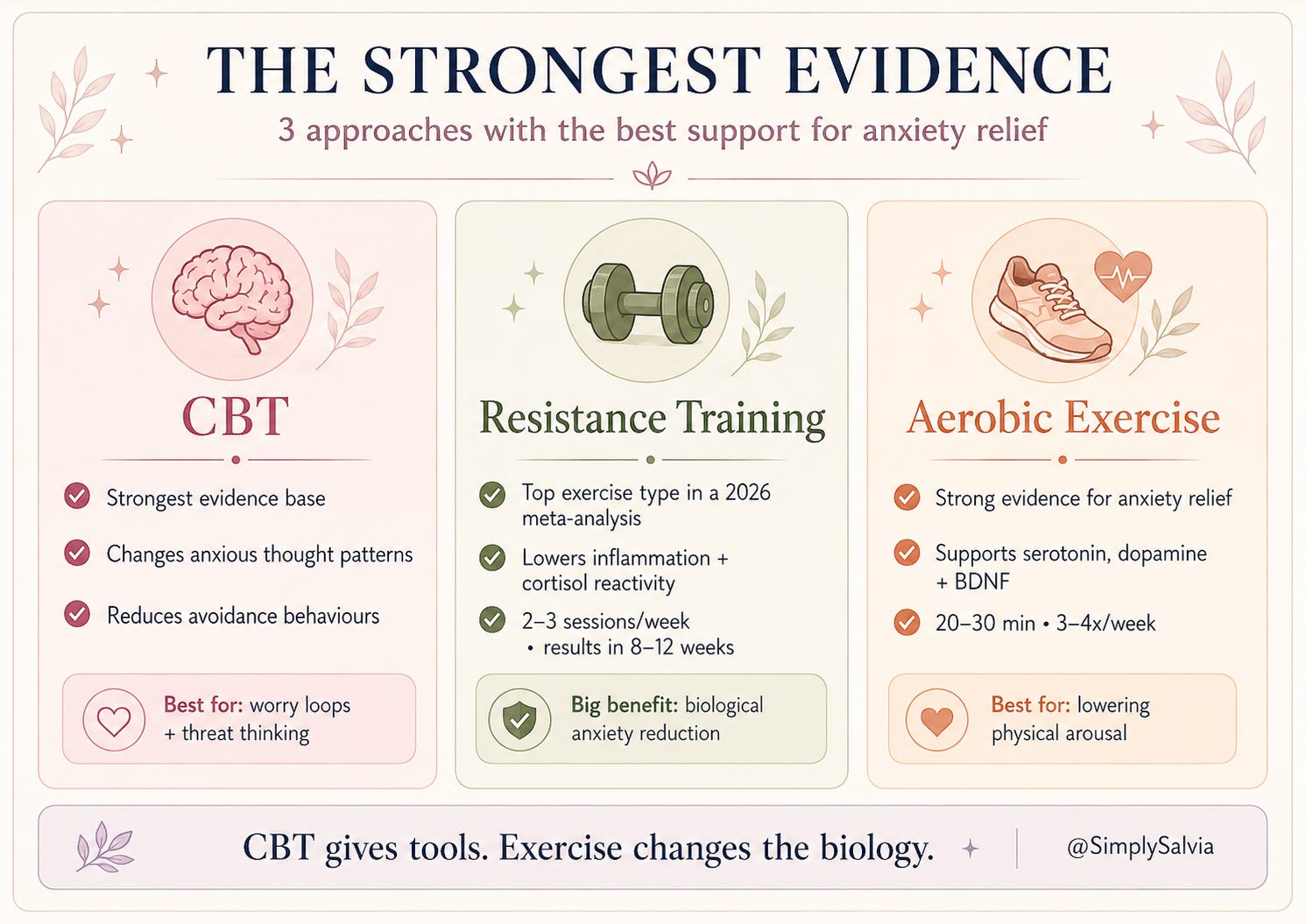
Resistance training — resistance training showed the highest effectiveness of all exercise types for anxiety disorders in the 2026 meta-analysis, with an effect size (SMD −0.79) comparable to CBT. The mechanism: resistance training reduces inflammatory cytokines (specifically IL-6 and TNF-alpha), increases BDNF, and produces consistent hormonal changes including reduced cortisol reactivity over time. Two to three sessions per week of resistance training produces significant anxiety reduction at 8–12 weeks in clinical populations.
Aerobic exercise also has strong evidence; cardiovascular exercise raises BDNF, supports serotonin and dopamine synthesis, and reduces the physiological arousal that anxiety sustains. The dose that produces clinical benefit is lower than most people assume: 20–30 minutes of moderate-intensity aerobic exercise, three to four times per week, has consistent evidence for anxiety reduction.
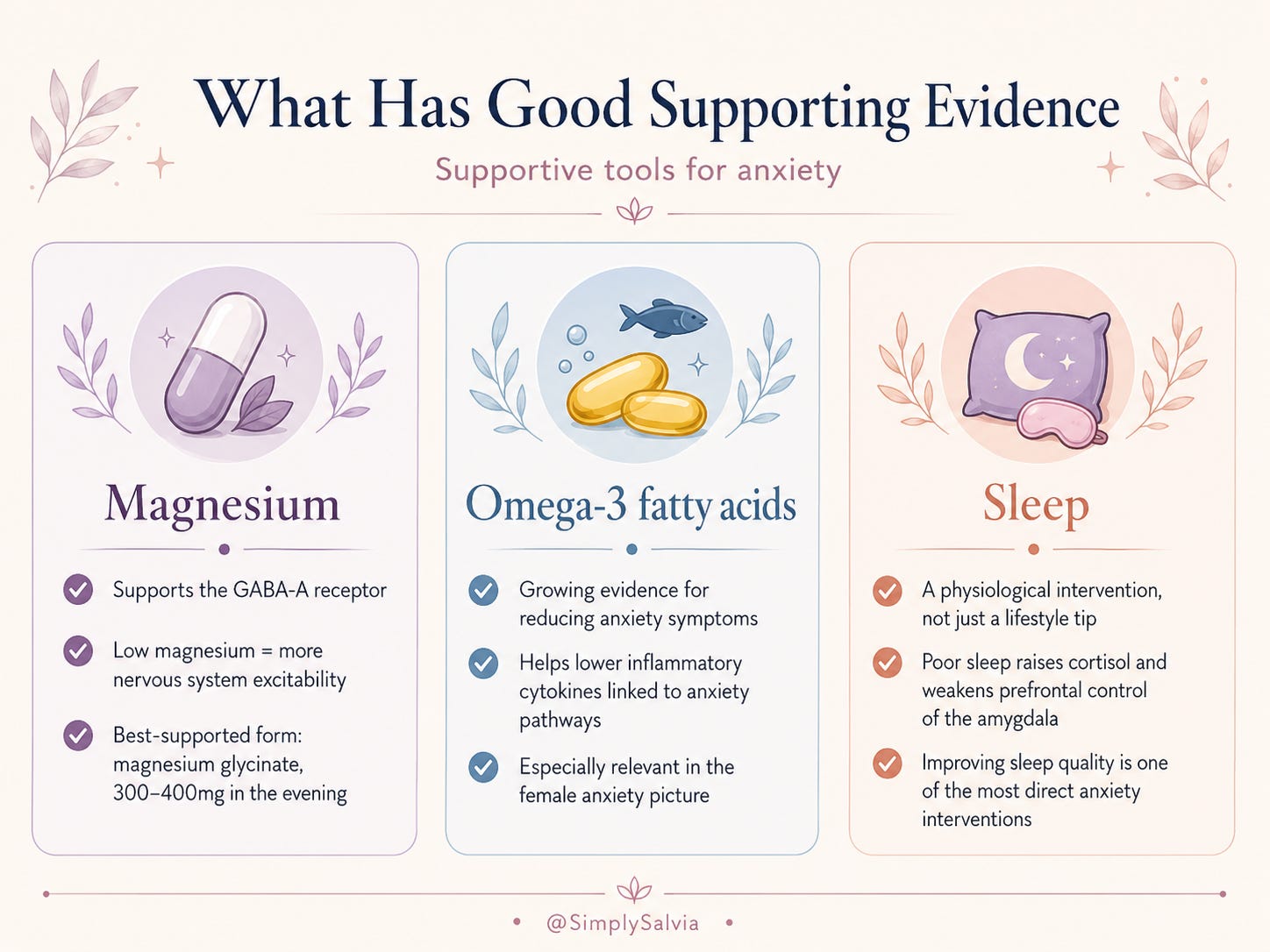
What Has Good Supporting Evidence
Magnesium
It works on the GABA-A receptor. The same receptor system implicated in the luteal-phase anxiety mechanism. Low magnesium is associated with lower GABA-A sensitivity, more nervous system excitability, and worse anxiety. A systematic review of magnesium and anxiety found significant improvements in subjective anxiety with supplementation. The form matters: magnesium glycinate specifically has the best evidence for neurological effects. 300–400mg in the evening is the well-researched dose range.
Omega-3 fatty acids
They have a growing evidence base specifically for anxiety. A meta-analysis found significant reductions in anxiety symptoms with omega-3 supplementation in adults with clinical diagnoses. The mechanism: omega-3s reduce inflammatory cytokines that activate the anxiety-generating tryptophan catabolite pathways mentioned in Chapter 1. Women are more vulnerable to these pathways, which is part of why omega-3s may be specifically relevant to the female anxiety picture.
Sleep
Not as a passive recommendation but as a physiological intervention. Disrupted sleep elevates cortisol and reduces prefrontal cortex regulation of the amygdala, producing exactly the heightened threat-detection and reduced emotional regulation that anxiety consists of. Improving sleep quality is one of the most direct anxiety interventions available, and it’s not sufficiently emphasised in standard anxiety management advice.
What Has Weaker Evidence Than Its Marketing Suggests
Ashwagandha
It has some evidence for reducing self-reported stress and cortisol at doses of 300–600mg. The effect is real but modest, and the studies are often industry-funded and short-term. It’s a reasonable supportive addition to an anxiety management routine with good evidence foundations. It’s not a replacement for the above.
L-theanine
It shows some evidence for acute anxiety reduction in the hour following a dose. The effect is mild and short-lived. It’s found naturally in green tea at lower concentrations. Not harmful; not going to resolve underlying anxiety patterns.
CBD
The evidence is significantly weaker than the marketing implies for anxiety disorders specifically. Some studies show acute anxiolytic effects; the evidence for sustained anxiety reduction is thin. Quality control issues (many products contain different CBD concentrations than labelled) compound the picture.
Breathing exercises and mindfulness
Genuinely evidence-based, but often presented as primary interventions when their strongest evidence is as adjuncts alongside CBT or exercise. They work by activating the parasympathetic nervous system and interrupting the physiological arousal of the anxiety response. Valuable, particularly for acute anxiety management. Not sufficient on their own for anxiety that has biological drivers.
Part 1 ends here. Part 2 is where it becomes a practical framework. The gut-brain connection and what specific probiotic strains do for anxiety, the sleep-anxiety loop and how to break it, the nutrition chapter with specific mechanisms, the cycle-aware protocol for the weeks that are reliably hardest, and the complete guide to building a routine that actually works.
Now you understand what’s actually happening. Women experience anxiety at almost twice the rate of men because of a genuinely different hormonal architecture — estrogen and progesterone shaping serotonin, GABA, and dopamine in ways that make the nervous system more susceptible to specific kinds of disruption. You know the GABA-withdrawal mechanism that makes the week before your period the worst and why that’s a monthly neurochemical event, not a personal failing. And you have the honest evidence hierarchy for what the research actually supports.
Part 2 takes all of this further.
Chapter 4 is the gut-brain axis chapter. How the gut microbiome produces GABA and serotonin, what specific probiotic strains the 2026 research supports for anxiety, and why the gut-anxiety connection is specifically more relevant for women.
Chapter 5 is the sleep-anxiety loop. The specific mechanisms by which poor sleep drives anxiety and anxious nights drive poor sleep, and how to break in at each point.
Chapter 6 is the nutrition chapter. Magnesium in detail, omega-3s and their anti-inflammatory anxiety mechanism, blood sugar stability and cortisol, and what the Mediterranean diet research says specifically for anxiety.
Chapter 7 is the cycle-aware anxiety protocol. The specific, phase-by-phase interventions that address the luteal-phase pattern that general anxiety advice doesn’t touch.
Chapter 8 is the complete practical guide. How to build a routine that layers the evidence-backed interventions, what to do in different anxiety windows, and when the right answer is professional support rather than self-management.
Subscribe to read Part 2 →
Sources & Further Reading
Women In Balance. Why women develop anxiety and depression at higher rates than men, June 2026
ScienceDaily. A daily probiotic may help relieve depression and anxiety, June 17, 2026