


Your skin sheds roughly 200,000,000 epidermal skin cells every single hour.
Most of them don’t go quietly. They build up. They settle into pores, dull your complexion, and sit in the fine lines around your eyes — making your skin look more tired than it actually is.
There’s a molecule that speeds all of this up. That clears the backlog, stimulates new collagen, and actively fades the dark spots left behind from every pimple you’ve ever picked. It was first developed in the 1970s as an acne treatment. It now has more clinical backing than almost any other ingredient in skincare — a 2024 meta-analysis across 23 randomised controlled trials found it produced significant improvement in fine wrinkles, hyperpigmentation, and skin roughness. The global market for it hit $1.45 billion in 2026.

Dermatologists use it on their own faces.
It’s retinol.
And most people our age are either too scared to start or starting completely wrong.
I get it. I was one of them.
Every time I opened TikTok, someone was talking about it. Every time I scrolled Instagram, there was a new retinoid launch. Celebs swore by it. Dermatologists swore by it. Influencers were documenting their “retinol journeys.”
And I started wondering… is it actually that good? Or is this just another overhyped, over-marketed skincare phase?
Because right when you start thinking about trying it, the scary questions kick in.
Should I be using retinol at 22?
Will it thin my skin?
Cause hyperpigmentation?
Redness?
Breakouts?
Will it make me more sensitive to the sun?
Will it ruin my skin?
Is it for older people?
Am I too young?
Or am I already late?
And then it gets worse.
If I do start…
Do I use retinol?
Retinal?
Adapalene?
What’s the difference?
Serum or cream?
What percentage?
How often?
I genuinely felt like I was losing my mind.
I went down the rabbit hole — video after video, influencer after influencer. Watching their transformations and wondering… is that real skin or a filter? One TikTok creator said retinol destroyed her skin for months. Another said it changed her life.
What if it ruins mine?
But what if it fixes everything?
Here’s what made me stop spiralling and actually start: the research isn’t ambiguous. Clinical trials show visible improvement in skin texture and tone beginning at week 4 and not after years.
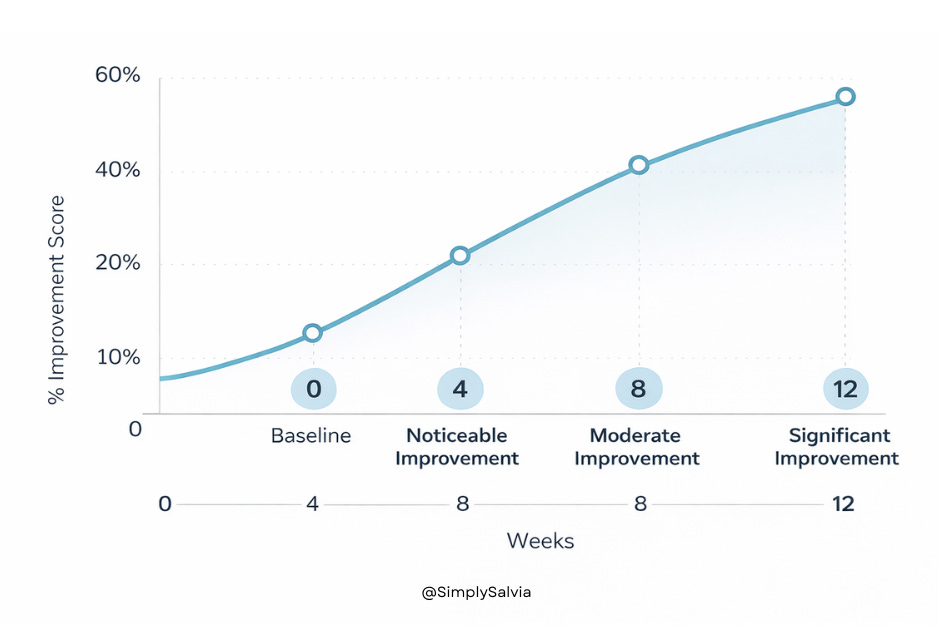
A major 12-week study found that even a low 0.1% concentration significantly improved crow’s feet, dark spots, and uneven tone. And here’s the part nobody tells you when you’re 22 and Googling this at midnight: retinol works fastest on younger skin, because younger skin has more collagen left to protect.
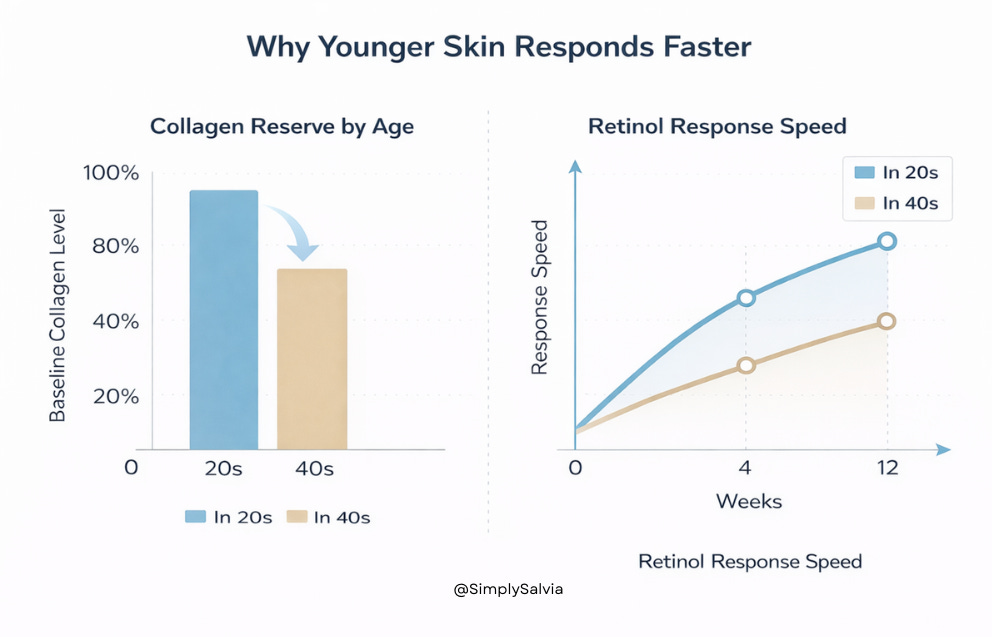
The women getting the most dramatic results aren’t in their 40s.
They’re our age and they started early.
Meanwhile, the industry has quietly solved most of what scared us. The products going viral right now — the ones people are calling “Botox in a tube” aren’t the harsh, stripping formulas from ten years ago.
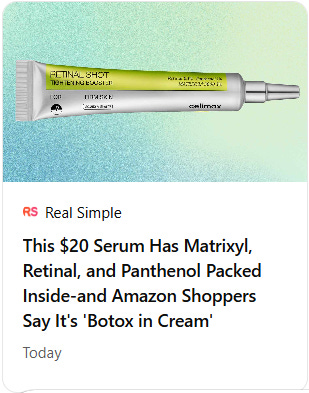
Next-generation retinols use micro-encapsulation and barrier-supporting actives to deliver results with almost none of the irritation. You can get an effective starter retinol for under £10. Sensitive skin is no longer a reason to wait.
So back to the real question:
Not should I use retinol, but how do I use it without ruining my skin in the process?
After three weeks of going through actual studies, dermatologist interviews, and ingredient breakdowns — not just social media — I finally know. And there’s one mistake almost every beginner makes in the first week that sets them back by months.
This is for you if you’re stuck in the same spiral. Keep reading.
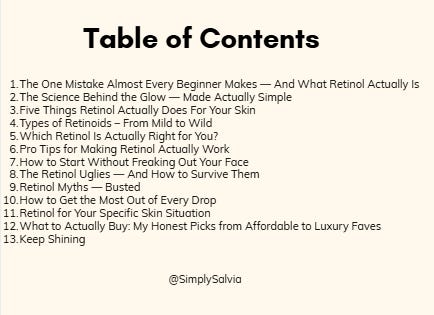
PS: We also have a subscriber-only group chat where members discuss the deep dives, share their sleep journeys, and ask me questions directly. See you there.
Disclaimer: The information and opinions expressed above are current as of the date of this post and are subject to change without notice. Materials referenced above are provided for educational and informational purposes only. None of the above constitutes medical advice, a diagnosis, a treatment recommendation, or a substitute for consultation with a qualified healthcare professional. Always seek the guidance of your doctor or another qualified health provider with any questions you may have regarding a medical condition or sleep disorder.
Short Dive below ↓