


Starting in your mid-20s, your skin produces roughly 1% less collagen every single year.
Not dramatically. Not visibly. Just quietly, consistently, compounding — the same way interest builds in a savings account, except in reverse.
Collagen is the main structural protein in your skin — it makes up 75 to 80% of your dermis, the deep layer that gives skin its firmness, bounce, and thickness. Think of it as the scaffolding underneath everything you can see. When it’s abundant, skin looks plump, resilient, and smooth. When it starts to go, fine lines appear where there weren’t any. Skin loses its snap. The jawline softens. Nothing looks wrong exactly — things just start looking slightly less right.
By your mid-20s, the decline has already started.
That means it applies to you. Now. Not in twenty years.
And most women our age have no idea, because collagen is marketed as a problem for women in their 40s and 50s, which means the advice, the products, and the preventative habits are all aimed at people who are already playing catch-up. Nobody talks about the decade before the visible damage. Nobody explains that the choices you’re making right now — what you eat, how you sleep, how much sun you get, how much stress you carry, whether you’re using the right things or unknowingly dismantling your own collagen supply, are what your skin will look like at 35.
And then there’s the TikTok version of this.
Which tells you to buy collagen supplements. Add collagen powder to your coffee. Use a collagen mask. Take a collagen shot. Build your entire routine around a single word without ever explaining what the word means, how collagen actually works, or whether any of those products do what the caption claims.
I started wondering: is collagen banking actually real? Do the supplements work? Why does everyone’s “routine for younger skin” look identical — retinol, vitamin C, SPF, collagen supplements, twenty-seven serums, and yet the science seems more complicated than anyone is saying?
So the questions started.
Is it too late if I haven’t been protecting it?
Are the supplements worth it?
What’s actually destroying my collagen right now?
Is sunscreen really doing anything at my age?
Does stress actually affect it?
Why does my skin look worse when I eat badly?
And then: if it’s declining at 1% a year, why is no one talking about this seriously until it’s already visible?
I went down the rabbit hole — the actual research, not the brand-funded content. Studies of skin biopsies across age groups show that collagen synthesis begins measurably declining in your 20s. Chronic UV exposure triggers a specific class of enzymes called MMPs that actively break collagen down — not over decades, but after every single unprotected sun exposure. Chronic stress raises cortisol, which directly accelerates collagen degradation. A diet high in sugar triggers a process called glycation that stiffens and damages collagen fibres. None of this is reversible. But all of it is slowable, if you understand what’s actually happening.
Here’s what made me stop spiralling and start actually doing something: the research on prevention is genuinely more compelling than the research on reversal. Studies show that higher antioxidant and vitamin C intake in younger years correlates with measurably fewer wrinkles later in life. The women with the best skin in their 40s aren’t the ones who panicked at 42 and started treatments. They’re the ones who started protecting at 22 — before there was anything to fix.
The dermatologists call it collagen banking. Building the account while it’s still full, rather than scrambling to replenish it once it’s been drawn down.
The best time to start was five years ago. The second best time is now.
So: not should I care about collagen in my 20s, but what do I actually need to know and do — based on research, not TikTok?
After going through the studies, I finally have an answer. And there’s one habit almost everyone our age has that is quietly undermining their collagen faster than anything else. You’ll probably recognise yourself in it.
This is for you if you’re somewhere between vaguely aware that collagen matters and genuinely confused about what to do about it. Keep reading.
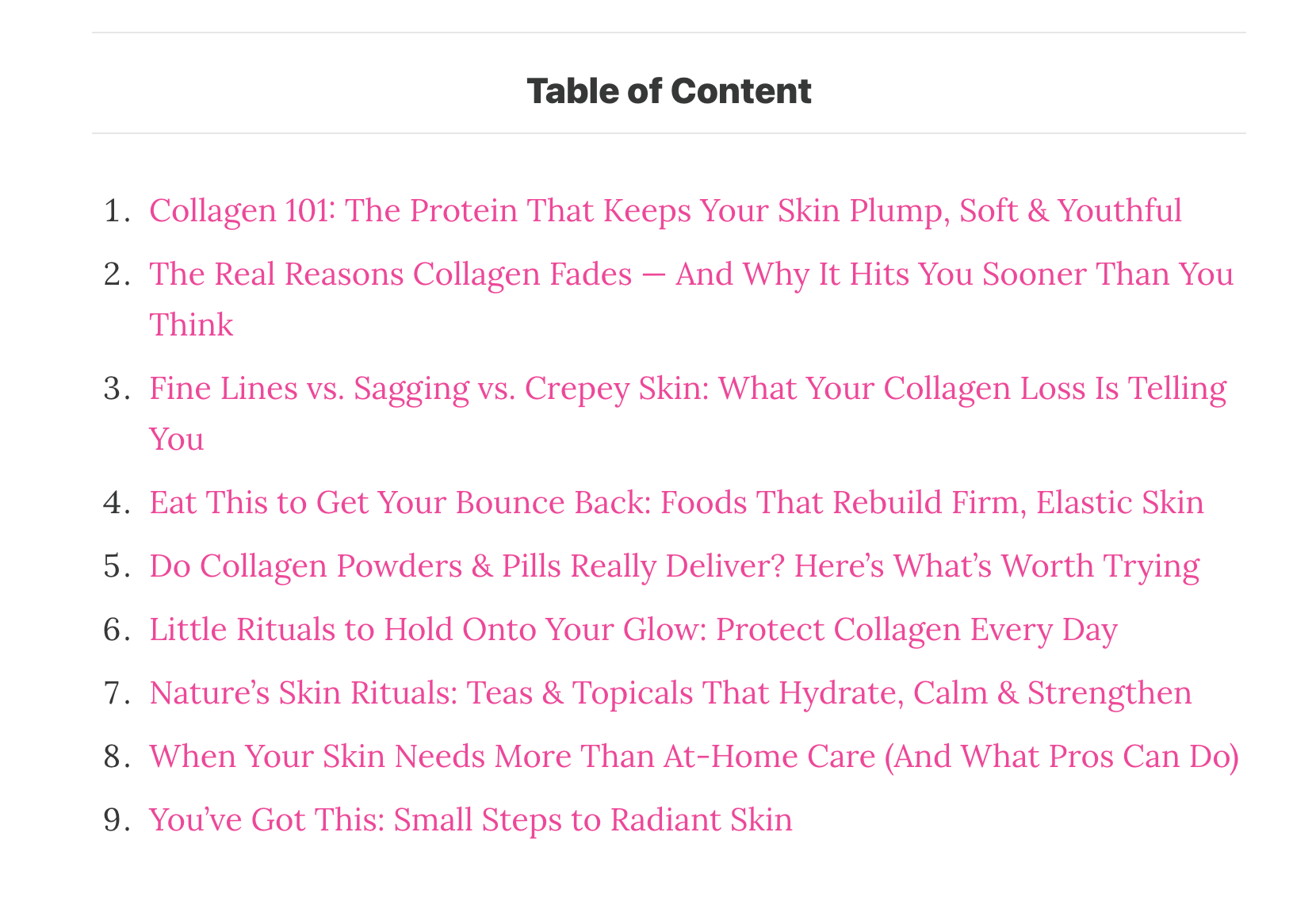
Hope you enjoy reading and learning with me, Simply Salvia
PS: We also have a subscriber-only group chat where members discuss the deep dives, share their sleep journeys, and ask me questions directly. See you there.
Disclaimer: The information and opinions expressed above are current as of the date of this post and are subject to change without notice. Materials referenced above are provided for educational and informational purposes only. None of the above constitutes medical advice, a diagnosis, a treatment recommendation, or a substitute for consultation with a qualified healthcare professional. Always seek the guidance of your doctor or another qualified health provider with any questions you may have regarding a medical condition or sleep disorder.
Short Dive below ↓
