


This is Part 2 of Fix Your Skin at the Root: Heal Your Barrier First. If you’re new here, start with Part 1 — it covers the what and the why. This part is all about the how.
Part 1 was a lot.
And if you’re coming back for Part 2, something probably landed. Maybe it was the moment you recognised your own routine in the list of things that damage the barrier — the glycolic acid toner, the retinol three nights in a row, the double exfoliation. Maybe it was the realisation that “sensitive skin” isn’t always a skin type. Sometimes it’s a skin condition. One that you caused without knowing, by doing exactly what the internet told you to do.
Either way: welcome back. Because Part 1 was the diagnosis. This is the treatment plan.
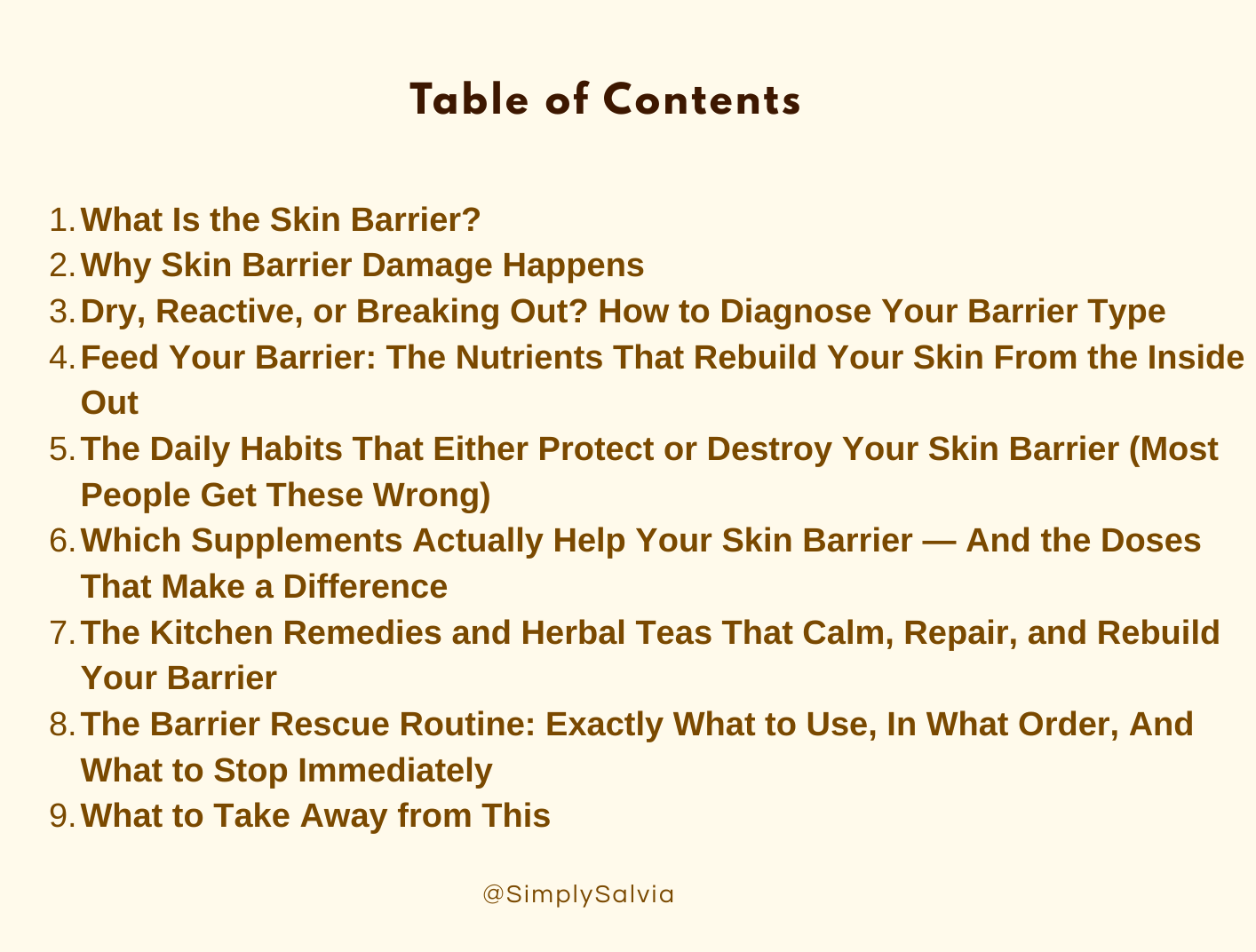
Chapters 4 through 9 are where it gets practical and this is the part where most barrier content either gets annoyingly vague (”moisturise! stay hydrated! reduce stress!”) or spirals into a 47-step protocol that makes you feel like you need a chemistry degree to wash your face. I’ve tried to do neither.
What’s actually in here: the specific nutrients that help your skin rebuild ceramides and collagen from within. The daily habits that most people don’t realise are quietly eroding their barrier, and the small ones that make a real difference. Which supplements have clinical evidence behind them, and which are mostly expensive speculation. What a real repair routine looks like — not the aesthetic version, the functional one, including what to stop, what to add, and in what order.
The 19-year-old with the ten-step routine who came up in Part 1 cut down to three products and healed in four weeks. Not because she found something better. Because she stopped getting in the way.
That’s the theme of everything that follows.
PS: We also have a subscriber-only group chat where members discuss the deep dives, share their sleep journeys, and ask me questions directly. See you there.
Disclaimer: The information and opinions expressed above are current as of the date of this post and are subject to change without notice. Materials referenced above are provided for educational and informational purposes only. None of the above constitutes medical advice, a diagnosis, a treatment recommendation, or a substitute for consultation with a qualified healthcare professional. Always seek the guidance of your doctor or another qualified health provider with any questions you may have regarding a medical condition or sleep disorder.
Short Dive below ↓
