
This is Part 2 of High Blood Pressure Isn’t Just an Older Person’s Problem. If you're new here, start with Part 1 — it covers the what and the why. This part is all about the how.
Part 1 was a lot.
And if you’re here, something probably landed. Maybe it was the 73% statistic — the proportion of young adults with hypertension who have no idea. Maybe it was the realisation that your blood pressure has been rising since your early 20s and nobody mentioned it. Maybe it was just the uncomfortable truth that a condition with no symptoms requires active looking to find, and most people never look.
Either way: you’re back. Which means you want the rest of it.
Part 1 was the biology — how blood pressure works, what the numbers mean, why the body drives it up and keeps it there. This is the part where it gets specific to you. To your hormones, your medication, your diet, your stress physiology, your future pregnancies or your history of them. The part where “cut salt and exercise more” gets replaced by information you can actually use.
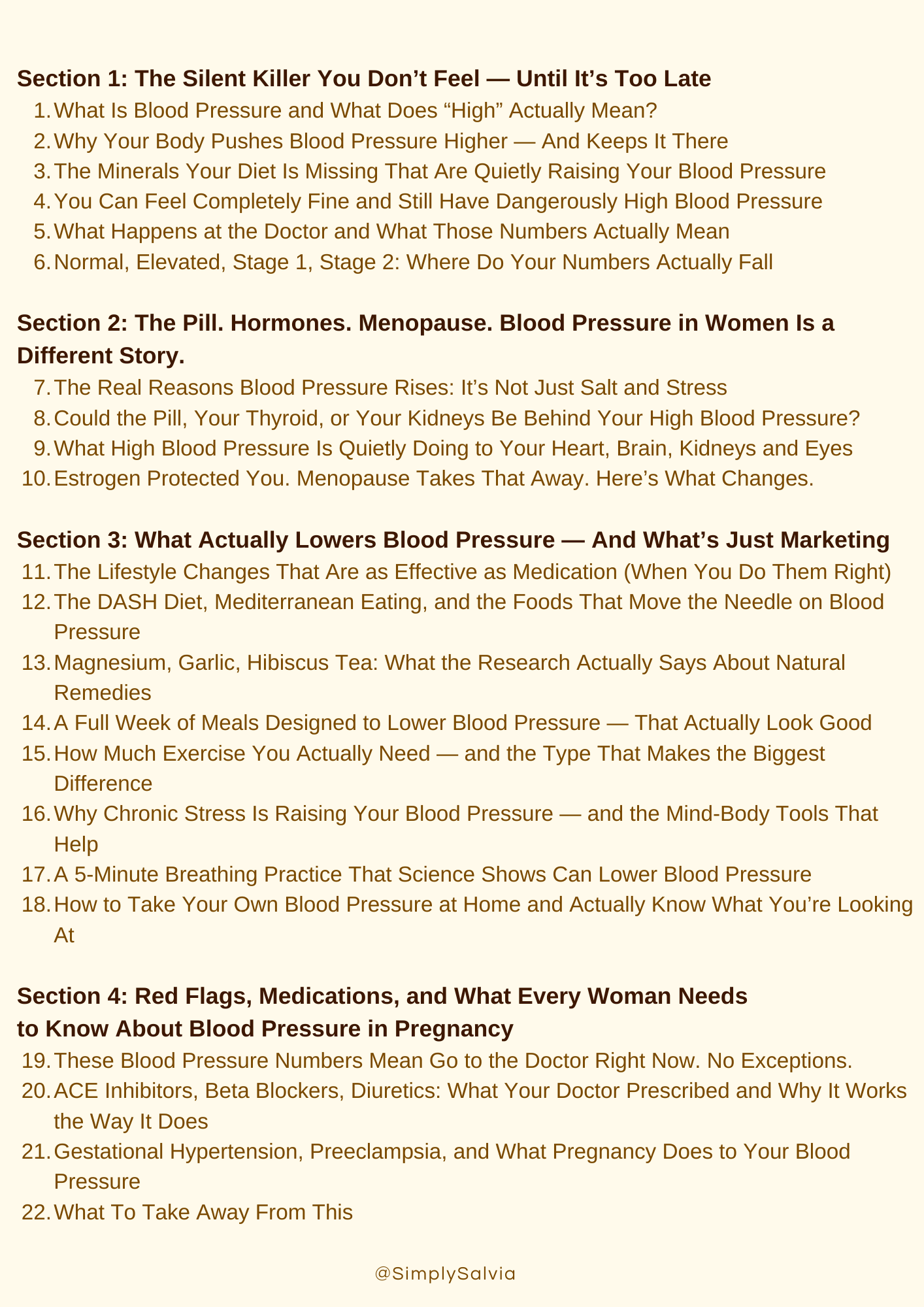
Section 2 opens with the question most women never think to ask: is something else causing this? Because in about 1 in 10 cases, high blood pressure isn’t the problem — it’s the symptom of one. The pill. A thyroid condition. A kidney issue. A hormonal imbalance producing too much aldosterone that a standard blood panel won’t catch unless someone orders the right test. This section covers all of it, including what changes at menopause and why the decade before it is the one that matters most for getting ahead of this.
Section 3 is where the evidence on lifestyle actually gets specific enough to be useful. Which diet changes move the needle and by how much. What the research says about the natural remedies that have clinical trial data behind them, and which are mostly expensive noise. A full week of meals built around blood pressure management, and a 5-minute breathing practice that has been shown in multiple studies to produce real reductions in resting blood pressure.
Section 4 is the one I’d send to anyone who is pregnant, planning to be, or has ever had a complicated pregnancy. It covers the blood pressure numbers that require same-day medical attention with no exceptions, what every class of medication actually does and why it was chosen, and the long-term cardiovascular implications of gestational hypertension and preeclampsia that most women leave the hospital never having been told.
The 24-year-old’s readings came down. Not overnight, and not from one thing but from understanding the system well enough to work with it rather than around it.
That’s what the rest of this is for.