


This edition covers four things that are all in motion right now, research findings that are actively reshaping clinical practice or public understanding in ways that are still catching up to the evidence. GLP-1 medications and their unexpected psychiatric effects. The autism and ADHD misdiagnosis gap in women and the perimenopause connection nobody was looking for. A bone hormone finding that’s being applied to pain in a way no one predicted. And a deep sleep circuit finding that wraps up everything Simply Salvia has been saying about sleep into a single, very clear diagram.
Caught My Eye…
GLP-1 Drugs Are Doing Something to Mood and Behaviour That Nobody Fully Predicted
The GLP-1 receptor agonist story keeps getting more interesting. Semaglutide (Ozempic/Wegovy), tirzepatide, and similar drugs were developed for type 2 diabetes and obesity. The cardiometabolic evidence has been robust since their initial trials. What’s been emerging over the past 18 months, and was significantly reinforced in the first half of 2026, is a psychiatric dimension that wasn’t fully anticipated.
A large study found major drops in depression, anxiety, and psychiatric-related events in people taking GLP-1 medications like semaglutide. This follows a pattern that’s been building for a while: the GLP-1 receptor is present in the brain, not just in the gut and pancreas. GLP-1 agonists appear to act on the brain’s reward system thus reducing the reinforcing quality of addictive substances and behaviours.
A Rutgers study published in June 2026 found that GLP-1 drugs may weaken the link between impulsive tendencies and violent behaviour. A finding the researchers described as suggesting these medications affect decision-making and impulse regulation through the brain’s GLP-1 pathways. Separate research has found associations between GLP-1 medication use and reduced alcohol consumption, reduced gambling behaviour, and reduced drug cravings.
The honest framing: most of this research is observational or small-scale, and the psychiatric effects of GLP-1 agonists are not yet well enough understood to be the basis for prescribing them for mental health indications. The mechanism is plausible, GLP-1 receptors in the brain regulate reward pathways but the dose-response relationships, the duration of effect, and the implications for different psychiatric populations are still being worked out. The FDA has not approved any GLP-1 drug for psychiatric use.
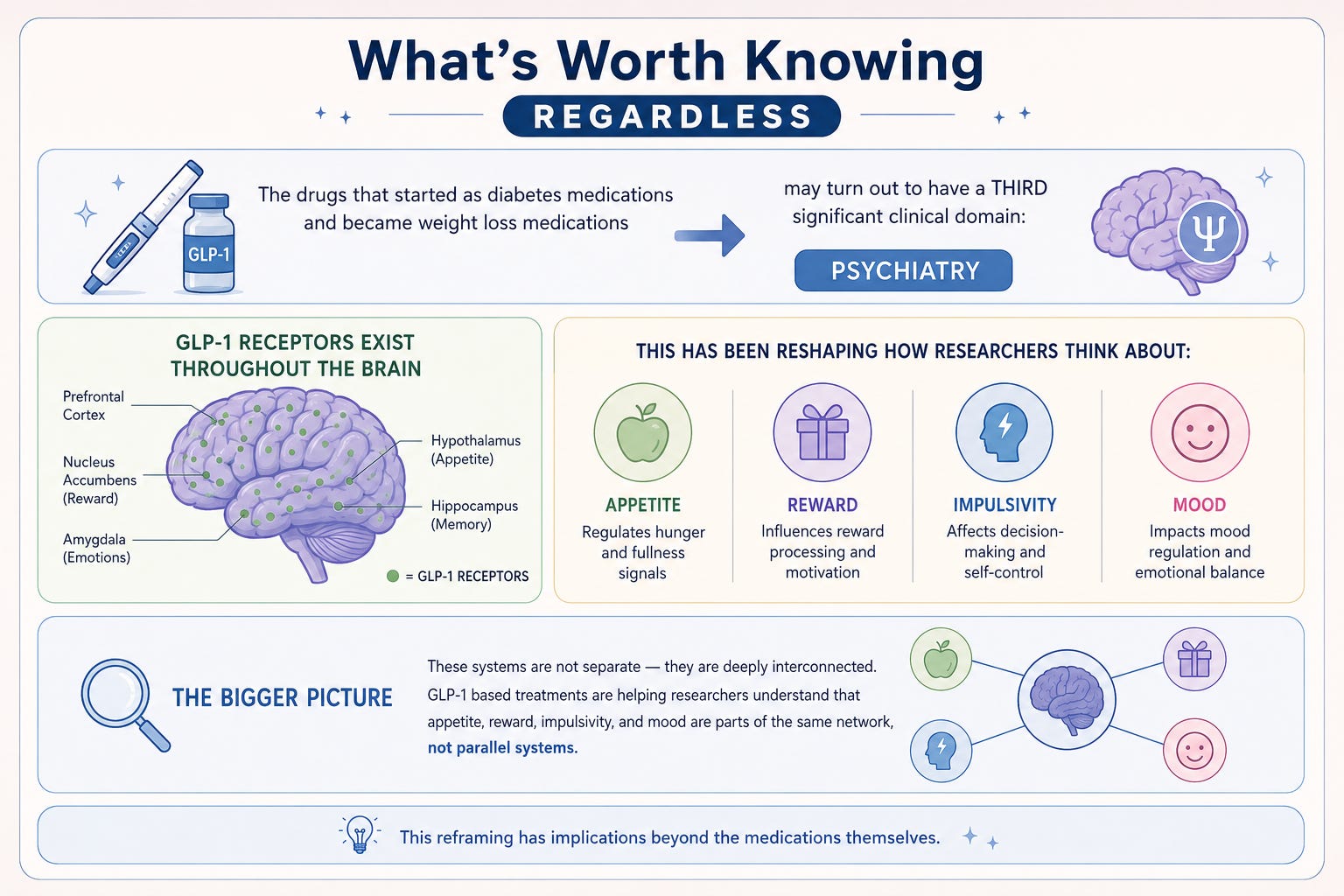
What’s worth knowing regardless: the drugs that started as diabetes medications and became weight loss medications may turn out to have a third significant clinical domain in psychiatry and the fact that GLP-1 receptors exist throughout the brain has been reshaping how researchers think about appetite, reward, impulsivity, and mood as genuinely interconnected rather than parallel systems. That reframing has implications beyond the medications themselves.
Women With Autism and ADHD Are Being Diagnosed Decades Late. And Perimenopause Is Often the Trigger
This finding is sitting at the intersection of several things Simply Salvia has covered; ADHD and hormones, perimenopause and cognitive changes, the ADHD-cycle connection and the 2026 research adds a specific new dimension that pulls them together.
“Gender bias and frequent misdiagnosis were recurrent issues, contributing to significant psychological distress. The findings emphasise the urgent need for gender-sensitive diagnostic frameworks, enhanced professional training, and a person-centred approach to care.”
The specific perimenopause connection is this: researchers are increasingly exploring how ADHD and autism present differently in women, including the role of masking behaviours and hormonal fluctuations, and recent studies have shown that autistic people and ADHDers may be particularly vulnerable to difficulties during menopause. Doctors have found women seek assessment during perimenopause, when hormonal changes can disrupt coping strategies that previously helped them navigate daily life.
The mechanism is overlapping with what I covered in the ADHD post earlier this year: estrogen’s role in dopamine signalling means that estrogen withdrawal, in the premenstrual window, postpartum, and most significantly through perimenopause, can strip away the neurochemical scaffolding that was keeping symptoms manageable. For women who have developed highly effective compensatory strategies across decades (masking, over-preparation, rigid routines that maintain function at significant personal cost) the hormonal disruption of perimenopause removes the reserve capacity those strategies depend on.
What makes this particularly significant is the diagnostic implication: a woman in her 40s experiencing sudden cognitive difficulties, overwhelm, and difficulty coping is very likely to be told this is menopause, or anxiety, or depression and to receive treatment targeted at those presentations, rather than investigation of whether an underlying neurodivergent condition that’s been masked throughout her life is now becoming clinically apparent for the first time.
The practical note: if you, or a woman in your life, is experiencing a significant shift in cognitive functioning, overwhelm tolerance, or sensory sensitivity during perimenopause and particularly if there are retrospective elements of the picture that resemble ADHD or autism traits throughout life this is worth raising specifically rather than accepting a purely hormonal explanation.
A Bone Hormone Is Being Used for Back Pain And the Mechanism Is Completely Unexpected
This one is genuinely surprising and falls into the category of findings that only make sense when you look at the biology underneath them.
A new study suggests a widely used bone hormone could help relieve chronic back pain in an unexpected way. Instead of just strengthening bone, it appears to stop pain-sensing nerves from growing into damaged spinal areas.
The hormone in question is related to bone metabolism, specifically the hormone involved in regulating the process by which bone is remodelled and maintained throughout adult life. The finding is that beyond its skeletal role, this hormone appears to regulate the growth of nociceptive nerve fibres (the nerves that carry pain signals) into damaged tissue. In the animal models tested, administering the hormone prevented pain-sensing nerves from innervating (growing into) damaged spinal disc tissue, which is one of the mechanisms by which chronic back pain becomes persistent and self-reinforcing.
This matters because chronic back pain is one of the leading causes of disability globally, and the treatment options beyond pain management are limited. Understanding the nerve-growth mechanism opens a conceptually different treatment pathway — one that targets the biological process that makes pain persist, rather than blocking pain signals after they’re already being generated.
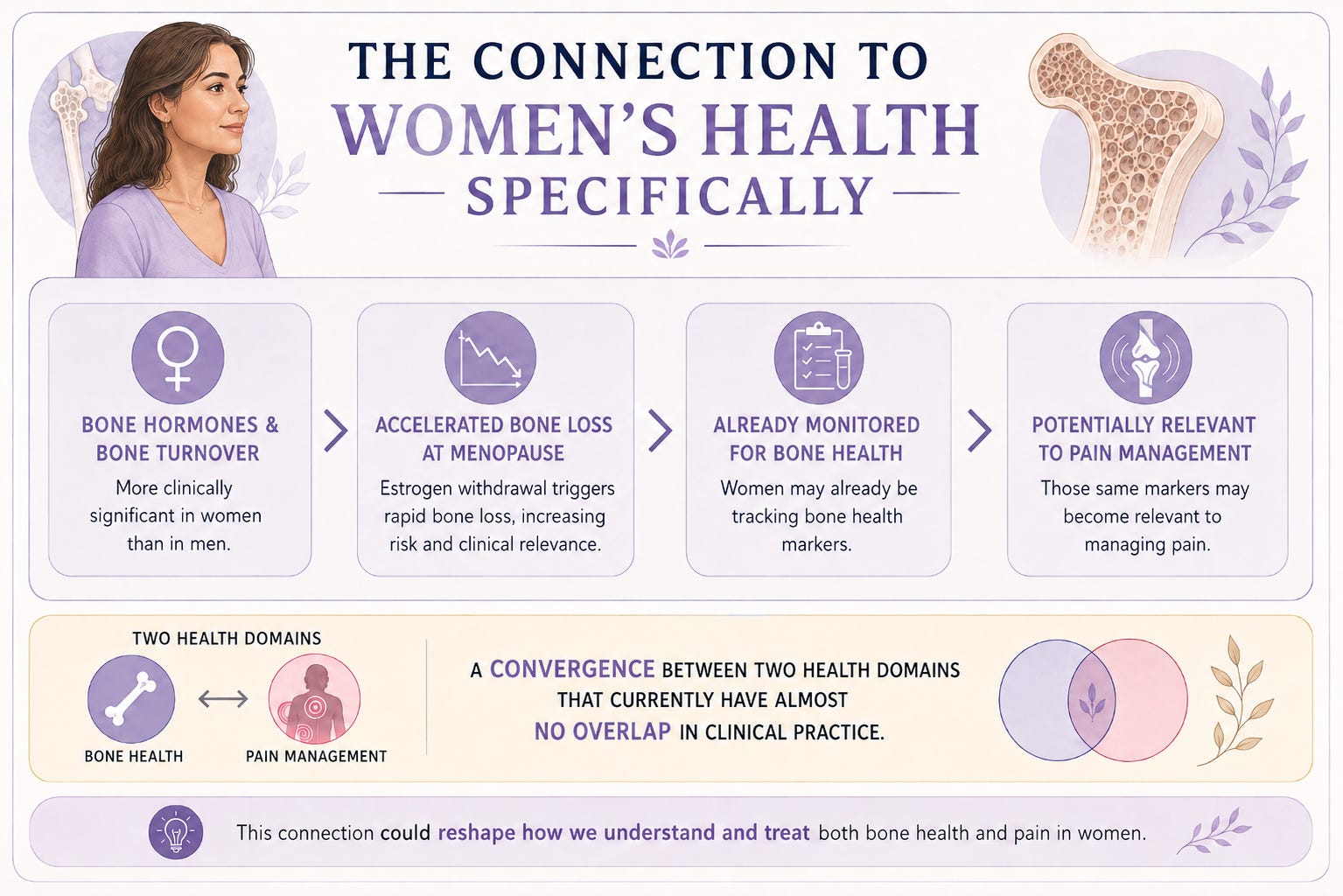
The connection to women’s health specifically: bone hormones and bone turnover are more clinically significant in women than in men due to the accelerated bone loss that follows estrogen withdrawal at menopause. Women who are already being monitored for bone health markers may eventually be in a position where those same markers are relevant to pain management, a convergence between two health domains that currently have almost no overlap in clinical practice.
The Deep Sleep Circuit That Builds Muscle, Burns Fat, and Regulates Mood. Now Fully Mapped
In July 2026, a research team published the most complete picture yet of the brain circuitry that links deep sleep with growth hormone release confirming and extending the UC Berkeley finding.
This finding pulls together several threads that Simply Salvia has covered across multiple posts: the UC Berkeley sleep-GH research, the weight loss short dive’s discussion of why sleep deprivation impairs body composition, and the hair loss short dive’s note about GH’s role in follicle repair and cell division. What the new mapping adds is the specific neural circuitry; the exact brain regions and signalling pathways that control the deep sleep to GH release cascade, which is the foundation needed for any targeted intervention.
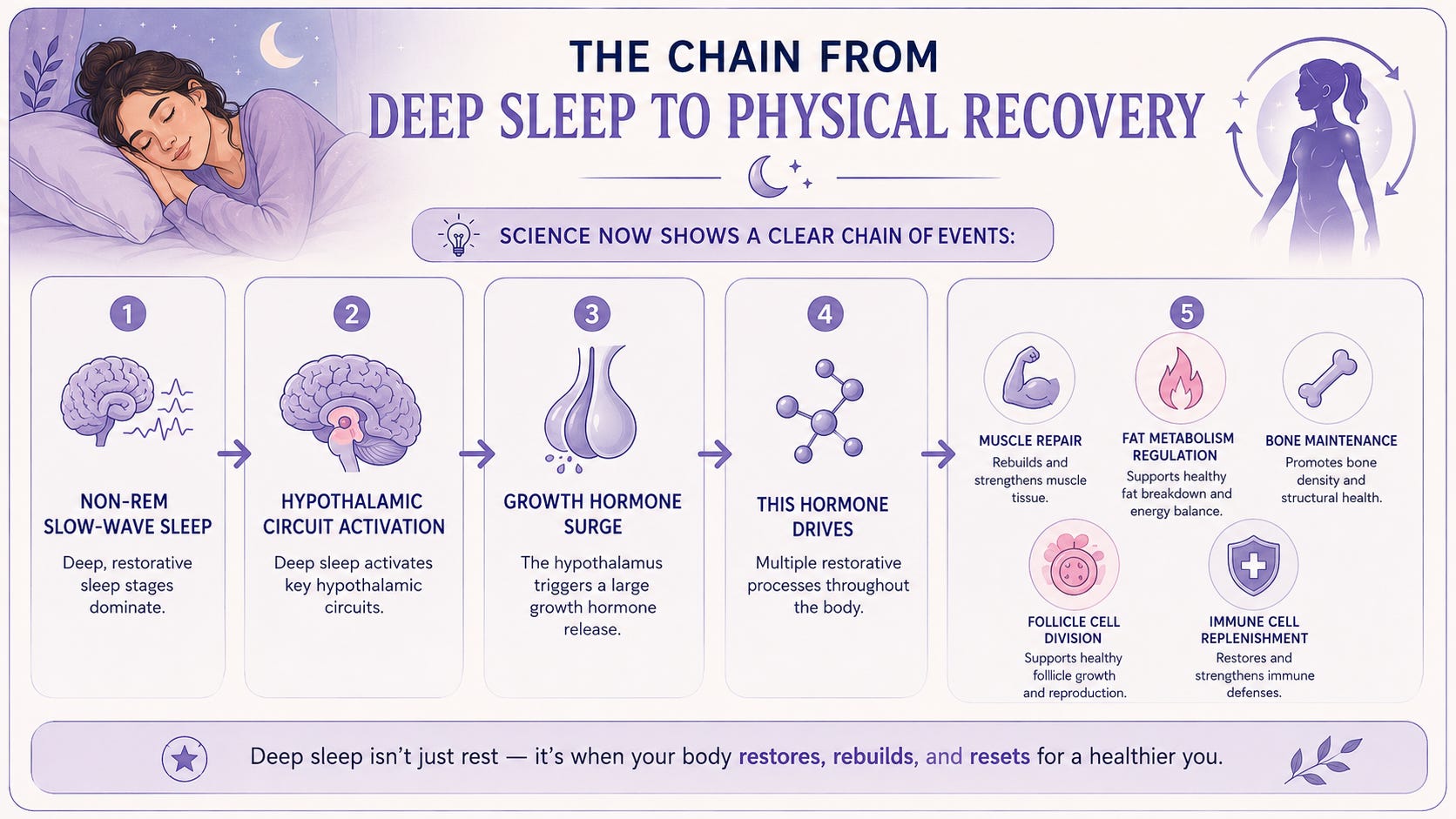
The clearest practical translation: the chain from deep sleep to physical recovery is now mapped well enough that we can say with confidence it goes: non-REM slow-wave sleep → hypothalamic circuit activation → growth hormone surge → muscle repair, fat metabolism regulation, bone maintenance, follicle cell division, and immune cell replenishment. Interrupting any part of this chain with alcohol, with elevated body temperature (the luteal phase mechanism), with early sleep cut-off, with chronic stress keeping cortisol elevated reduces the output at the end.
What’s worth sitting with: this isn’t a fringe claim in alternative wellness. The growth hormone regulation of adult tissue maintenance is fundamental physiology, it’s now mapped at the circuit level, and the implications span muscle composition, metabolic health, skin repair, hair growth, and immune function simultaneously. Sleep is not a passive state. It’s the maintenance window. And the circuitry that runs it is now visible enough to understand why every single intervention that disrupts deep sleep costs the body something real and measurable.
The information in this post is for educational and informational purposes only. None of the above constitutes medical advice. Always consult a qualified healthcare professional for personal health concerns.
Between Saturdays is a weekly research roundup from Simply Salvia. Four things from science and wellness worth knowing about. If someone sent this to you, you can subscribe here.
Detailed Readings
Weight loss drug Ozempic cuts depression, anxiety, and addiction risk
Researchers Link Use of GLP-1 Medications to Lower Risk of Violence
Gender Bias and Diagnostic Delays in Young Women: A Narrative Review
Scientists discover hormone that may stop chronic back pain at its source
Scientists discover the deep sleep circuit that builds muscle, burns fat, and boosts the brain