


Some weeks the wellness content pipeline is frustrating to read. Not because it doesn’t care, but because it moves faster than the evidence does and by the time a study gets misrepresented on TikTok, half a million people have already incorporated its conclusion into their routine.
This edition is a bit of a myth-bust. Four things that are all over your feeds right now — iron deficiency, cortisol face, seed cycling, and women’s sleep needs, and what the research actually says about each of them.
Let’s get into it.
Caught My Eye…
40% of Teenage Girls Are Iron Deficient. Routine Tests Are Missing Most of Them.
If you’ve ever been told your blood test came back normal and still feel exhausted, brain-fogged, and like you’re functioning at about 60%, this one is for you.
A 2023 study published in JAMA examined iron levels in over 5,000 American girls and women aged 12–21. The finding: nearly 40% had iron deficiency. Not anaemia — iron deficiency, which is the earlier and more common stage where your iron stores are depleted before it shows up in red blood cell counts.
The part that should frustrate you: routine screening missed 83.6% of these cases. The reason is that standard blood panels typically check haemoglobin; the protein that carries oxygen in red blood cells rather than ferritin, which is the protein that stores iron. You can have haemoglobin levels that look normal while your iron reserves are nearly empty. And the symptoms of non-anaemic iron deficiency — fatigue, difficulty concentrating, low mood, hair shedding, coldness in hands and feet, reduced exercise tolerance, are vague enough that they get attributed to stress, sleep, or just being a busy person.
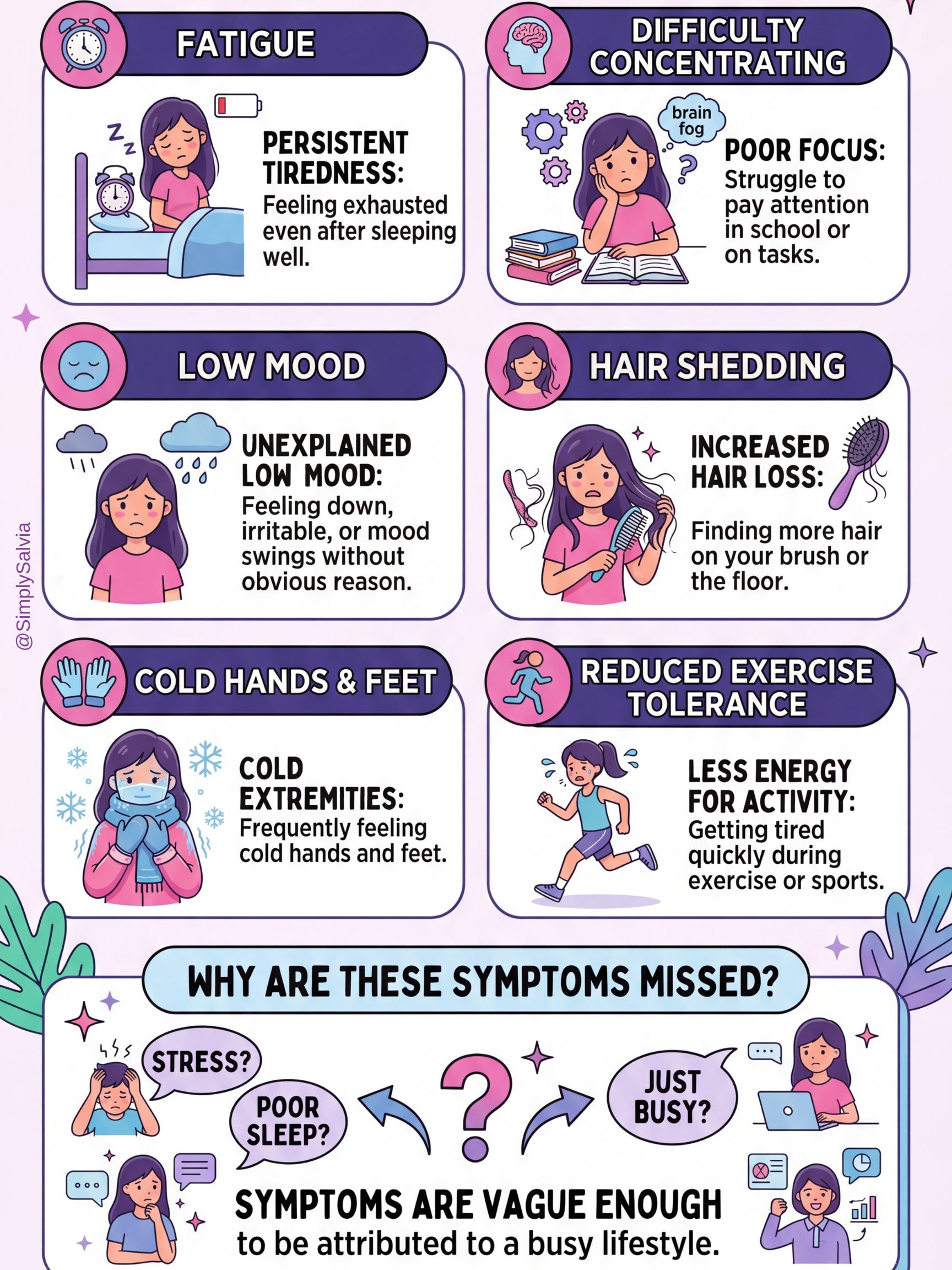
The CDC currently recommends screening for anaemia in adolescent girls every 5 to 10 years. Not iron deficiency — anaemia, which is the more severe, later-stage condition. A 2024 study in Blood Advances found that in a cohort of over 13,000 people diagnosed with iron deficiency, 58% still had not achieved resolution three years later and of those who did, it took an average of almost two years.
Two years of low energy. Two years of brain fog. Often while being told your results look fine.
What to ask for: request a ferritin test specifically, not just a full blood count or haemoglobin check. A ferritin level below 30 µg/L is considered iron deficient by most haematologists, even if haemoglobin looks normal. If you menstruate heavily, or follow a plant-based diet, or have been feeling persistently tired in a way sleep doesn’t fix — this is worth checking.
Cortisol Face: What TikTok Got Right and What It Got Very Wrong
#cortisolface has tens of millions of views. The premise: chronic stress raises cortisol, which causes facial puffiness, weight redistribution to the face, and a rounded, swollen appearance that people are calling “cortisol face.”
The emotional hook: “you’re not ugly, you just have cortisol face,” has understandably resonated. It offers an explanation and reframes appearance in terms of physiology rather than personal failing. But dermatologists and endocrinologists have been consistent in their pushback, and it’s worth understanding why.
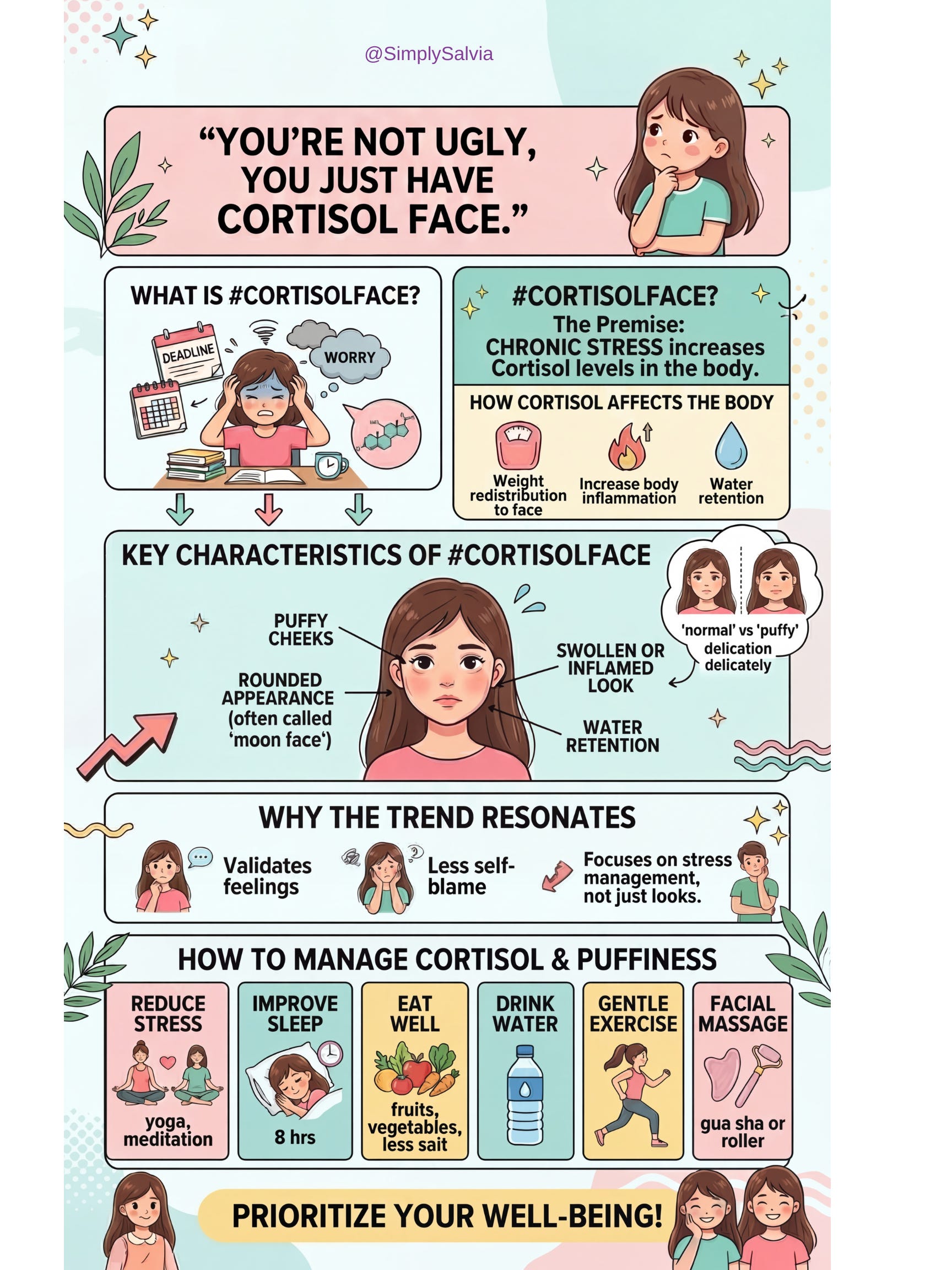
Chronic everyday stress is unlikely to raise cortisol enough to cause visible facial changes. The kind of cortisol-driven facial puffiness that looks like what people are calling “cortisol face,” the uniform rounding of the cheeks, the redistribution of fat to the face and back of the neck is clinically called moon facies, and it occurs primarily in people with Cushing’s syndrome (a rare condition causing pathologically elevated cortisol) or those taking corticosteroid medications at high doses over prolonged periods. Cushing’s syndrome affects approximately 2.2 people per 100,000 — not the substantial portion of TikTok users who have self-diagnosed.
That doesn’t mean stress has no effect on your face. Chronic stress disrupts the cortisol rhythm, damages the skin barrier, contributes to collagen breakdown, and, this is the important part — impacts your habits. Poor sleep causes under-eye puffiness and fluid retention. High-sodium stress eating causes facial bloating. The anxiety-driven 3am snacking does too. These are real cortisol-adjacent effects on appearance. They’re just not the same as cortisol directly redistribution fat to your face.
The nuanced version: stress affects your face, mostly through secondary effects — what it does to your sleep, your diet, your inflammation levels. If you’re puffy, tired-looking, and breaking out, stress is very likely involved. But the mechanism isn’t “cortisol accumulating in your cheeks.” The treatment isn’t supplements that claim to lower cortisol. It’s the less glamorous stuff: sleep consistency, less salt, more water, actual stress management.
If your facial puffiness is persistent, uniform, accompanied by worsening acne, weight gain concentrated around the abdomen, or increased facial hair growth. That is a reason to see a doctor and get cortisol levels actually tested, not to buy an adaptogen stack from an influencer.
Seed Cycling: The Honest Version of What We Know
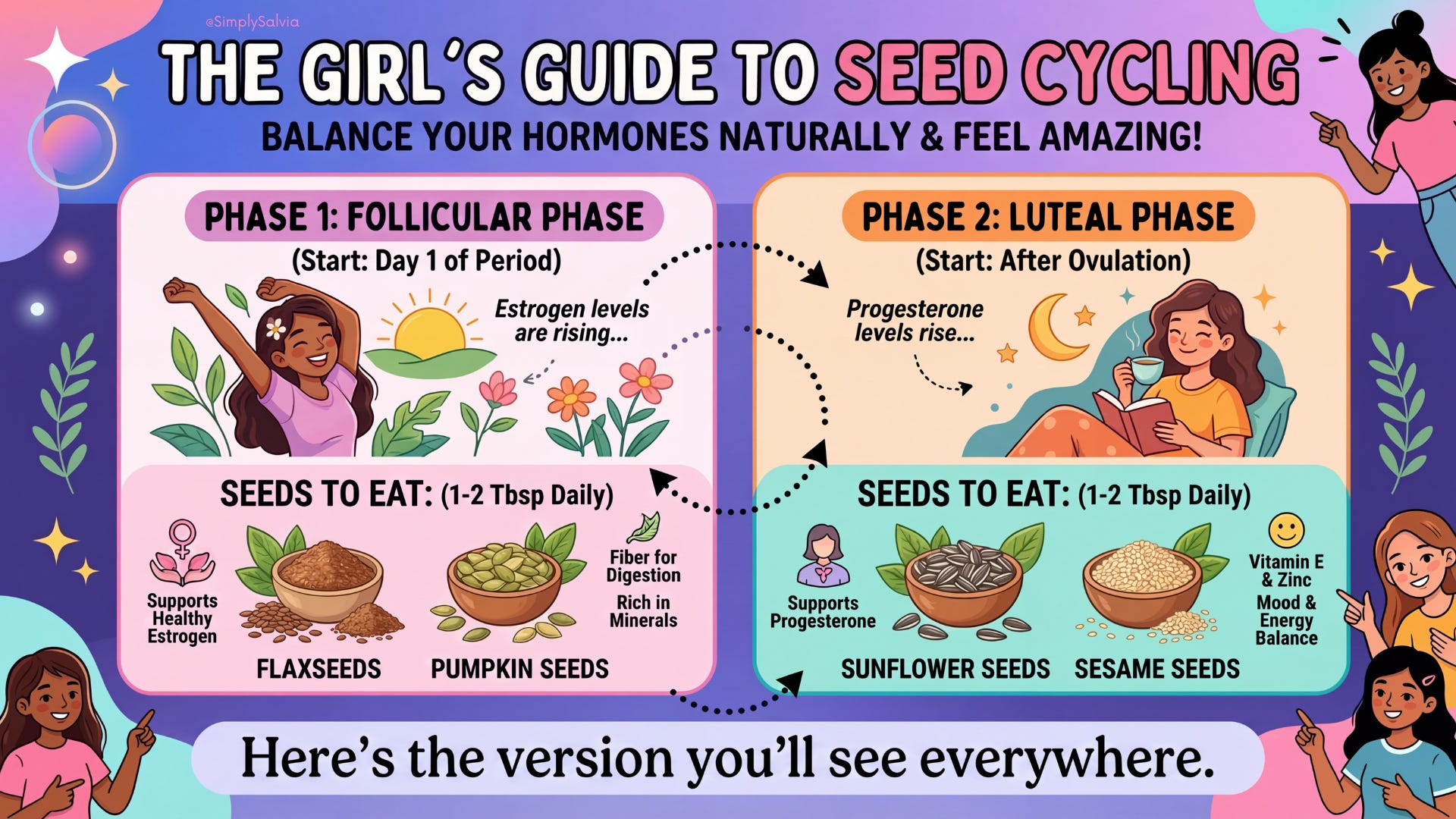
Seed cycling is everywhere. The protocol; eating flaxseeds and pumpkin seeds in your follicular phase, switching to sunflower and sesame seeds in your luteal phase, claims to balance oestrogen and progesterone through the compounds in each seed, reducing PMS, supporting fertility, and improving hormonal symptoms across the cycle.
The appeal makes sense. It’s food-based, low-cost, low-risk, and framed around supporting your natural cycle rather than overriding it.
But here’s the honest research summary: there are currently no clinical trials on seed cycling as a practice. The evidence that exists is on individual seeds in isolation and not on the cycling protocol, and not in high-quality randomised controlled trials.
What that evidence does show is genuinely interesting. Flaxseeds contain lignans that interact with oestrogen receptors and have been associated with longer luteal phases and more consistent ovulation in a small study of 18 women. Pumpkin seeds are high in zinc, which plays a role in corpus luteum function and progesterone support. Sesame seeds contain lignans that may modulate oestrogen activity in the luteal phase. Sunflower seeds provide vitamin E and selenium, both involved in antioxidant protection and hormone metabolism.
The individual nutritional case for eating these seeds is real. The specific claim that eating them in phase-timed rotation creates a meaningful hormonal effect — that’s where the evidence runs out.
A 2025 review in Food and Humanity found preliminary evidence that seed cycling may improve some hormonal markers in PCOS, but concluded that “robust clinical trials are urgently needed to validate these claims scientifically.”
The realistic take: eating these seeds as part of a varied diet is nutritionally sensible and unlikely to cause any harm. Eating them in the specific protocol might work for you — the individual seed compounds have biological rationale. But if you’re managing PCOS, irregular cycles, severe PMS, or fertility concerns, seed cycling is not a substitute for medical assessment. It’s a food habit, not a treatment.
Women Sleep More Than Men — And Still Report Worse Sleep. Here’s Why.
The research on women’s sleep is one of those topics where the headlines and the reality don’t quite line up, and it’s worth separating the two.
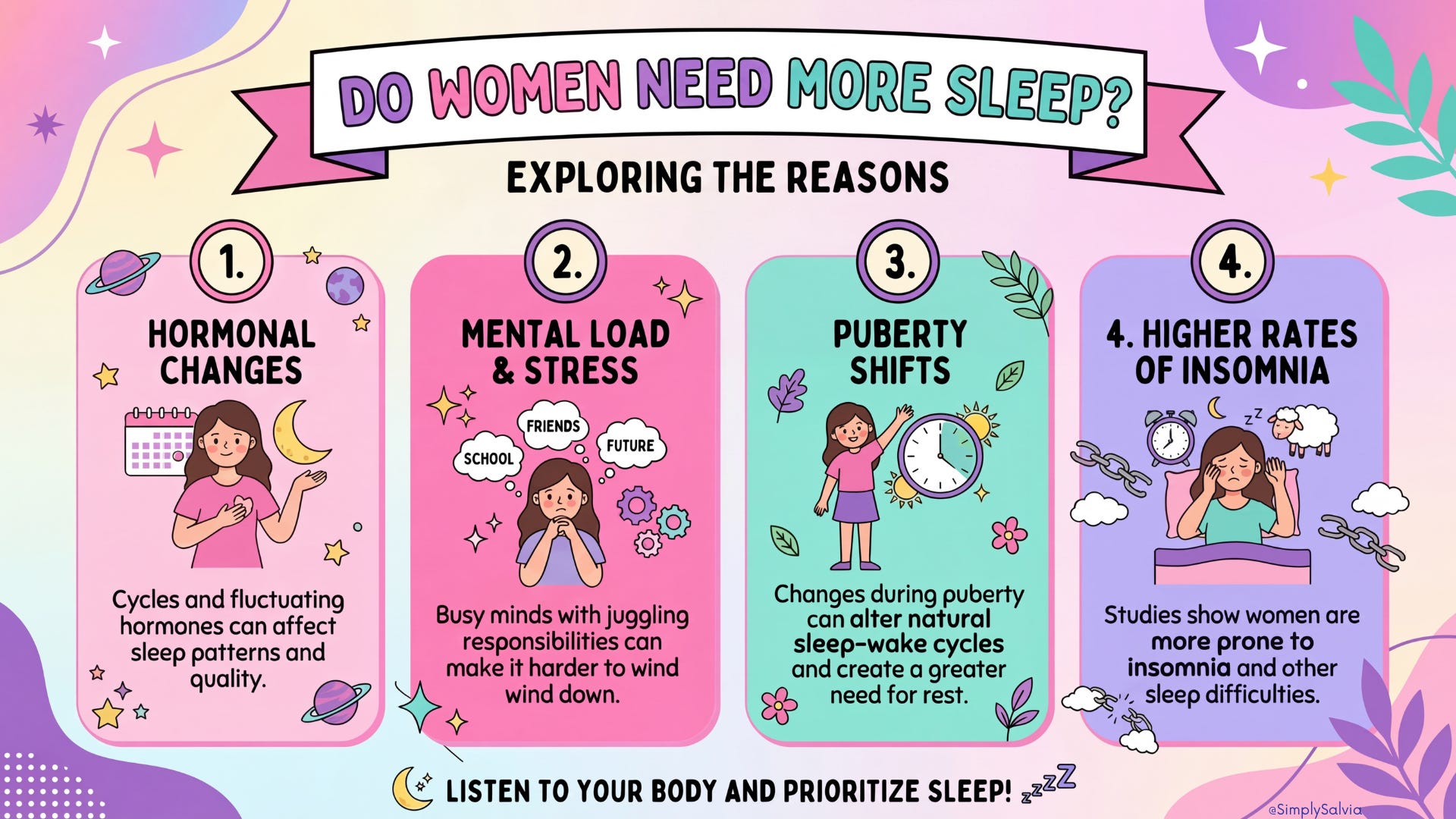
What’s true: women sleep slightly longer than men on average, about 8 to 11 minutes more per night. Sleep lab studies consistently show women spend more time in deep non-REM sleep. Women also fall asleep faster than men, which is often interpreted as a sign of a greater biological sleep need.
What’s also true: women are 40% more likely than men to have insomnia, twice as likely to be diagnosed with anxiety and depression (both strongly associated with disrupted sleep), and consistently report lower sleep quality despite the objective measures looking comparable or better.
A 2024 review published in Sleep Medicine Reviews by researchers from Southampton, Stanford, and Harvard found that women’s circadian periods are approximately six minutes shorter than men’s — which sounds small but creates a meaningful misalignment between the internal body clock and external cues like light and darkness. Women’s melatonin is secreted earlier, core body temperature peaks earlier, and the result is a sleep-wake cycle that is more vulnerable to disruption from late nights, irregular schedules, and artificial light. The researchers found that circadian misalignment is approximately five times larger in women than in men.
The hormonal piece compounds everything. The follicular-to-luteal transition drops core body temperature and disrupts sleep architecture in ways that track across the cycle. Progesterone has mild sedative properties but also raises body temperature in the luteal phase, which fragments sleep. The premenstrual window; when oestrogen and progesterone both fall is associated with more awakenings and lighter sleep.
What this means practically: the generic “get 7–9 hours” advice treats sleep as if it’s identical across sexes and life stages. For women, sleep quality is more hormonally dependent, more disrupted by circadian misalignment, and more sensitive to irregular scheduling than the standard advice accounts for. A consistent sleep and wake time, even on weekends has outsized benefit for women specifically because of the circadian vulnerability. And the sleep deficit you accumulate across a poorly-timed week isn’t fully recovered by a long Saturday lie-in.
It’s not that you need more sleep. It’s that your sleep is harder to protect, and the disruptions cost more than you might think.
Between Saturdays is a weekly research roundup from Simply Salvia. Four things from science and wellness worth knowing about. If someone sent this to you, you can subscribe.
The information in this post is for educational and informational purposes only. None of the above constitutes medical advice. Always consult a qualified healthcare professional for personal health concerns.
Detailed Readings
Prevalence of Iron Deficiency and Iron-Deficiency Anemia in US Females Aged 12-21 Years, 2003-2020
Over 38% of Young Women Iron Deficient, New Research Finds
Iron Deficiency Remains Unresolved Years After Diagnosis
Is ‘cortisol face’ a real thing?
Is Seed Cycling Legit for Hormone Balance?
Research uncovers differences between sexes in sleep, circadian rhythm and metabolism