


This edition is the honest version of four things that are all over your FYP right now. Berberine, which has been marketed as a natural weight loss drug for two years and had a major review published in March 2026 that complicates that story significantly. Microplastics, which are in your ovarian follicular fluid and your bloodstream and which most wellness content either ignores or catastrophises. The vagus nerve trend, which has something real to it but is being sold with more confidence than the evidence warrants. And sleepmaxxing - the Gen Z TikTok trend that’s got both something right and something wrong. Let’s do all four.
Caught My Eye…
Berberine Is Not “Nature’s Ozempic”. A March 2026 Review Finally Said It Directly.
Berberine has had 100 million+ TikTok views as a natural alternative to Ozempic. The claim: it works on the same pathways, produces the same appetite suppression, and gives you the weight loss results of semaglutide without the prescription or the side effects.
A review published in the International Journal of Molecular Sciences in December 2025, summarised by Medical Xpress in March 2026, looked at this claim carefully and reached a clear conclusion: the comparison is an oversimplification that doesn’t reflect how berberine actually works, or how strong the evidence is.
Here’s the honest picture. Berberine is a plant compound that activates an enzyme called AMPK, which plays a role in regulating metabolism and improving insulin sensitivity. It does have genuine evidence for lowering blood sugar particularly in people with type 2 diabetes and some modest evidence for supporting weight loss over 8–12 weeks. These are real effects.
But Ozempic (semaglutide) is a GLP-1 receptor agonist. It directly mimics a gut hormone that tells your brain you’re full, dramatically suppresses appetite, slows gastric emptying, and produces an average weight loss of 15–20% of body weight in clinical trials. Berberine does not work through the GLP-1 pathway. It doesn’t suppress appetite in the same way. It doesn’t produce remotely comparable weight loss outcomes. The mechanisms are different, the effect sizes are different, and the evidence base is different.
What the March 2026 review specifically found: responses to berberine differ widely between individuals likely because its effects run through the gut microbiome, which varies enormously between people. One person’s berberine response is completely different from another’s in a way that doesn’t happen with semaglutide. The individualised, microbiome-dependent mechanism is interesting and worth more research. It is not the same mechanism as Ozempic.
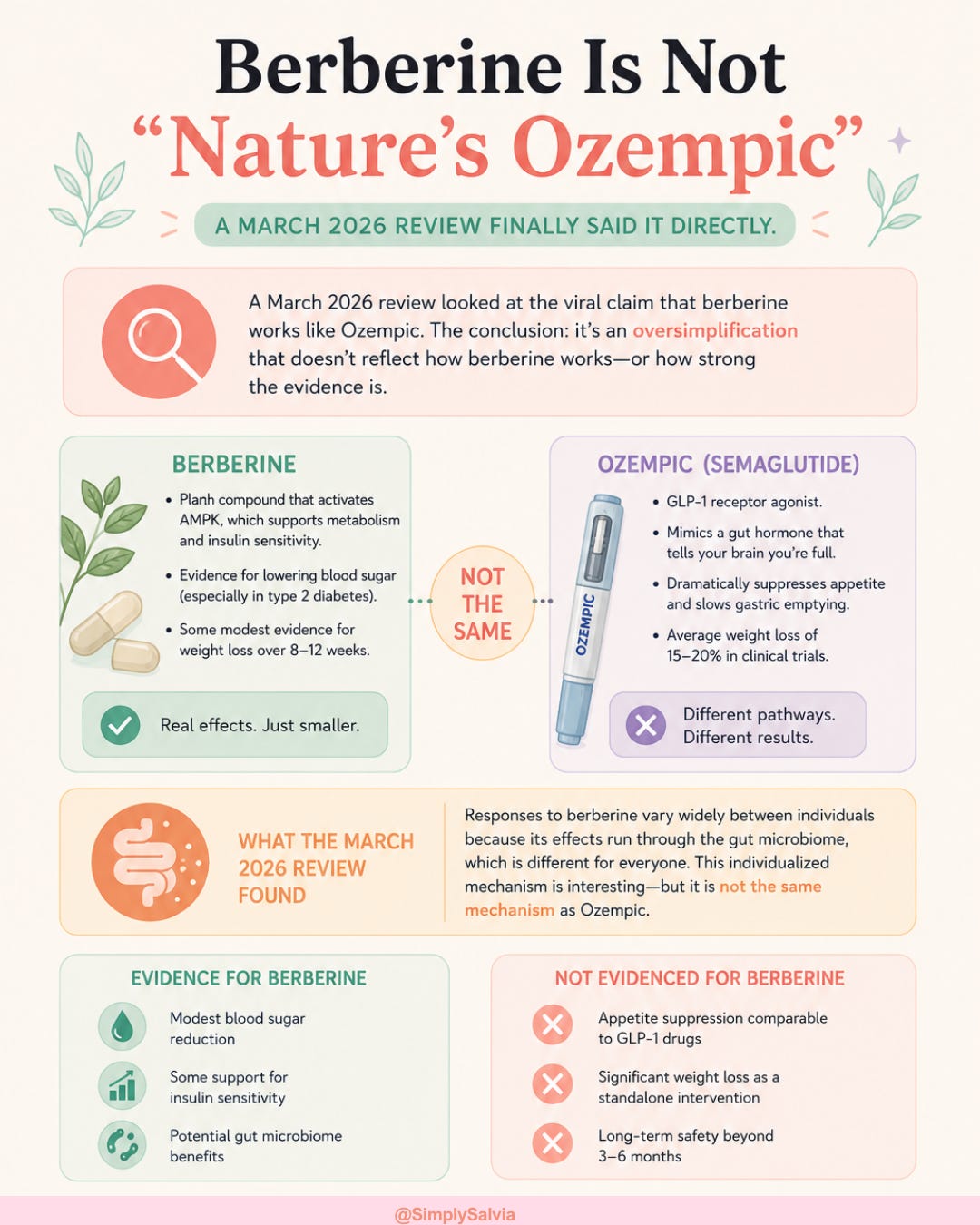
What berberine does have evidence for: modest blood sugar reduction, some support for insulin sensitivity, potential gut microbiome benefits. What it doesn’t have evidence for: appetite suppression comparable to GLP-1 drugs, significant weight loss as a standalone intervention, long-term safety beyond 3–6 months.
If you’re taking it: the evidence doesn’t suggest it’s harmful at standard doses (500mg 2–3x daily) for most healthy adults. The evidence does suggest the “natural Ozempic” framing is marketing, not science. And there are specific groups who should avoid it entirely: pregnant or breastfeeding women, people on blood sugar or blood pressure medication, and people with clotting disorders.
Microplastics Are In Your Ovarian Follicular Fluid. Here’s What the Research Actually Says.
This is the one that wellness content gets very wrong in two opposite directions: either “microplastics are fine, the danger is overhyped” or “microplastics are destroying your hormones and fertility right now.” The actual research sits in a more specific and more unsettling place than either of those.
A systematic review published in Archives of Gynecology and Obstetrics in January 2025, covering 15 experimental studies, found that microplastic exposure significantly affects ovarian function, decreases fertility rates, and disrupts hormone levels in female subjects. A separate review in the International Journal of Gynecology & Obstetrics in October 2025 confirmed the pattern: microplastics and nanoplastics interfere with the hypothalamic-pituitary-ovarian axis (the hormonal control system that regulates the menstrual cycle) in ways that disrupt estrogen and progesterone production.
The most striking single finding: researchers detected microplastics inside human ovarian follicular fluid. The fluid that surrounds developing eggs. This means microplastics are reaching the immediate environment of egg development. The clinical implications of this aren’t fully established yet. But the fact that they’re present is not a small finding.
A meta-analysis published in August 2025 found that consuming food in plastic containers significantly increased microplastic contamination in pregnant women, and that microplastic content in the placenta correlated with worse pregnancy outcomes including intrauterine growth restriction.
The honest caveats: most of the reproductive health studies are in animals (mice, zebrafish, rats), not humans. Human studies exist but are fewer and typically smaller. The dose-response relationship (how much exposure is needed to produce harm) isn’t fully established. “Microplastics are present” is confirmed. “Microplastics are causing X level of harm in healthy women in their 20s” is still being quantified.
What this means practically - not catastrophically, but concretely:
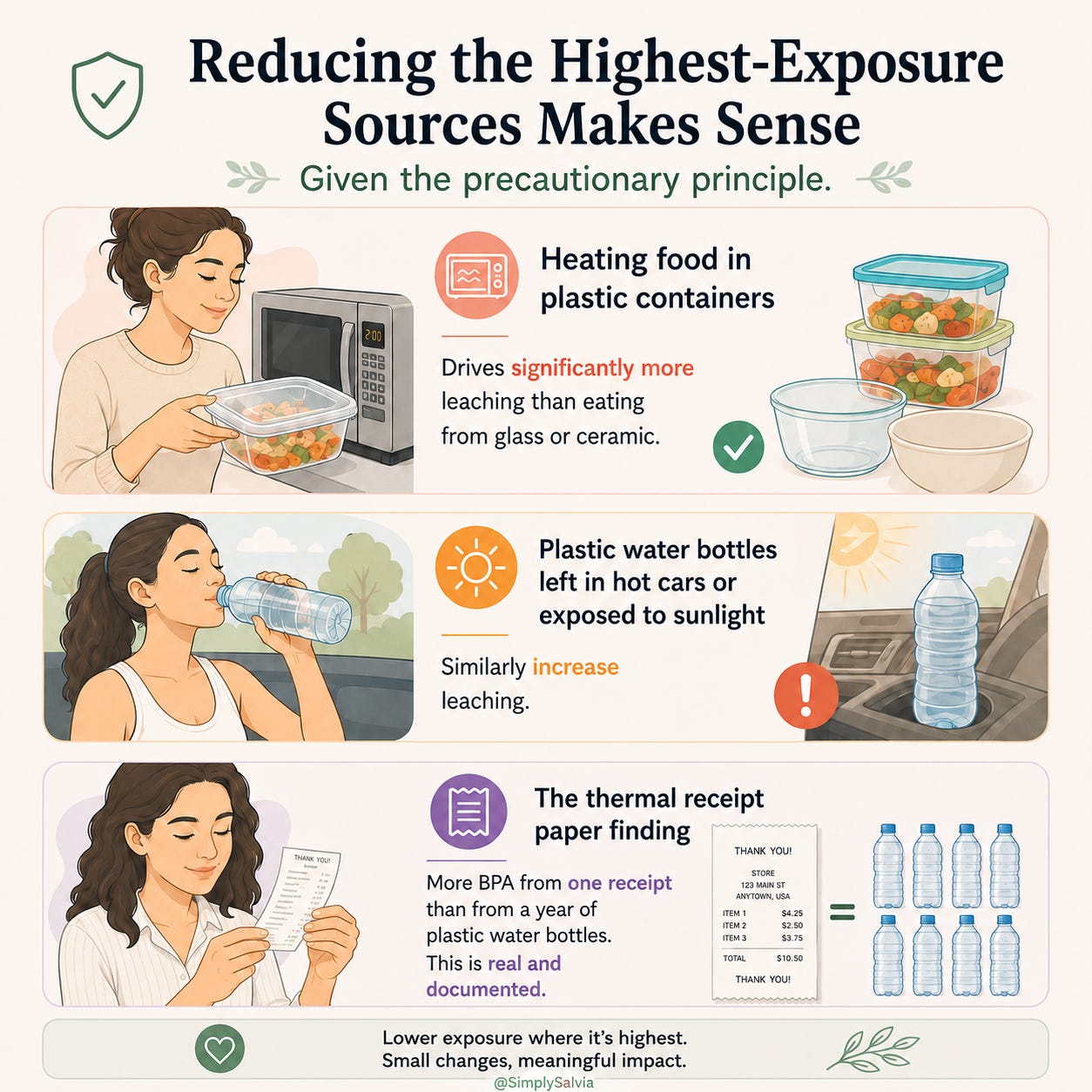
These aren’t reasons for anxiety. They’re reasons for easy, low-effort swaps that reduce the highest-dose exposures while the research catches up.
The Vagus Nerve Trend Has Something Real To It. The Devices Being Sold Around It Have More Confidence Than Evidence.
Vagus nerve stimulation has gone from a clinical procedure for treatment-resistant epilepsy and depression to a TikTok wellness aesthetic involving ear seeds, special breathing devices, cold plunges, and $400 gadgets - in approximately 18 months.
The biology is real. The vagus nerve is the longest nerve in the body, running from the brainstem through the heart, lungs, and gut. It’s the primary conduit of the parasympathetic nervous system; the “rest and digest” counterpart to the “fight or flight” sympathetic system. Stimulating it activates anti-inflammatory pathways, slows heart rate, reduces cortisol output, and shifts the nervous system toward calm. A 2026 comprehensive review in Comprehensive Physiology confirmed that vagus nerve stimulation affects the brain’s arousal, emotion, and homeostatic networks through direct anatomical pathways.
The clinical evidence for implanted vagus nerve stimulators (for epilepsy, treatment-resistant depression, and PTSD) is solid. For non-invasive transcutaneous auricular VNS (taVNS), stimulating the vagus nerve through the ear, the evidence is growing and genuinely interesting. A 2025 placebo-controlled trial found significant reductions in stress, cognitive anxiety, and somatic anxiety with auricular VNS. A 2025 systematic review found non-invasive VNS significantly improved symptoms across gut disorders including IBS and inflammatory bowel disease. A 2022 trial found 50% improvement in self-reported sleep quality after one month.
The honest state of the evidence: non-invasive VNS shows real promise. Most studies are small. Effect sizes vary considerably between individuals. The consumer devices being sold, ranging from electrical ear clips to vibrating neck devices, are not the same as the devices used in clinical trials, and their efficacy hasn’t been independently validated. “The vagus nerve is real and stimulating it does things” is confirmed. “This £200 device will regulate your nervous system” is a different claim with much weaker evidence.
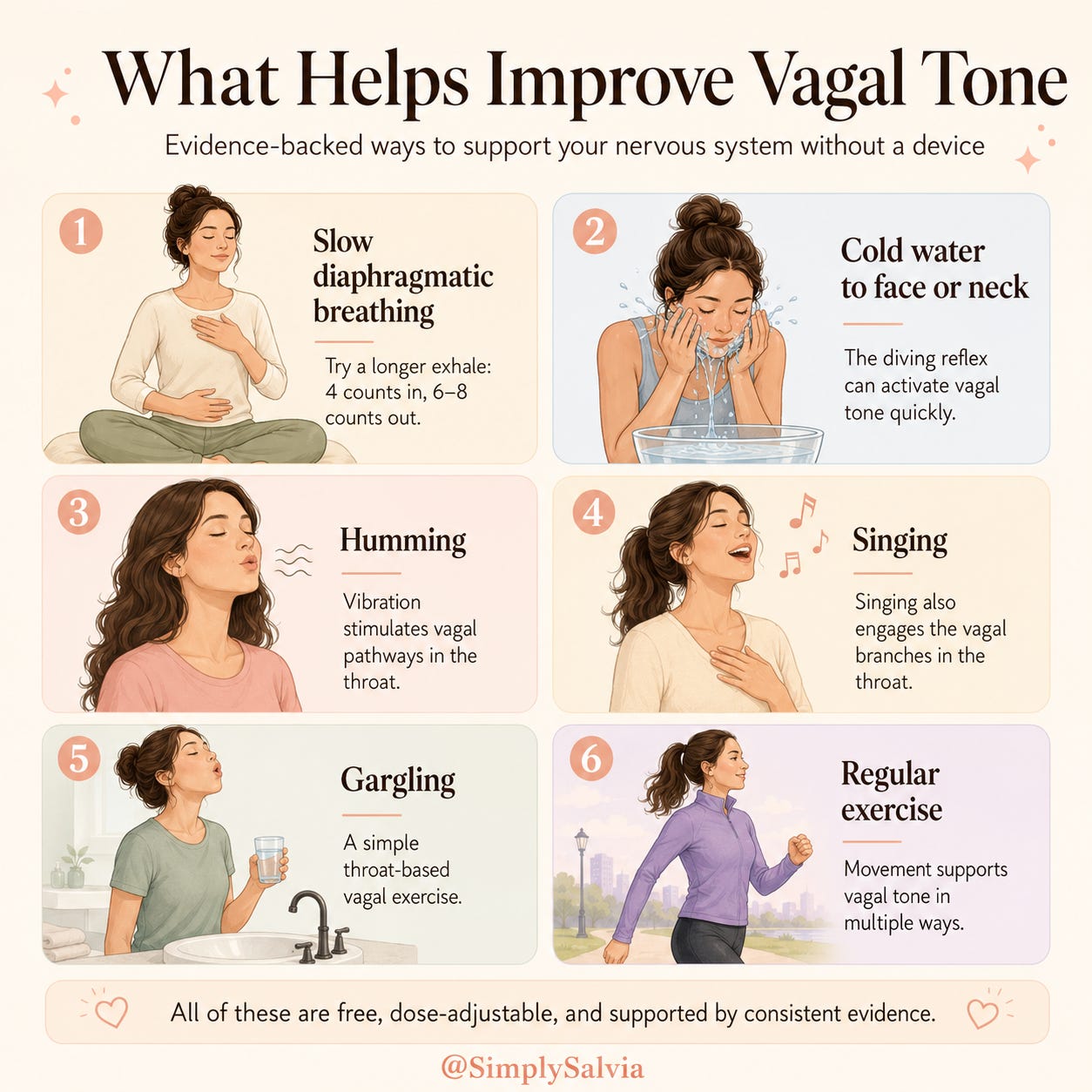
What does have good evidence for improving vagal tone without a device:
Sleepmaxxing: What the Trend Gets Right, and the One Thing It Gets Wrong
Sleepmaxxing - the Gen Z TikTok movement to optimise sleep through supplements, devices, and routines, has been described by the director of UC Berkeley’s sleep centre as Gen Z “reclaiming their right to a full night of sleep without embarrassment.” Which is genuinely good.
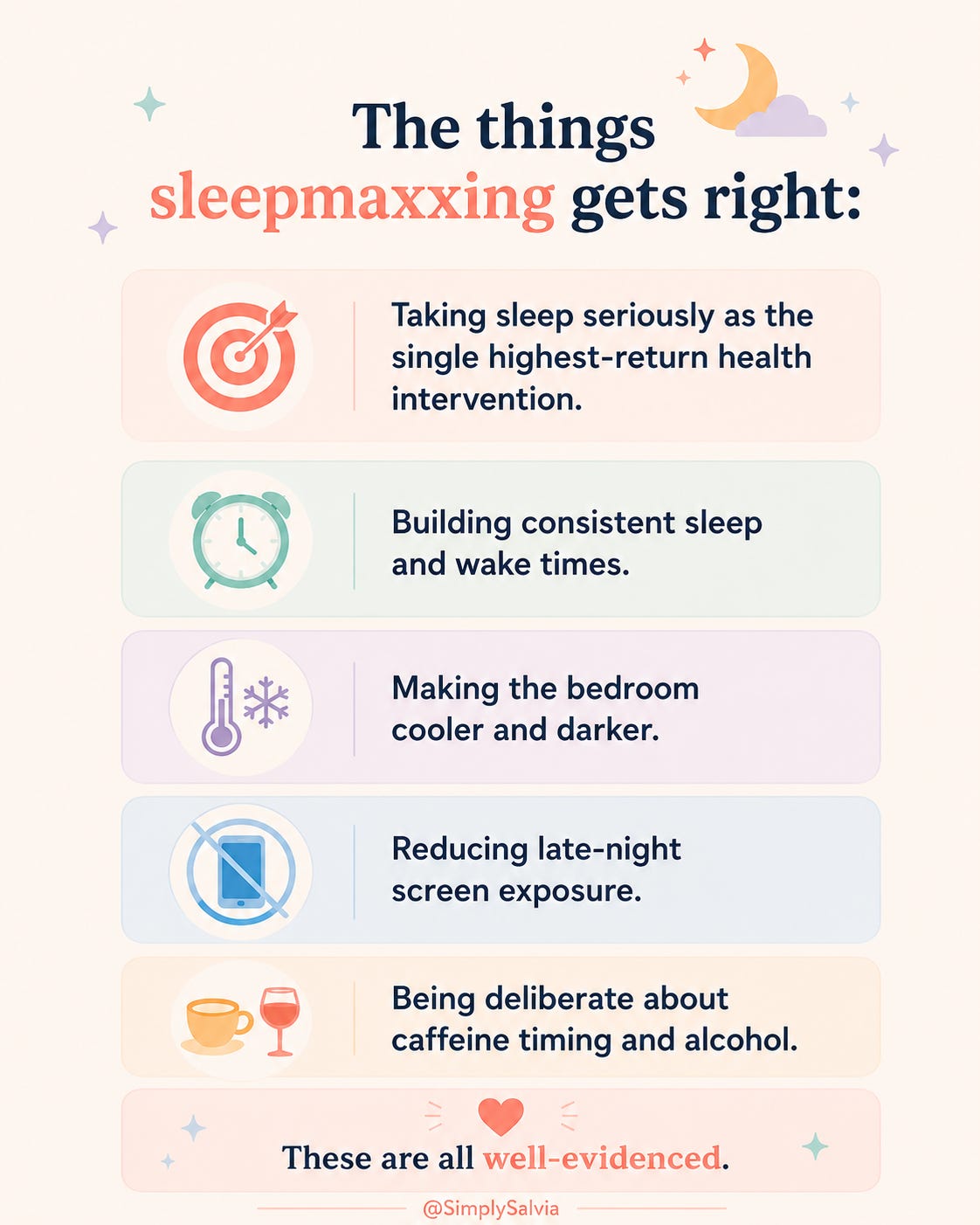
The things sleepmaxxing gets right:
The thing the trend gets wrong: the assumption that more optimisation tools equals better sleep. Mouth taping (covered in an earlier Between Saturdays; the 2025 PLOS One systematic review found it can be dangerous for people who mouth breathe due to obstruction, which is most people who mouth breathe). Sleep tracking devices creating anxiety about sleep scores - a documented phenomenon researchers now call “orthosomnia,” where sleep tracking itself causes sleep anxiety that worsens sleep quality. Stacking multiple supplements (magnesium + melatonin + L-theanine + ashwagandha + glycine) without understanding what each does and whether the combination makes sense. And taking magnesium, which does have good evidence for sleep quality, in the wrong form (magnesium oxide, the cheapest and most common, has the lowest bioavailability for neurological effects).
The sleepmaxxing principle is right. Sleep is the most foundational health intervention available and the most consistently undervalued. The one well-evidenced, accessible intervention that most people can add without any device or supplement: a consistent wake time, maintained even on weekends. Sleep research consistently finds that irregular sleep timing (varying by more than 60 minutes between weekdays and weekends) has measurable negative effects on metabolism, mood, and cognitive function - independent of total sleep hours. The sleep schedule is more powerful than the sleep gadget.
The information in this post is for educational and informational purposes only. None of the above constitutes medical advice. Always consult a qualified healthcare professional for personal health concerns.
Between Saturdays is a weekly research roundup from Simply Salvia. Four things from science and wellness worth knowing about. If someone sent this to you, you can subscribe here.
Detailed Readings
What to know about berberine, the so-called “nature’s Ozempic”
A review of the impact of micro‐ and nanoplastics on female reproduction