


Everything this edition has fine print. The wellness trend that works, but not for everyone. The food that’s genuinely implicated in depression but causation is still being untangled. The drug that’s changing lives, and may be quietly doing something to bones and muscle that nobody mentions at the pharmacy counter. And the sunscreen habit that’s giving you less protection than the label says.
The information exists. It’s just not reaching people. That’s what this is for.
Caught My Eye…
Ultra-Processed Food and Your Mental Health: The Research Has Reached a Tipping Point
This story has been building for years. It arrived somewhere significant this month.
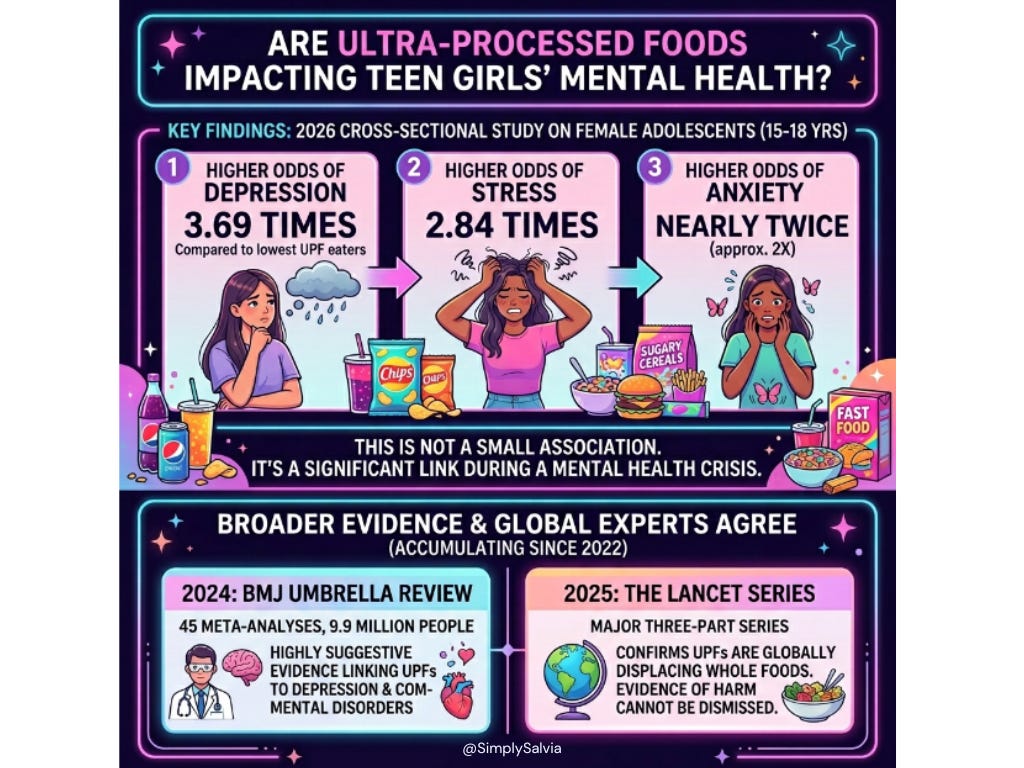
A 2026 cross-sectional study in female adolescents aged 15–18 found that girls in the highest ultra-processed food consumption group had 3.69 times higher odds of depression, 2.84 times higher odds of stress, and nearly twice the odds of anxiety compared to those in the lowest consumption group. That’s not a small association. In a population that is already experiencing a mental health crisis by most measures, it’s a significant one.
This study sits within a broader body of evidence that has been accumulating since 2022. A major umbrella review published in the BMJ in 2024, which analysed 45 pooled meta-analyses covering 9.9 million people found highly suggestive evidence linking ultra-processed food consumption to depression and common mental disorders, alongside diabetes, obesity, and cardiovascular disease. The Lancet published a major three-part series on UPFs in November 2025 confirming that the dietary pattern is globally displacing whole foods and that the evidence for harm, including mental harm, has reached a threshold that can no longer be dismissed.
The mechanism is increasingly understood: UPFs disrupt the gut microbiome (which directly affects serotonin and dopamine signalling), drive systemic low-grade inflammation (strongly associated with depression), and alter the dopaminergic reward pathways involved in mood regulation through their hyperpalatable combination of fat, sugar, salt, and food additives.
The important caveat: most of the evidence is observational, which means causation hasn’t been definitively proven. People who eat more ultra-processed food may also experience more stress, sleep less, exercise less, and have fewer resources, all of which independently affect mental health. Randomised controlled trials are needed to establish direct causality. But the consistency of the association across populations, age groups, and countries has moved beyond coincidence.
What counts as ultra-processed: packaged snacks, flavoured crisps, soft drinks, fast food, instant noodles, mass-produced bread with long ingredient lists, flavoured yogurts, packaged cereals with added sugar, processed meat products. Not all convenience food, but most of what lines the centre aisles of a supermarket.
The message isn’t “you caused your depression by eating badly.” It’s that the food environment most of us navigate daily may be compounding mental health vulnerability in ways that are only now being quantified.
Cold Plunging for Women: The Study That Changed What I Think About This

The cold plunge trend has been everywhere for two years. Most of the research cited to support it was conducted predominantly in men. That turns out to matter — significantly.
A systematic review and meta-analysis published in PLOS One in January 2025 by researchers at the University of South Australia analysed 11 randomised trials involving 3,177 participants. The headline findings: cold-water immersion reduced stress levels and was associated with improved quality of life and fewer sick days. Sounds compelling.
But the detail buried in the analysis stopped me: men, but not women, reported sleeping better after cold-water immersion. The sleep benefit, which is one of the most frequently cited reasons young women adopt cold plunging, did not replicate in female participants.
There’s a biological reason for this. Women’s core body temperature regulation operates differently across the menstrual cycle — progesterone raises core temperature in the luteal phase, and the relationship between body temperature and sleep onset is more hormonally dependent in women than in men. Cold immersion before bed may interfere with the natural thermoregulatory process that helps women fall asleep rather than supporting it.
The other finding worth knowing: cold-water immersion increased inflammation immediately after and one hour post-exposure in all participants. The initial spike is the stress response that drives longer-term adaptation. But for women who are already dealing with elevated systemic inflammation from other causes — poor sleep, chronic stress, hormonal fluctuation, this initial inflammatory hit is worth thinking about.
What the evidence does support for women: cold exposure at moderate temperatures (around 14–15°C, not ice-cold) for stress reduction, mood, and metabolic benefits. Dr. Stacy Sims, a researcher who specialises specifically in female physiology and exercise, has been consistent in her guidance that women don’t need to go as cold as men to get the same adaptive benefits and that extremely cold water (4–6°C) may drive a cortisol response that is counterproductive for women specifically.
If you’re doing it and enjoying it: keep going. But “colder is better” is male-derived advice. For women, the evidence points to smarter rather than colder.
Ozempic and Your Bones: The Risk Nobody Is Discussing With Young Women
This is the story that broke properly in early March 2026 and deserves more attention than it’s getting in mainstream wellness content.
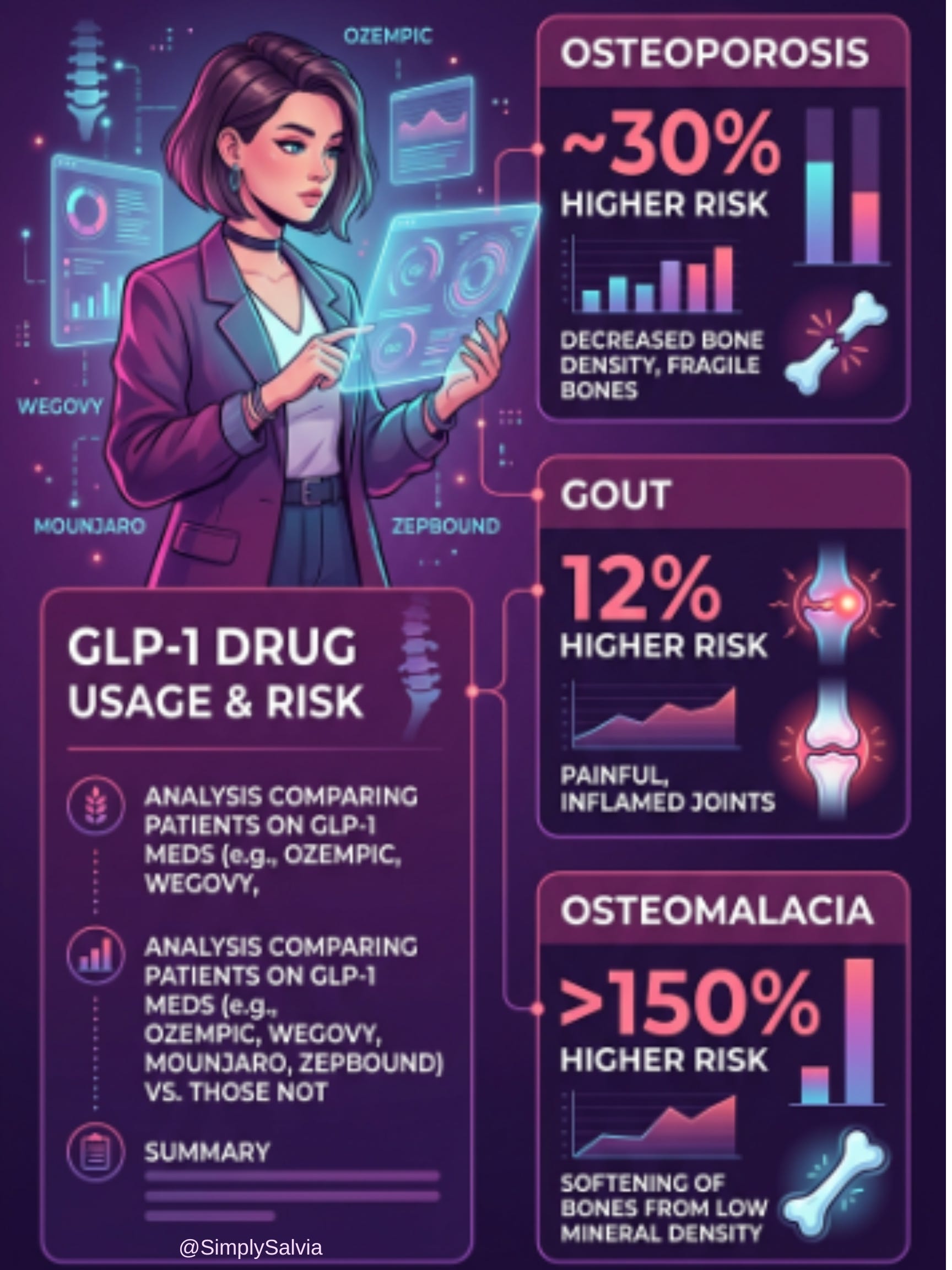
Research presented at the American Academy of Orthopaedic Surgeons’ annual meeting on March 8, 2026, drawn from nearly 150,000 patient health records over five years found that people taking GLP-1 medications (Ozempic, Wegovy, Mounjaro, Zepbound) faced a nearly 30% higher risk of osteoporosis, a 12% higher risk of gout, and a more than 150% higher risk of osteomalacia (softening of the bones from low mineral density) compared to those not on these drugs.
The researchers were careful to say this doesn’t outweigh the substantial benefits these medications offer for people with obesity and Type 2 diabetes. But the findings raise questions that are specifically relevant to younger women taking these drugs for weight loss rather than metabolic disease — where the risk-benefit calculation looks different.
Here’s the mechanism: rapid weight loss reduces the mechanical load on the skeleton, slowing bone formation. GLP-1 drugs also suppress appetite, which can lead to reduced intake of calcium, vitamin D, and protein. The three nutrients bone remodelling most depends on. Research from UC Davis found that roughly 15–25% of weight lost on GLP-1 drugs is lean mass, including muscle, and that bone acts as a single structural unit with muscle and tendon, so muscle loss and bone loss tend to move together.
For young women specifically: the years between 15 and 30 are when peak bone mass is still being built. Bone density peaks around age 25–30. Interventions that reduce bone density during this window don’t just affect you now, they affect your baseline for the rest of your life. The absolute risks in the study are still relatively low (about 4% of GLP-1 users developed osteoporosis versus 3% of non-users over five years). But that study population was predominantly older adults with metabolic disease. In younger, otherwise healthy women using these drugs off-label for weight loss, the picture may look different.
If you’re taking a GLP-1 medication: resistance training is the most evidence-backed way to preserve both bone and muscle during weight loss. Adequate protein (at least 1.2g per kg of body weight), calcium, and vitamin D intake matter. And it’s worth discussing bone density monitoring with your doctor especially before starting, if you have any risk factors.
You’re Probably Getting a Fraction of Your SPF’s Protection. Here’s Why.
This one is simple, annoying, and almost universally true.
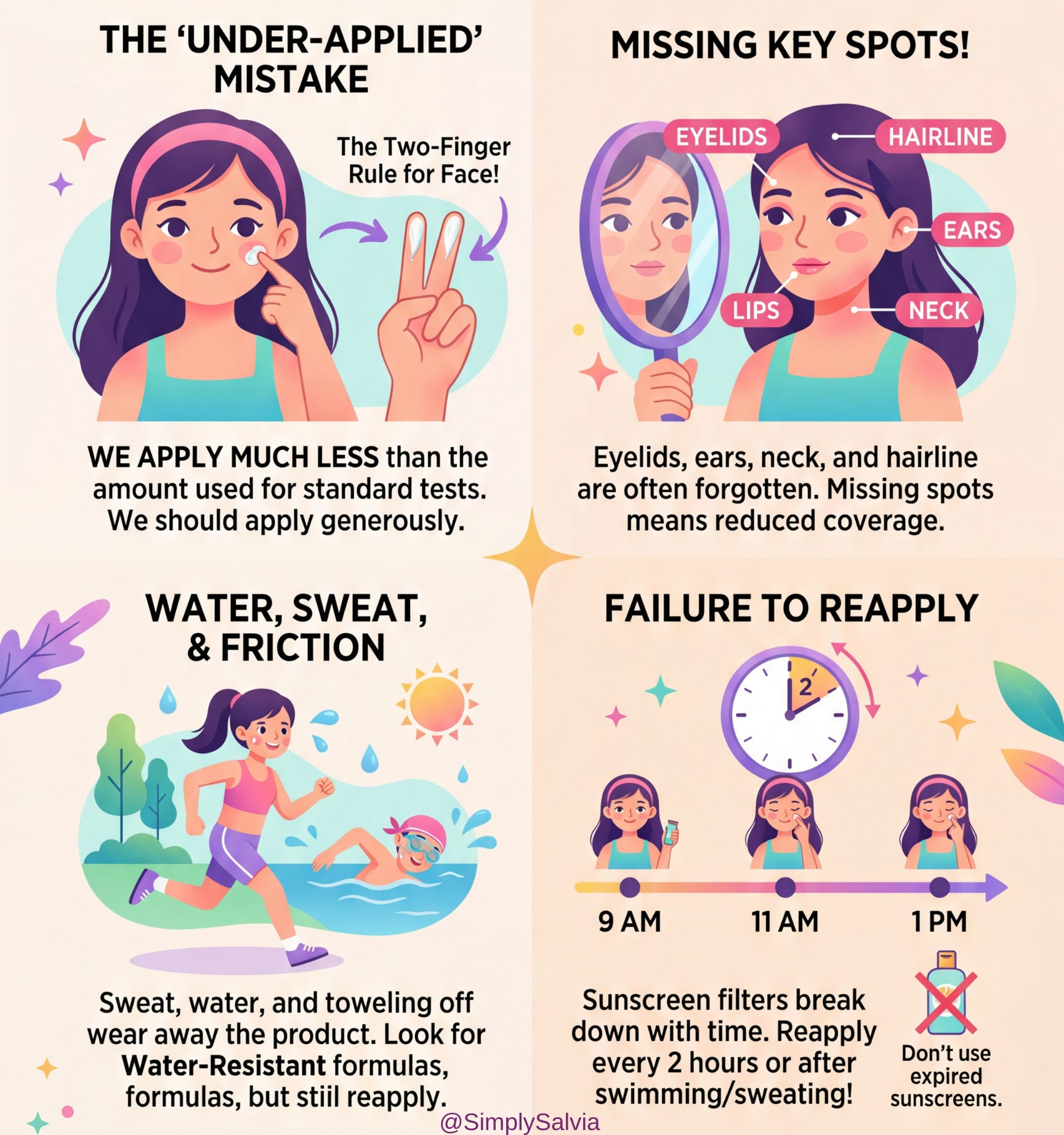
Studies consistently find that most people apply between 0.5mg/cm² and 1mg/cm² of sunscreen, but the SPF on the label is tested at 2mg/cm². At half the application density, you don’t get half the protection. Because of the logarithmic relationship between SPF and UV protection, applying SPF 50 at half the recommended dose gives you an effective SPF of approximately 7 to 8.
Not 25. Not 15. Seven.
This has been documented in dermatology research for decades and still hasn’t reached most people who use sunscreen daily. The practical consequences: a significant proportion of people who believe they’re adequately protected from UV-induced collagen breakdown, hyperpigmentation, and skin cancer risk are not.
The 2mg/cm² standard translates to: for the face alone, approximately half a teaspoon of sunscreen per application (about 1/4 teaspoon if you’re using a separate neck application). Most people apply a fraction of that and pat it in until it’s invisible, which reduces coverage further.
What this means practically: use more than you think you need, apply it before sun exposure (not on the way out the door), and reapply every two hours when you’re outside, because SPF protection degrades with UV exposure, sweat, and physical contact even before the two-hour mark. Mineral sunscreens (zinc oxide, titanium dioxide) sit on the skin’s surface and tend to provide more consistent coverage than chemical ones, which require even distribution to work properly.
The SPF number on the bottle is a ceiling, not a guarantee. How much you apply is what determines what you actually get.
The information in this post is for educational and informational purposes only. None of the above constitutes medical advice. Always consult a qualified healthcare professional for personal health concerns.
Between Saturdays is a weekly research round-up from Simply Salvia. Four things from science and wellness worth knowing about. If someone sent this to you, you can subscribe here.
Detailed Readings:
Ultra-processed foods and human health: the main thesis and the evidence
Ultra-Processed Foods and Mental Health: What the Research Actually Says
FACT CHECK: Do ultra-processed foods cause a decline in mental health?
Effects of cold-water immersion on health and wellbeing: A systematic review and meta-analysis
The health benefits (and risks) of cold plunges
Cold Plunging for Women: Why Colder Isn’t Always Better
UC Davis Health examines systemic impact of GLP-1–based therapies
GLP-1 drugs like Ozempic can raise bone and tendon injury risk, study suggests