


This edition is about connections. Things that seem unrelated until you understand the biology linking them. Your body temperature and your sleep quality. The stress in your nervous system and the breakouts on your skin. The habits in your 20s and the bone density in your 50s. The gut bacteria in your digestive system and the hormones in your bloodstream. These aren’t separate systems doing separate things. They’re one system, communicating constantly. Here’s the research on four of the most important connections that wellness content hasn’t been joining up properly.
Caught My Eye…
Body Temperature Is Your Most Underrated Sleep Tool
Sleep researchers talk about body temperature far less than they talk about screens, supplements, and sleep schedules. They should probably swap those priorities.
Your core body temperature needs to drop by approximately 1–1.5°C from its daily peak to initiate and maintain deep, slow-wave sleep. This isn’t a small adjustment, it’s a significant physiological shift that the body actively manages through a process called distal vasodilation: blood is sent to the hands and feet, where heat can radiate away from the body, cooling the core. This is why warm hands and feet are associated with faster sleep onset. The heat is redistributing from the centre outward.
Several things interfere with this process in ways that most sleep content doesn’t address:
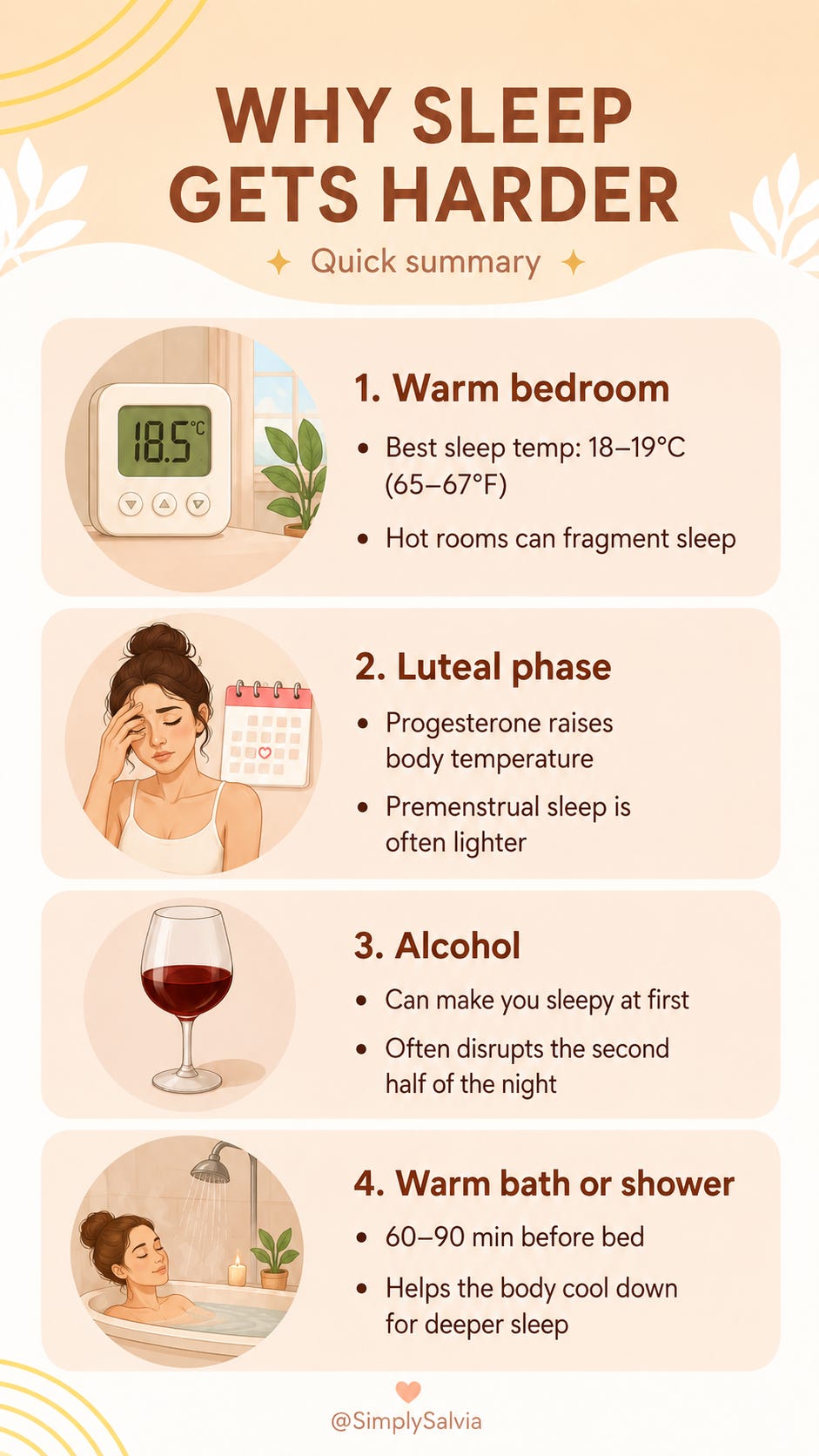
A warm bedroom. The optimal sleeping temperature for deep sleep is approximately 18–19°C (65–67°F) for most people. Research from the Sleep Foundation and multiple sleep labs found that room temperatures above 24°C significantly increase waking during the night and reduce slow-wave sleep time. Sleeping hot is one of the most common and least discussed causes of fragmented sleep.
The luteal phase of the menstrual cycle. As covered in the sleep deep dive: progesterone raises resting body temperature by 0.3–0.7°C in the two weeks before a period. When the baseline is already elevated, the body has less temperature range to drop through on the way to deep sleep. This is the primary mechanism behind the sleep fragmentation that most women notice in the premenstrual window.
Alcohol. Alcohol initially causes peripheral vasodilation, it feels relaxing because it redistributes heat but as it metabolises, it disrupts the temperature regulation required for sustained deep sleep and produces arousal in the second half of the night.
A warm bath or shower 60–90 minutes before bed works paradoxically: it heats the skin surface, accelerating peripheral vasodilation, which speeds up the cooling of the core. The bath doesn’t make sleep better because it relaxes you. It makes sleep better because it accelerates the physiological temperature drop that deep sleep requires.
Practical for right now: make your bedroom colder than you think you need to. Research suggests most people sleep at temperatures 3–5°C higher than is optimal. The discomfort of a cool room lasts about two minutes before you’re under a duvet and the sleep is measurably better.
The Stress-Skin Connection Is a Loop, Not a Line
Most content on stress and skin treats it as a one-way relationship: stress raises cortisol, cortisol disrupts your skin. That’s true, but it’s only half the picture. The full picture is a feedback loop and understanding the loop changes what you do about it.
Chronic stress raises cortisol. Cortisol degrades collagen, increases sebum production, disrupts the skin barrier, and suppresses the overnight repair processes that depend on deep sleep and growth hormone. This produces reactive, acne-prone, dull, or inflamed skin.
Here’s the other half: skin conditions themselves activate the stress response. Dermatology research has consistently found that inflammatory skin conditions like acne, eczema, rosacea, psoriasis, elevate psychological stress, which in turn elevates cortisol, which worsens the skin condition, which elevates stress further. The loop feeds itself from both directions.
This explains why people with stress-driven skin conditions often find that topical treatments produce improvement but not resolution. The topical intervention is addressing the skin end of the loop without addressing the nervous system end. The cortisol that’s driving the barrier disruption, the sebum overproduction, or the inflammatory flare is being re-generated continuously by the stress loop that the product can’t reach.
Research from 2025 examining psychodermatology interventions found that cognitive behavioural therapy and mindfulness-based stress reduction produced measurable improvements in inflammatory skin conditions, independent of any topical treatment. The mechanism is direct: reducing HPA axis activation reduces the cortisol signal to the skin. Less cortisol means less sebum production, less barrier disruption, better overnight repair, less inflammation.
The most powerful single intervention for this specific pattern is sleep. A single night of sleep deprivation measurably elevates cortisol and inflammatory markers. Chronic poor sleep maintains the cortisol elevation that keeps the skin loop running. No topical product can compensate for what consistently disrupted sleep is doing to the hormonal environment the skin has to function within.
This is the real sequence:
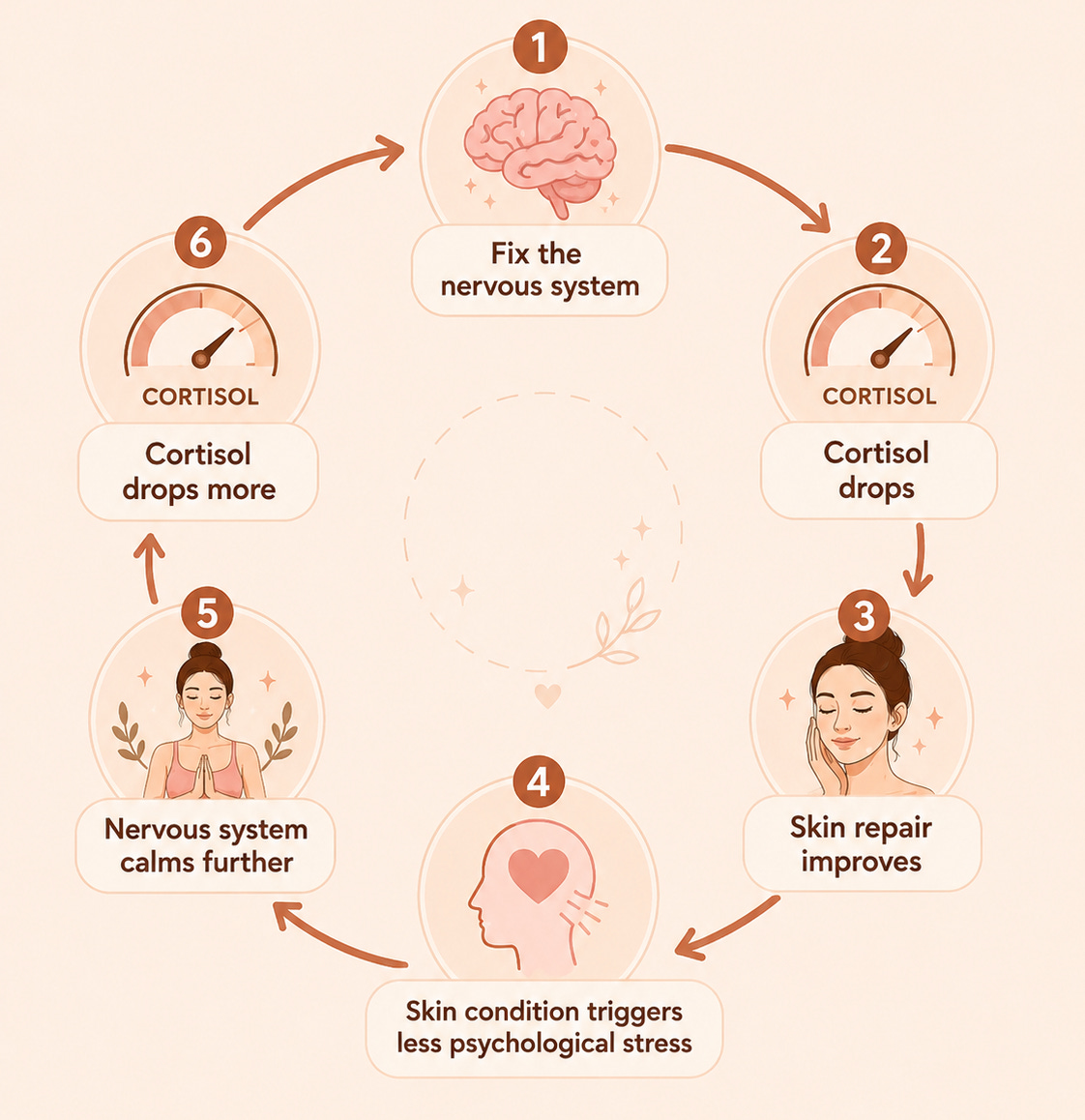
The entry point to this loop, for most people, is sleep. Not a new serum.
The Exercise Snack Research Is Genuinely Interesting
“Exercise snacking,” short bouts of physical activity (typically 2–10 minutes) spread across the day rather than consolidated into one workout, has accumulated a surprisingly strong evidence base over the past two years, and it matters specifically for people who struggle to maintain longer exercise sessions.
A 2025 systematic review found that exercise snacks specifically short bouts of vigorous stair climbing, brisk walking, or bodyweight exercises performed 2–3 times per day produced measurable improvements in cardiovascular fitness (VO2max), blood sugar regulation, and insulin sensitivity comparable to longer, continuous moderate exercise. The key finding: accumulated short bouts appear to produce similar or equivalent metabolic benefits to a single longer session of equivalent total duration.
For women specifically, there’s an additional angle: the blood sugar spike that follows meals can be meaningfully reduced by a 2–5 minute walk within 30 minutes of eating. Research published in Sports Medicine found that post-meal walking (even very short duration) significantly blunted post-meal glucose responses compared to sitting. The mechanism: muscle contraction uses glucose directly from the bloodstream as fuel, reducing the amount of work insulin has to do.
This matters practically because the meal-to-meal blood sugar swings that drive cravings, energy crashes, and the luteal phase blood sugar instability I’ve covered repeatedly in Simply Salvia are most effectively managed at the point of the meal and not through general lifestyle changes that work on a longer timescale.
The honest caveat: exercise snacking is not a replacement for progressive resistance training for body composition, bone density, and long-term metabolic health. The evidence supports it as an effective strategy for people with limited time or access, or as an addition to a broader movement practice and not as a complete substitute. Walking after meals and taking the stairs consistently are genuinely useful habits with evidence behind them. They are not a replacement for 2–3 weekly resistance sessions.
The Inflammation Biomarker Most Young Women Have Never Heard Of
CRP (C-reactive protein) is a blood marker of systemic inflammation. It’s produced by the liver in response to inflammatory signals from anywhere in the body; infection, injury, autoimmune activity, or chronic low-grade inflammation from lifestyle factors. It’s included in standard blood panels in some countries and omitted in others, and most women in their 20s and 30s have never had it discussed with them.
Here’s why it matters:
Low-grade chronic inflammation, reflected in mildly elevated CRP is one of the most consistent underlying mechanisms in the conditions that most affect young women:
Depression and anxiety (elevated inflammatory cytokines are found in a significant subset of both),
Acne and inflammatory skin conditions,
Menstrual irregularity and painful periods (prostaglandin-driven pain is an inflammatory process), and
Insulin resistance and metabolic dysfunction.
A 2025 analysis found that CRP levels in young adults are rising, driven by increasing rates of ultra-processed food consumption, sleep disruption, sedentary behaviour, and chronic psychological stress. This isn’t a condition with obvious symptoms. It’s a background state of heightened immune activation that quietly makes all of the above conditions harder to manage and more severe.
The factors with the strongest evidence for reducing CRP in healthy young women:
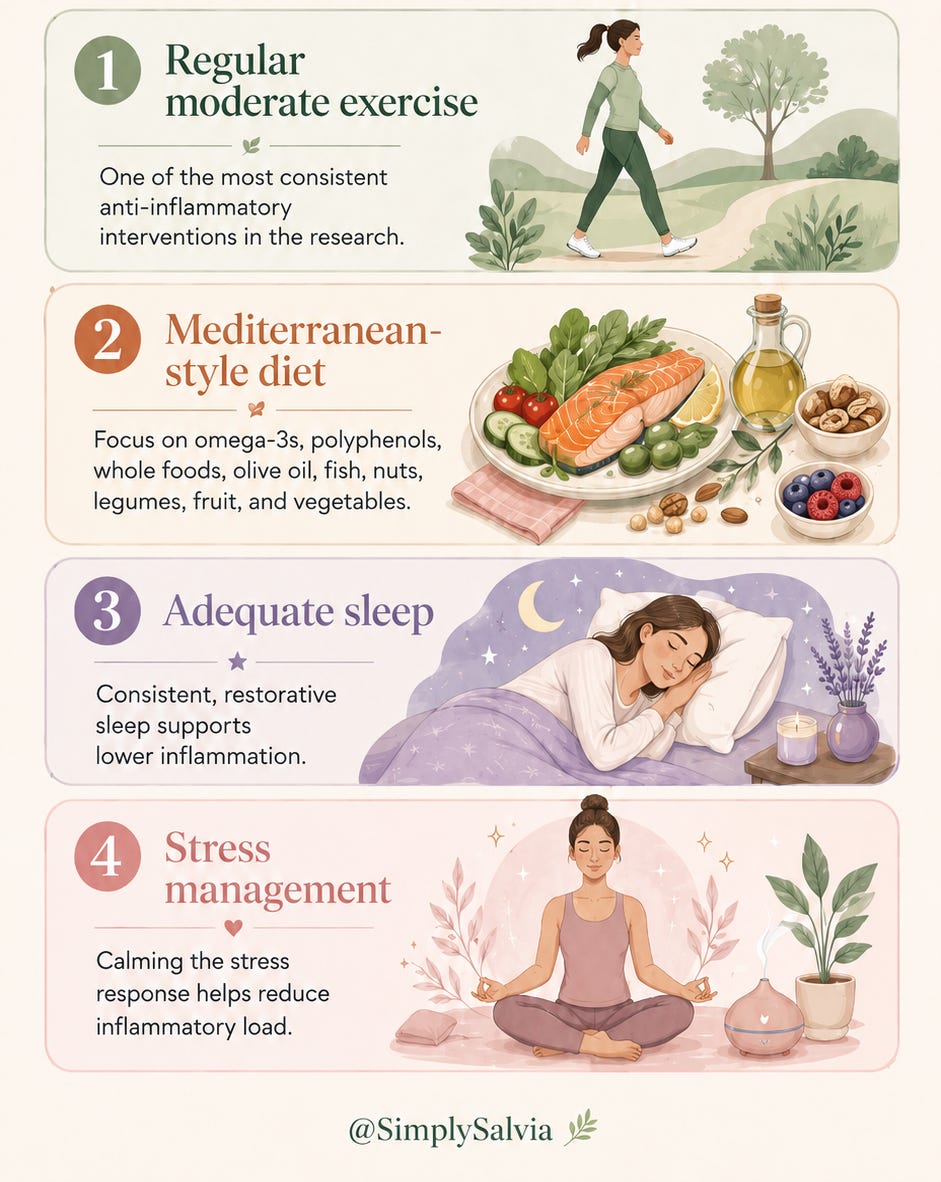
These are the same interventions that show up across every category of women’s health research, not because wellness content keeps repeating the same things, but because chronic systemic inflammation is genuinely at the root of a wide range of conditions and these interventions address it at the source.
The things with the strongest evidence for raising CRP:
Ultra-processed food,
Sleep deprivation,
Physical inactivity,
Abdominal obesity, and
Smoking.
These, too, are the same factors that show up repeatedly in the risk literature across multiple conditions. The biological mechanism connecting them all is inflammation.
If your GP runs a full metabolic panel and CRP isn’t included: ask for it specifically. A high-sensitivity CRP (hs-CRP) below 1 mg/L is low risk. 1–3 mg/L is moderate. Above 3 mg/L is elevated and worth investigating. It won’t be discussed unless you ask, but it tells you more about your background inflammatory state than most of the other markers routinely measured.
The information in this post is for educational and informational purposes only. None of the above constitutes medical advice. Always consult a qualified healthcare professional for personal health concerns.
Between Saturdays is a weekly research roundup from Simply Salvia. Four things from science and wellness worth knowing about. If someone sent this to you, you can subscribe here.
Detailed Readings
The Role Temperature Plays in Sleep Quality
Changes in sleeping energy metabolism and thermoregulation during menstrual cycle
Psychodermatology: Bridging Dermatology and Psychiatry
Positive impact of a 10-min walk immediately after glucose intake on postprandial glucose levels