


This week’s research has a common thread: the body registering and responding to things long before they show up as an obvious symptom. The immune dip that arrives right after stress ends rather than during it. The genetic and hormonal signals that show up in something as unlikely as finger length. The way natural killer cells, a frontline immune defence quietly decline under anxiety and poor sleep. And a supplement safety finding that’s worth knowing if you or anyone in your life is trying to conceive.
Caught My Eye…
Why You Get Sick Right After the Stressful Period Ends, Not During It
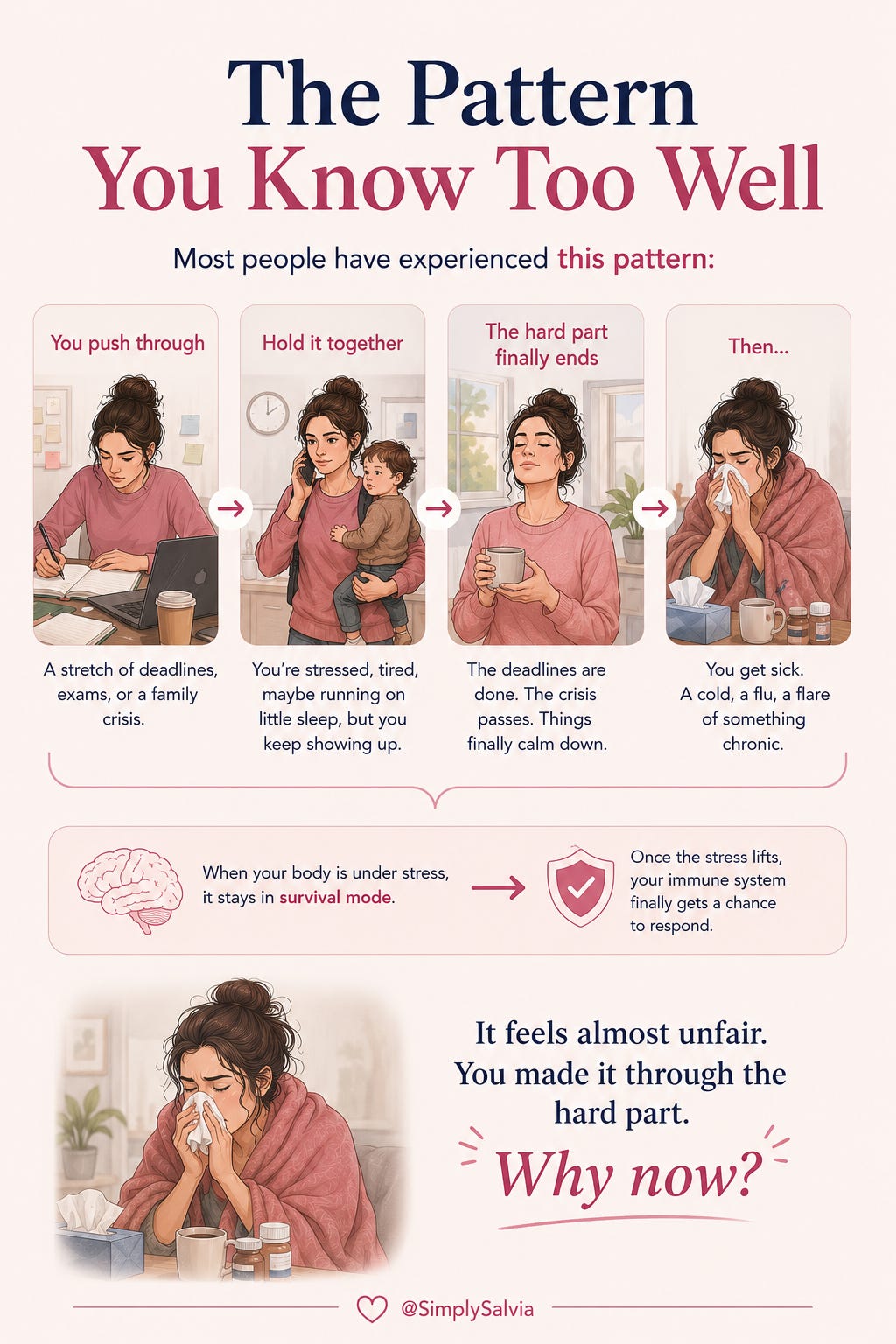
Most people have experienced this pattern: you push through a stretch of deadlines, exams, or a family crisis, holding it together the entire time and then the moment things calm down, you get sick. A cold, a flu, a flare of something chronic. It feels almost unfair. You made it through the hard part. Why now?
The immune research explains this precisely, and it comes down to a distinction between acute and chronic stress that’s worth understanding properly.
Acute stress; the short, intense kind actually enhances certain immune functions. It mobilises immune cells, increases inflammatory readiness, and prepares the body for potential injury or infection. This is the stress response working as designed: a short-term boost in defensive readiness, evolved for genuine physical threats.
But this system is built on a cycle of activation followed by recovery. When stress is sustained (weeks of deadline pressure, an extended crisis, months of overload) the recovery phase never arrives. The immune system shifts in a different direction entirely: suppressed cellular immunity, reduced antibody responses, and an impaired ability to regulate inflammation. The system doesn’t stay switched on. It becomes dysregulated.
This is why illness often arrives right as the stressor lifts. During the high-stress period, the body is running on a kind of borrowed immune readiness, adrenaline and cortisol keeping things functioning under pressure. The moment that pressure releases, the body’s resources reallocate, the masking effect of acute stress hormones fades, and the immune suppression that’s been building underneath becomes apparent. The illness wasn’t caused by the stress ending, it was caused by the stress itself, and the ending is just when your body finally has room to register it.
The practical implication isn’t to avoid stressful periods as most aren’t avoidable. It’s to actively support recovery once the acute period ends, rather than immediately filling the newly available time and energy with something else. Sleep, hydration, and nutrient-dense food in the days immediately following a high-stress period aren’t indulgent. They’re giving the immune system the recovery window it’s been waiting for.
A Massive Genetics Study Just Reshaped How We Understand Why Mental Health Conditions Overlap
This finding is more foundational than most of what I cover, but it has direct relevance for anyone who’s noticed that anxiety, depression, ADHD, and other conditions seem to travel together more often than chance would suggest.
A massive global genetics study analysing data from more than six million people found deep genetic connections across 14 psychiatric conditions, reshaping the understanding of why mental health diagnoses so often co-occur in the same person. Rather than 14 separate, unrelated conditions that happen to sometimes appear together, the genetic architecture suggests significant shared biological underpinnings across conditions that have historically been classified and treated as entirely distinct.
This matters practically for a few reasons. First, it helps explain something many people experience and don’t have language for: having both anxiety and ADHD, or depression alongside an eating disorder, isn’t a sign of being “more broken,” it reflects overlapping genetic and biological vulnerability that researchers are only now mapping properly. Second, it suggests that effective treatments for one condition in this overlapping cluster may have more crossover benefit for related conditions than previously assumed, which is consistent with what we’ve covered before regarding exercise’s broad effect across both depression and anxiety, and gut microbiome interventions showing benefit across multiple mood-related conditions.
This is genetics research, not a treatment finding, it doesn’t change what to do today. But it’s worth knowing because it reframes a common experience: if you’ve ever felt like your mental health doesn’t fit neatly into one diagnostic box, the underlying biology may genuinely not separate as cleanly as the diagnostic categories suggest it should.
Anxiety and Insomnia Are Linked to a Measurable Drop in a Specific Immune Cell. In Young Women Specifically
This finding connects directly to the immune-stress research above, but with more specificity, and it’s worth knowing on its own.
A study of young women in Saudi Arabia found that both anxiety and insomnia were linked to significantly fewer natural killer cells, a type of immune cell that acts as the body’s rapid-response team, providing frontline defence against infected and abnormal cells.
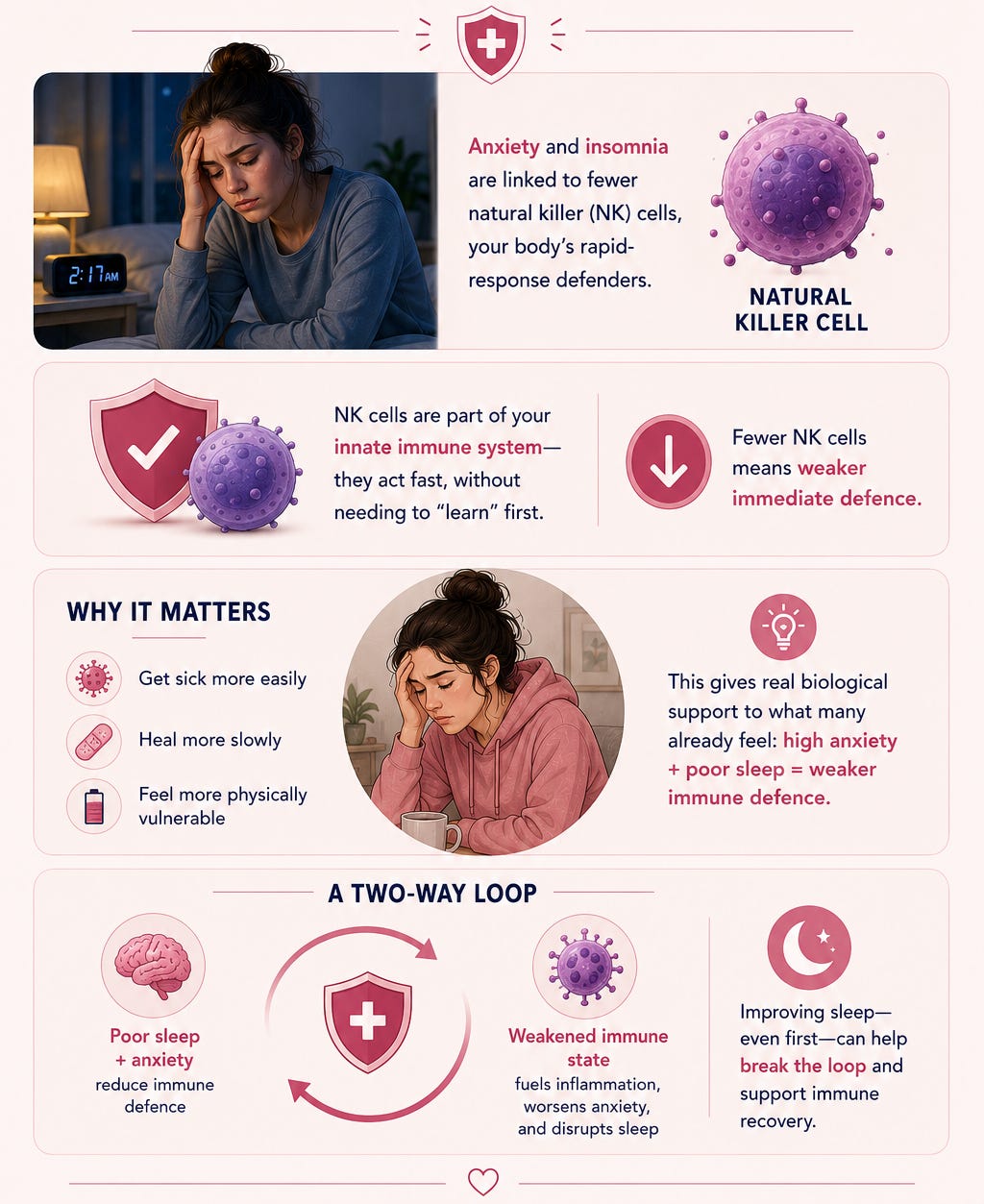
Natural killer cells are part of the innate immune system meaning they don’t need to “learn” a threat first; they respond immediately. A measurable reduction in their numbers represents a real decrease in the body’s immediate defensive capacity, not a subtle or theoretical effect.
This adds a concrete mechanism to something many women already sense intuitively: that periods of high anxiety and poor sleep coincide with getting sick more easily, healing more slowly, and generally feeling more physically vulnerable and not just more tired. The natural killer cell finding gives that intuition a measurable biological basis rather than leaving it as a vague feeling.
This is also a two-way relationship worth being aware of, similar to the stress-skin loop covered in a previous edition: poor sleep and anxiety reduce immune defence, and a weakened immune state can itself contribute to the kind of low-grade inflammation that worsens anxiety and disrupts sleep further. Breaking into this loop at any point, improving sleep specifically, even before anxiety itself feels manageable has a documented basis for supporting immune recovery, not just feeling more rested.
A Popular Supplement May Increase Birth Defect Risk. Worth Knowing Even If Pregnancy Isn’t on Your Mind Right Now
This finding is specific and worth flagging clearly, because the supplement involved is widely used and widely perceived as completely harmless.
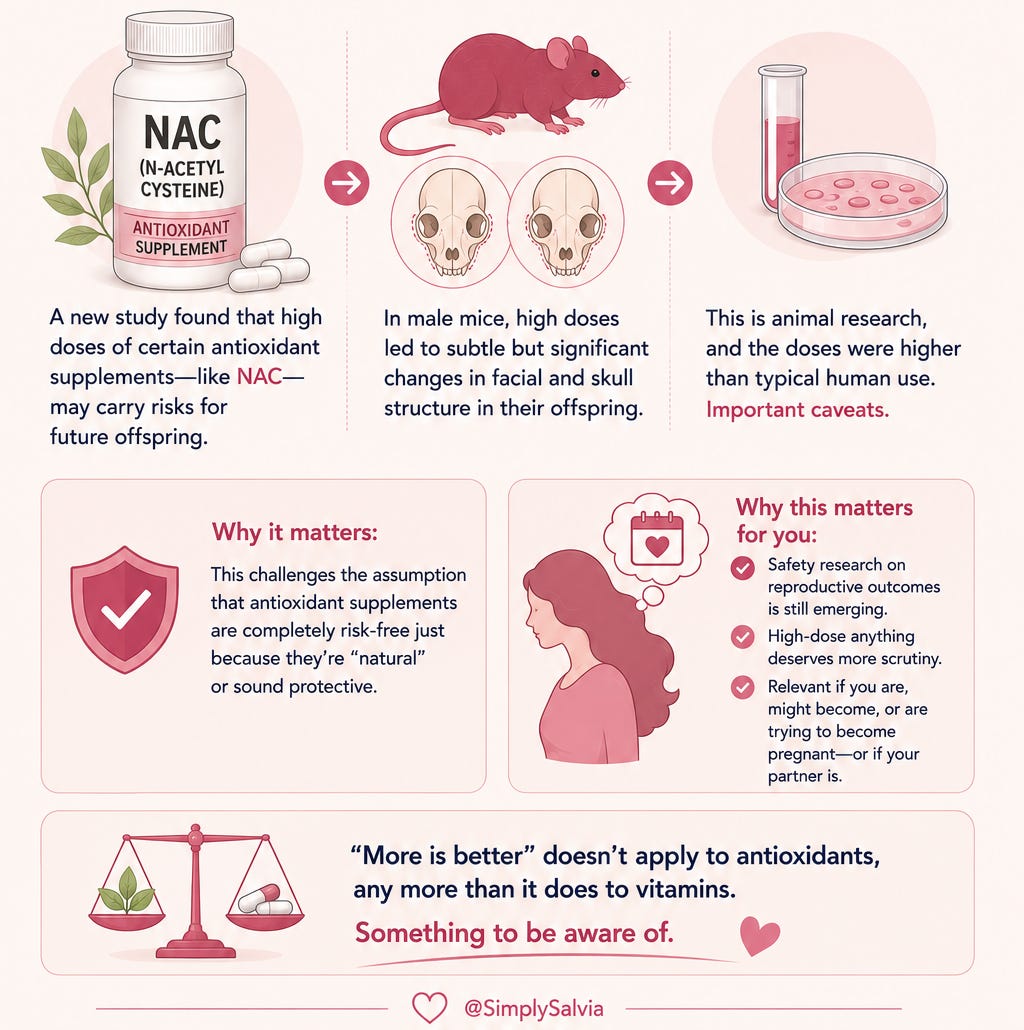
A new study found that high doses of certain antioxidant supplements including NAC (N-acetylcysteine), commonly used for liver support, respiratory health, and as a general antioxidant, may carry risks for future offspring that weren’t previously well understood. In the study, male mice given common antioxidant supplements at high doses produced offspring with subtle but significant facial and skull structural changes — an effect that researchers hadn’t anticipated given antioxidants’ generally benign reputation.
This is animal research, and the dose levels used were higher than typical human supplemental use, both important caveats. But the finding matters because it challenges a common and largely unexamined assumption: that antioxidant supplements are essentially risk-free because they’re “natural” or because their general mechanism (reducing oxidative stress) sounds protective rather than harmful.
The practical relevance, even outside of active pregnancy planning: supplement safety research specific to reproductive outcomes is still emerging, and high-dose supplementation of anything, even substances generally considered safe deserves more scrutiny than it typically receives, particularly for anyone who is, might become, or is trying to become pregnant, or whose partner is in that category. “More is better” doesn’t reliably apply to antioxidants any more than it applies to vitamins generally, and this is a useful, concrete example of why.
The information in this post is for educational and informational purposes only. None of the above constitutes medical advice. Always consult a qualified healthcare professional for personal health concerns.
Between Saturdays is a weekly research roundup from Simply Salvia. Four things from science and wellness worth knowing about. If someone sent this to you, you can subscribe here.
Detailed Readings
Psychological Stress and the Human Immune System: A Meta-Analytic Study of 30 Years of Inquiry
Scientists discover why mental disorders so often overlap
Anxiety and insomnia linked to sharp drops in key immune cells
This popular supplement may increase risk of birth defects, study finds