


When we think about cardiovascular health, the focus often jumps straight to medications or major overhauls. But the vascular system is surprisingly responsive to modest, repeatable signals from food. Certain plant compounds influence how blood vessels relax, how cholesterol moves, and how pressure is distributed across the arterial tree. This week’s studies look at familiar foods: cabbage-family vegetables, oats, walnuts, and wild blueberries. Here’s what happens when they’re eaten consistently.
Caught My Eye…
Cruciferous vegetables and blood pressure
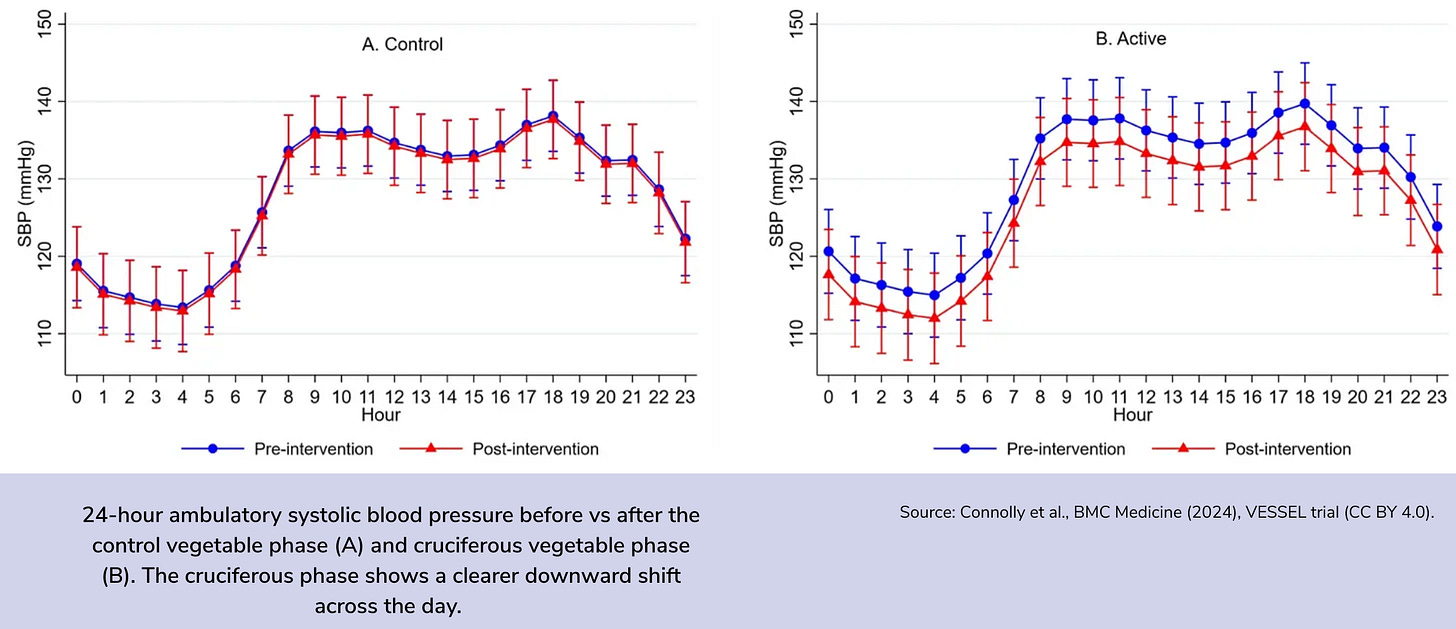
In a randomized crossover trial, adults were asked to eat daily servings of cruciferous vegetables such as cabbage, broccoli, and cauliflower. And then switch to a control phase emphasizing root and squash vegetables.
The difference was measurable. During the cruciferous phase, 24-hour systolic blood pressure fell by about 2.5 mmHg more than during the control phase. Because blood pressure was measured over a full day, the result reflects real-world vascular effects rather than a single reading.
The likely explanation lies in sulfur-containing compounds unique to cruciferous vegetables, which support nitric oxide signaling and vascular relaxation. The takeaway isn’t that other vegetables don’t matter it’s that vegetable type influences vascular tone, not just vegetable quantity.
Oats and LDL cholesterol
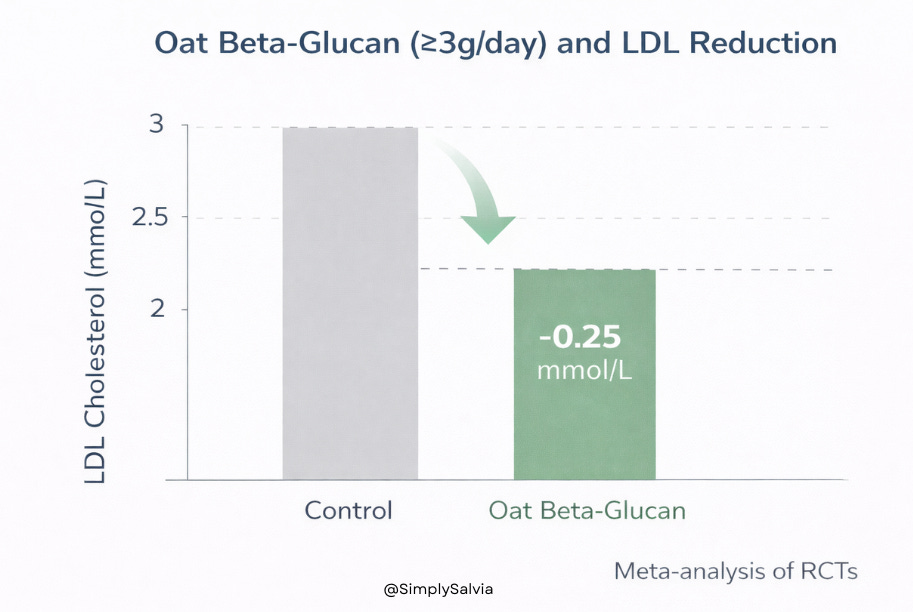
A meta-analysis of randomized controlled trials examined the effect of oat beta-glucan, a soluble fiber, at doses of 3 grams per day or more.
Across studies, LDL cholesterol fell by about 0.25 mmol/L, with total cholesterol dropping by roughly 0.30 mmol/L, compared with control diets. These effects were consistent enough to reinforce what’s long been suspected: beta-glucan binds bile acids in the gut, prompting the liver to pull more cholesterol from circulation to replace them.
It’s a reminder that some fibers act mechanically, not hormonally and that structure matters as much as nutrients.
Walnuts and central blood pressure
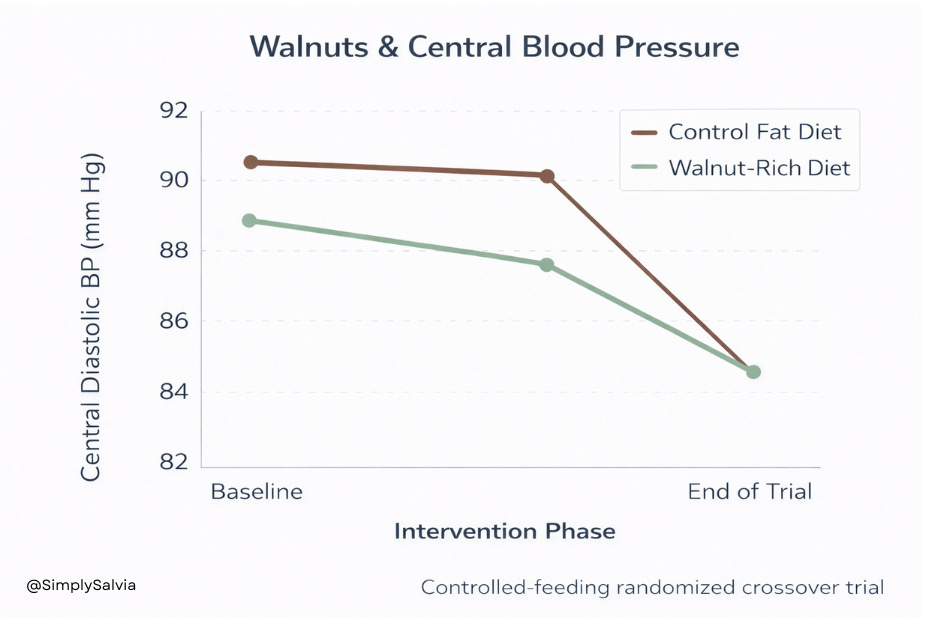
A controlled-feeding randomized crossover trial compared a walnut-rich diet with matched diets using other fats and oils. While standard arm blood pressure readings didn’t change dramatically, something more subtle did.
The walnut diet led to improvements in central diastolic blood pressure, a measure more closely linked to the pressure experienced by the heart and major organs. At the same time, LDL cholesterol and other lipid markers improved.
Replacing saturated fat with walnuts delivered benefits beyond cholesterol alone, likely due to a combination of unsaturated fats, polyphenols, and arginine, nutrients that influence vascular elasticity and endothelial function.
Wild blueberries and vascular function
In a double-blind randomized controlled trial, participants consumed wild blueberry powder daily and were compared with a placebo group.
The blueberry group showed improvements in flow-mediated dilation, a gold-standard measure of endothelial function, along with reductions in 24-hour systolic blood pressure. These changes suggest better nitric oxide availability and healthier vessel responsiveness.
Polyphenols don’t act like medications. Their effects are smaller, but they work through signaling pathways that support the blood vessels’ ability to adapt especially when intake is regular rather than occasional.
None of these foods are dramatic on their own. A few millimeters of mercury here, a modest cholesterol shift there. But cardiovascular risk doesn’t move in leaps — it drifts. And these studies show how daily, ordinary foods gently steer that drift in a healthier direction.
Detailed Readings
Cholesterol-lowering effects of oat β-glucan
Replacing Saturated Fat With Walnuts or Vegetable Oils Improves Central Blood Pressure