


This is Part 2. If you're new here, Part 1 covers the anatomy, causes, and types of tension — start there first. This part is entirely practical.
Part 1 ended with something most people don’t have: an actual explanation.
Not “you’re stressed” or “your posture is bad,” but specifically why the neck and shoulders hold tension the way they do, what’s driving yours in particular, and why the standard advice (stretch more, sleep better, relax) keeps not being enough. That understanding matters. You can’t address a system you don’t understand.
But understanding doesn’t release a muscle. So here’s the part that does.
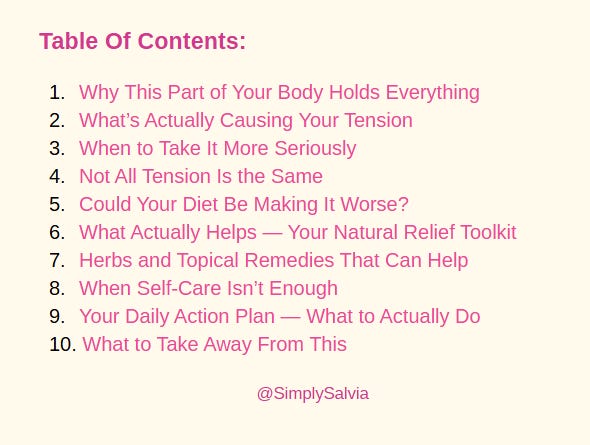
Part 2 starts with what you’re putting in your body, because it turns out your tissue has nutritional requirements that chronic tension quietly depletes and most women in this age group are deficient in the exact minerals that regulate muscle relaxation. That chapter tends to surprise people.
From there: the full practical toolkit. The specific postural changes that address the mechanical load at its source. The stretches worth doing and the ones that feel satisfying but don’t actually change anything structurally. And the nervous system regulation piece, which is the part almost every tension guide skips, because it requires understanding that some of what lives in your shoulders isn’t physical and can’t be stretched out. It has to be discharged through the nervous system that put it there.
Let’s get into it.
PS: We also have a subscriber-only group chat where members discuss the deep dives, share their sleep journeys, and ask me questions directly. See you there.
Disclaimer: The information and opinions expressed above are current as of the date of this post and are subject to change without notice. Materials referenced above are provided for educational and informational purposes only. None of the above constitutes medical advice, a diagnosis, a treatment recommendation, or a substitute for consultation with a qualified healthcare professional. Always seek the guidance of your doctor or another qualified health provider with any questions you may have regarding a medical condition or sleep disorder.
Short Dive below ↓